
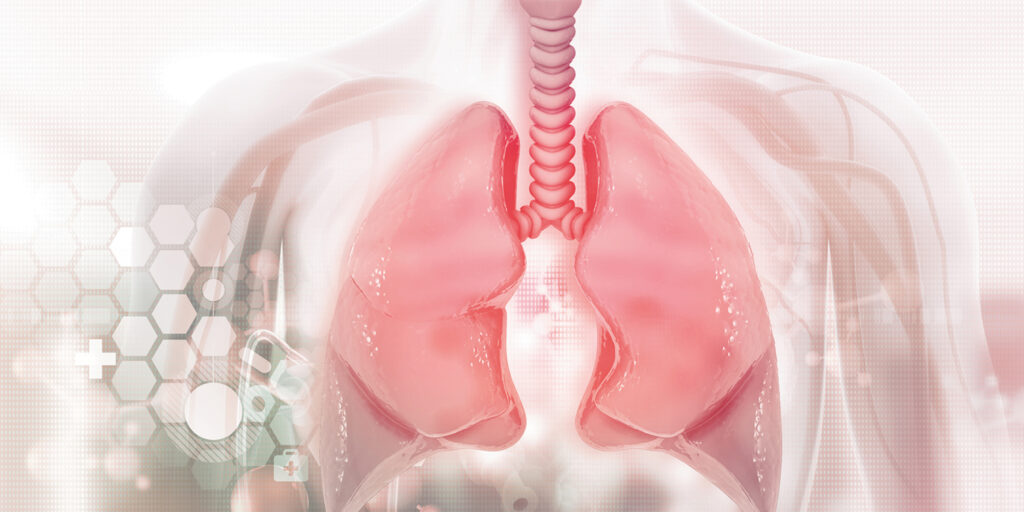
Breathe Easier: Advances in Respiratory Care and Ventilation Equipment
By Rene Ryan | Friday, August 21, 2026
5 Second Summary
Modern ventilation and airway clearance devices can support overall health, comfort, and independence. Rely on your respiratory care team to help match equipment to changing needs over time.
For people living with neuromuscular diseases, the muscles used to draw in a breath or push air out of the lungs can weaken over time.
As a result, breathing may become more difficult, sleep may become less restful, and keeping the airways clear can become a daily challenge.
The good news is that respiratory care has advanced significantly in recent decades. Today, sophisticated devices can bring clinical precision into the home and are often compact enough to use on the go. People living with neuromuscular diseases and their families have more options than ever to find equipment that maintains healthy lung function, prevents respiratory complications, and supports their lifestyles.

Bethany Lussier, MD
“In the past, using respiratory support equipment may have been viewed as something to fear or avoid. It’s increasingly considered an essential part of comprehensive neuromuscular care,” says Bethany Lussier, MD, Director of the Neuromuscular Pulmonology and Home Ventilation Clinic at Parkland Health in Dallas.
In addition to promoting overall health, respiratory care can help people living with neuromuscular diseases maintain their independence or continue to perform daily activities longer.
What’s in a breath?
We use respiratory muscles to breathe. The diaphragm (a dome-shaped muscle below the lungs) and muscles between the ribs flex to expand the chest and pull air into the lungs. These muscles relax to let air leave the lungs.
To forcefully inhale or exhale, we use additional muscles in the neck, chest, and belly. For example, a cough involves a sudden, strong contraction of abdominal and chest muscles.
The process of breathing in and out is called ventilation. The pathway that air follows from the nose or mouth, through the windpipe (trachea), and into the lungs is the airway.
Why respiratory care matters
Over time, neuromuscular disorders can weaken some or all the muscles used for breathing. When these muscles don’t move well, air can’t move in and out of the lungs effectively.
Weak breathing muscles can lead to reduced lung expansion, lower blood oxygen levels, and an increased risk of respiratory infections. Respiratory failure, often in association with pneumonia, is a frequent cause of death for people with neuromuscular disorders.
The goal of respiratory care isn’t simply to help someone breathe when breathing becomes difficult but to preserve lung health before major symptoms occur. Neurologists and pulmonologists (respiratory care specialists) can recommend methods to preserve and support the muscles used for breathing tailored to your muscle strength and risk of muscle fatigue and injury. These methods may include respiratory muscle training and breathing support equipment.
Breathing support devices are an important part of respiratory care, as they can improve ventilation, help maintain lung volume, assist airway clearance, and reduce the strain on weakened muscles. Research has shown that early intervention can improve quality of life and, in some neuromuscular diseases, extend longevity.
Modern devices are significantly improved compared to ventilators of the past, offering greater mobility, smaller sizes, and better comfort for managing respiratory health.
Equipment to support breathing
Equipment needs should be determined in consultation with your respiratory care team. The following devices are often used by people in the neuromuscular community.
Bilevel positive airway pressure (BiPAP)
BiPAP is the most common type of device used for noninvasive ventilation. This device delivers air into the lungs through a mask worn over the mouth and/or nose to reduce the work of breathing, improve airflow, and help prevent the buildup of carbon dioxide. The machine uses a lower pressure for exhaling than for inhaling.
Many people begin using BiPAP at night to improve breathing during sleep. Some BiPAP machines also have a volume-control mode that allows them to be used like portable ventilators during the day.
A BiPAP machine may deliver air through:
- Full face mask
- Nasal mask
- Nasal pillows
- Mouthpiece (in volume-control mode)
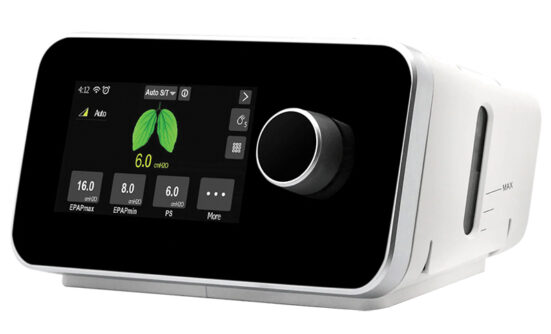
Bilevel positive airway pressure (BiPAP) device
Portable ventilators
When breathing muscles get weaker, a volume-targeted ventilator is usually recommended. These devices are more powerful and adjustable than BiPAP but still sized to be portable.
Today’s home ventilators are technologically advanced machines. They allow a respiratory specialist to set a target tidal volume (amount of air per breath), and the ventilator automatically adjusts the airway pressure with every breath to safely deliver that exact volume without overinflating the lungs. The machine can even be monitored remotely, so a patient’s care team can track their data and determine when adjustments are needed. Custom settings and adjustable interfaces allow for respiratory support to evolve as needs change over time.
These ventilators are also smaller and lighter than the machines of the past. Portable ventilators typically weigh under 12 pounds and can hook onto the back of a wheelchair. They have a rechargeable internal battery, so they don’t need to be plugged in, and families can purchase backup batteries for more time between charges.
A portable ventilator may deliver air through:
- Full face mask
- Nasal mask
- Nasal pillows
- Mouthpiece (such as sip and puff)
- Tracheostomy tube
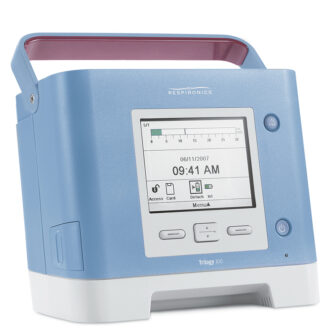
Portable ventilator device
About tracheostomy
If noninvasive ventilation is not providing effective and comfortable breathing support, the respiratory care team may discuss invasive ventilation through a tracheostomy.
A tracheostomy is a surgically created opening in the neck that allows a tube to be placed in the trachea to deliver air from a ventilator directly to the lungs.
A tracheostomy may be considered when:
- A person cannot tolerate mask-based ventilation
- Noninvasive ventilation no longer provides adequate support
- Breathing assistance is needed around the clock
- Mucus and liquid secretions become difficult to manage
- Swallowing difficulties increase the risk of aspiration (food and liquids being inhaled into the lungs)
A common concern is that a tracheostomy will affect a person’s ability to speak. There are various methods to talk with a tracheostomy, including adding a speaking valve. In fact, some people find it easier to talk and interact with others with a tracheostomy than with a mask on their face.
“The choice to pursue tracheostomy is a personal one,” Dr. Lussier says. The decision often involves thorough discussions about medical needs, personal goals, communication preferences, caregiving considerations, and well-being.
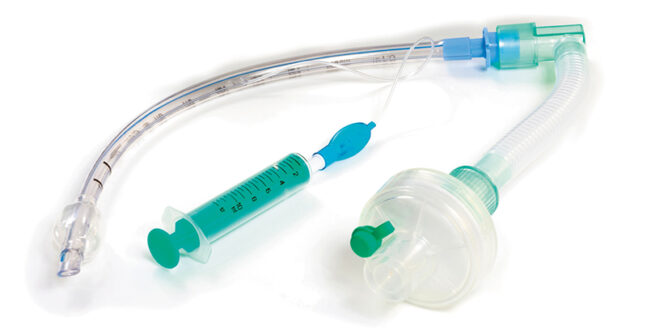
Tracheostomy equipment
Other equipment
Ventilation is only one part of respiratory health. Equally important is keeping the airway and lungs clear.
Muscle weakness can affect the ability to cough. This makes it hard to clear mucus out of the airway and can lead to respiratory infections or pneumonia.
Some studies suggest that airway clearance therapies have additional benefits, including preserving speech, easing swallowing, and improving overall lung health.
A mechanical insufflation-exsufflation machine, commonly called a cough assist device, mimics a natural cough by delivering a deep breath followed by rapid pressure changes to expel the air. This helps move mucus and fluid secretions out of the lungs and the back of the throat.
“Cough assist machines are lifesaving and life-prolonging in patients with neuromuscular diseases,” Dr. Lussier says.
Many respiratory specialists recommend using a cough assist device as part of a daily respiratory care routine — and more frequently during an illness.
In cases where mucus is especially thick or hard to clear, specialists might recommend high-frequency chest wall oscillation. This is often called vest therapy because it involves wearing an inflatable vest that delivers pulses to the chest to help loosen thick secretions and produce a cough.
For people with tracheostomies, a suction machine is needed to clear mucus and fluids from the tracheostomy tube. Portable and stationary models are available.
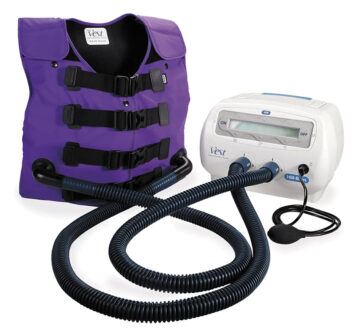
High-frequency chest wall oscillation device
Taking a proactive approach
Respiratory care has become one of the most powerful tools available for helping people with neuromuscular diseases stay healthy and continue performing daily activities.
While choosing breathing devices requires careful consideration and, sometimes, learning new care routines, today’s advanced ventilation and airway clearance options can help people sleep better, avoid complications, and maintain well-being.
By identifying changes early and building a strong care team, people living with neuromuscular diseases can take proactive steps to protect their respiratory health.
Rene Ryan is a writer for Quest Media.
Next Steps and Useful Resources
- Learn how community members made decisions about respiratory care and came to love their breathing devices in Respiratory Support Makes a Big Difference.
- Is it time to start breathing support? Learn the early signs of respiratory weakness, and how testing, equipment costs, and insurance can guide informed decisions.
- Stay up to date on Quest content! Subscribe to Quest Magazine and Newsletter.


Disclaimer: No content on this site should ever be used as a substitute for direct medical advice from your doctor or other qualified clinician.