
Is It Time to Start Breathing Support or Ventilation? Here’s What to Consider
By Amy Bernstein | Friday, August 21, 2026
For many people with neuromuscular diseases, respiratory muscle weakness develops gradually. Often, it begins during sleep long before breathing problems are noticeable during the day.
Bethany Lussier, MD
“When the diaphragm weakens, nighttime breathing is often affected first,” says Bethany Lussier, MD, Director of the Neuromuscular Pulmonology and Home Ventilation Clinic at Parkland Health in Dallas.
Sometimes this happens so gradually that a person may not notice. They might just think they’re fatigued, feeling down, or not sleeping well.
But it’s important to recognize when it’s more than that. Untreated respiratory weakness can lead to reduced lung expansion, lower blood oxygen levels, an increased risk of respiratory infections and, eventually, respiratory failure.
Fortunately, respiratory care and ventilation equipment have advanced in recent decades. Whether a person needs breathing support at night or full-time, there are options that support their lifestyle.
Here’s what people with neuromuscular diseases should know when considering starting respiratory support.
Recognizing the early signs
Some of the earliest warning signs of respiratory weakness include:
- Excessive daytime fatigue
- Morning headaches
- Frequent nighttime awakenings
- Restless or poor-quality sleep
- Waking up gasping for air
- Difficulty lying flat
- A weak cough
- Shortness of breath with everyday activities
- Taking frequent breaths while speaking

Nazmin Shah
People whose conditions affect the muscles involved in swallowing and airway protection may also notice choking or coughing during meals.
Shortness of breath — the best-known symptom of too little oxygen — may not occur if skeletal muscle weakness prevents moderate to vigorous activity. It’s important to watch for the other signs of possible respiratory decline.
According to Nazmin Shah, a respiratory therapist at a teaching institution in San Francisco, these symptoms shouldn’t be ignored. “Consistently experiencing poor-quality sleep, morning headaches, or excessive daytime fatigue is an indication that further respiratory testing may be needed,” she says.
Respiratory testing
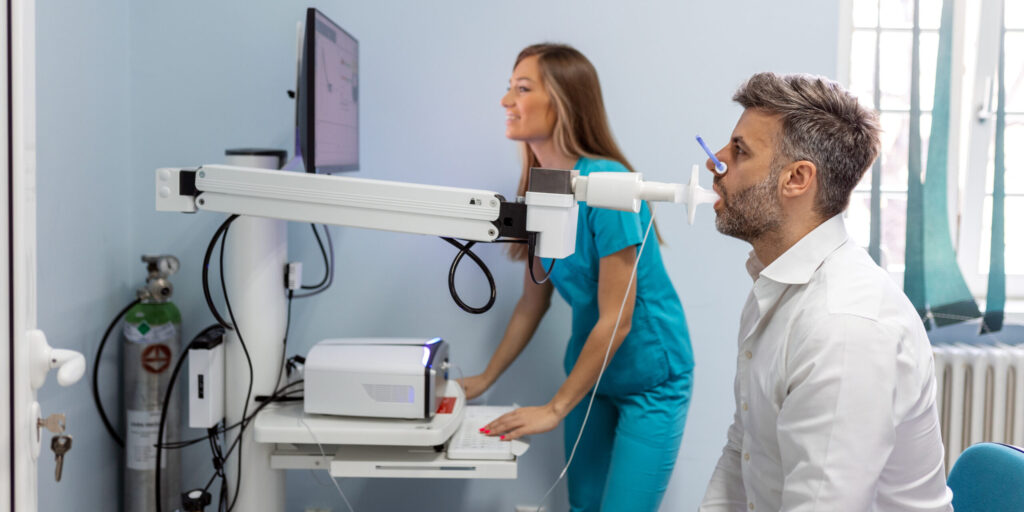
A respiratory therapist will conduct pulmonary function tests to evaluate your breathing. These tests are noninvasive (no needles).
Courtney Roberts
Generally, pulmonary function testing involves breathing into a mouthpiece connected to equipment that can measure how much air your lungs can hold, your respiratory muscle strength, how quickly and forcefully you can move air in and out, and how efficiently your lungs transfer oxygen into your bloodstream.
“You’ll wear a nose clip during the breathing test so none of the air comes out of the nose because we’re measuring the air coming out of the mouth,” explains Courtney Roberts, a respiratory therapist at Helen DeVos Children’s Hospital in Michigan.
Respiratory specialists recommend getting breathing tests as soon as you receive a neuromuscular disease diagnosis. These initial tests provide baseline measures that they will use to track how your pulmonary function changes over time.
In many neuromuscular clinics, including MDA Care Centers, respiratory monitoring begins long before breathing symptoms become severe. Regular pulmonary evaluations can help your care team identify changes early and intervene before serious complications develop.
Decision-making support
Dr. Lussier acknowledges that the prospect of needing breathing support can be emotional for people with neuromuscular diseases and their families.
“Families and patients who are new to navigating respiratory care are almost universally nervous,” she says. “Hopefully, understanding that it is most often not a final stage, but rather being proactive in managing a chronic condition, alleviates some of the anxiety.”
She has observed that once people adjust to using their equipment, it greatly improves how they feel and function in their daily lives.
Courtney describes decision-making as a collaborative process between providers, patients, and families. “The providers on the care team have a discussion with the family about where they are and what they want to do going forward,” she says. “They don’t pressure anybody; they just help them have all the information so that they can make that decision when the time comes.”
As a person begins using ventilation, they’ll probably visit their respiratory care team in the clinic about every six months for pulmonary tests and to adjust the machine settings or mask as needed.
Your care team
Determining when respiratory support is needed — and which equipment is most appropriate — is a team effort.
“It’s not just one provider — it’s a team,” Dr. Lussier says. “It extends from the clinical providers to the staff of the office, the home health care team, the DME providers, and families.”
Depending on your needs, your team may include:
Durable medical equipment (DME) providers
DME providers are a critical link between the care team that prescribes equipment and the patient who receives the equipment. DME providers are responsible for supplying, setting up, and maintaining respiratory support devices in the home environment. Many DME providers employ respiratory therapists who visit homes to educate patients and caregivers about using the equipment safely and effectively.
Home health professionals
Some home health services can provide specialized support for people with respiratory care needs. Their home health professionals may include respiratory therapists or nurses with training in ventilator management and tracheostomy care.
Neurologists
Neurologists are doctors who specialize in the nerves and muscles, and how they communicate. A neurologist may be your primary neuromuscular care specialist, and they can recommend other specialists to include on your care team. Many MDA Care Centers are directed by neurologists.
Physical medicine and rehabilitation physicians (physiatrists)
These doctors focus on the nonsurgical evaluation and treatment of conditions that affect mobility and function, including neuromuscular disorders. They often lead multidisciplinary care teams.
Pulmonologists
Pulmonologists are doctors who specialize in the lungs and breathing. These doctors usually work closely with respiratory therapists.
Respiratory therapists
Respiratory therapists conduct respiratory testing and monitoring. They play a particularly important role in monitoring ventilation equipment, troubleshooting problems, and adjusting therapies as a person’s needs change.
Sleep specialists
These doctors have specialized training in sleep medicine. They focus on diagnosing and treating sleep disorders.
Social workers
You will probably meet different types of social workers during your care journey. Medical social workers, found in hospitals and clinics, generally focus on the practical aspects of coping with illness and disability, such as insurance reimbursement and financial issues, equipment and housing needs, transportation, and home care. Clinical social workers generally serve as counselors, helping people cope with any mental, emotional, and social issues related to disability.
Speech-language pathologists
Also known as speech therapists, these healthcare professionals evaluate muscle weakness that affects speech and swallowing. They can perform tests and provide tools and techniques to help improve speaking and swallowing.
Navigating insurance and equipment costs
Respiratory support devices can cost from around $1,500 to more than $20,000, depending on the type of machine. Insurance coverage for the equipment can vary widely.
Most insurers require documentation showing medical necessity, which may include pulmonary function tests, overnight monitoring, sleep studies, or clinical evidence of respiratory muscle weakness.
“Sometimes insurance companies only approve one piece of equipment every five years,” Courtney says. “So, it can be hard, from an insurance standpoint, to get multiple devices covered at the same time.”
Experts encourage families to stay in close communication with their care team and DME provider throughout the process. They also recommend exploring financial assistance options. (The MDA Resource Center can provide information about MDA’s DME Grant Program and other financial assistance that may be available.)
“Most DME companies have payment plans, and they’ll work with the families and financial assistance programs if that route is needed,” Courtney says.
While navigating insurance can feel frustrating, respiratory specialists say early respiratory evaluations and timely testing are the best ways to prevent delays and ensure the right equipment is available when it’s needed.
Most importantly, experts want families to remember that respiratory support is about preparation.
Next Steps and Useful Resources
- Learn how community members made decisions about respiratory care and came to love their breathing devices in Respiratory Support Makes a Big Difference.
- Stay up to date on Quest content! Subscribe to Quest Magazine and Newsletter.


Disclaimer: No content on this site should ever be used as a substitute for direct medical advice from your doctor or other qualified clinician.