Your Voice, Your Vote
By Shaun Hill | Friday, September 4, 2026
Voting is more than a civic responsibility. It is a declaration of presence, power, and participation.
The decisions made by elected officials touch nearly every aspect of our lives—from access to healthcare and medical research to community-based services, caregiver support, transportation, education, and employment.
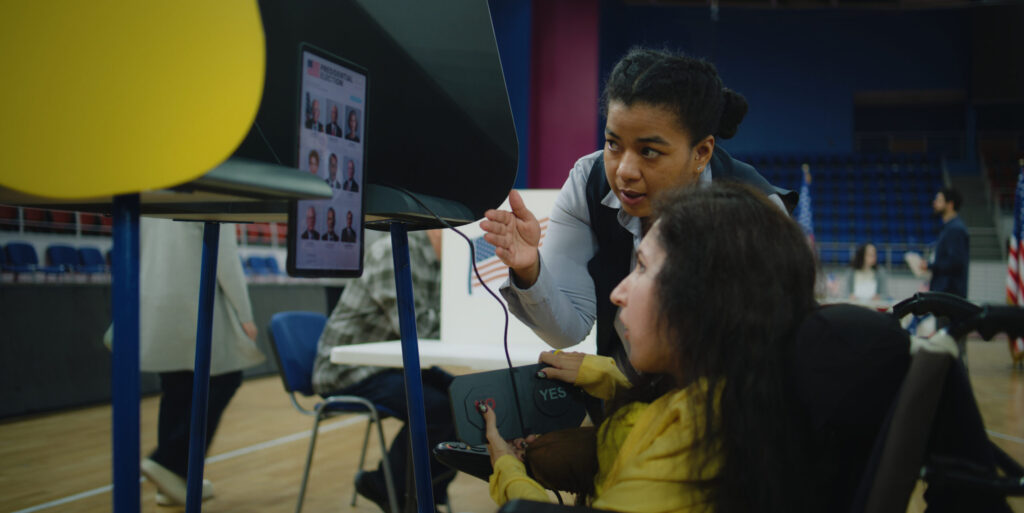
For people living with disabilities, however, participating in an election may require additional preparation. Questions about polling-place accessibility, transportation, voting equipment, personal assistance, and mail-in voting can become barriers if voters do not have reliable information early enough.
MDA created Access the Vote campaign to help people living with neuromuscular diseases understand their voting rights, prepare to participate, and make their voices heard in the 2026 elections.
Moving from awareness to influence
Access the Vote is MDA’s nonpartisan voter education and engagement initiative for people living with neuromuscular diseases, their families, caregivers, and supporters. The campaign does not tell anyone which candidates to support or what methodology to use in casting your vote. Instead, it helps members of our community understand their rights, explore their voting options, and make informed decisions based on the issues that matter most to them.
Access the Vote launched during the 2024 election cycle with a key focus on raising awareness about disability voting rights. Access the Vote 2026 builds on that foundation by encouraging our community to move from awareness to action—and from action to influence.
People with disabilities are not simply affected by public policy. We are constituents, advocates, community leaders, and voters. Our experiences should be reflected in the decisions made at every level of government. When our community participates, candidates and elected officials are reminded that disability issues intersect with voting rights.
Knowing your rights and making a plan
Federal law protects the right of voters with disabilities to participate in elections privately and independently. This includes access to voter registration, election information, polling locations, voting equipment, and assistance when needed. Yet legal protections do not always guarantee a barrier-free experience. That is why preparation matters.
There is no single voting method that works best for everyone. Some voters may prefer to vote on Election Day, while others may find early or mail-in voting more accessible. The best choice is the one that gives each person the greatest opportunity to cast a ballot successfully and confidently.
A voting plan can be simple. Decide how and when you want to vote, identify any accessibility support you may need, and know whom to contact if your original plan does not work. Because election rules, deadlines, and polling locations can change, voters should confirm current information with their state or local election office well before Election Day. Knowing your rights is empowering. Having a plan helps turn that knowledge into action.
What to expect from Access the Vote
Throughout the 2026 election season, MDA will share nonpartisan information and opportunities designed to help members of our community become more informed, prepared, and engaged voters.
The campaign will elevate the experiences of MDA advocates, provide practical voting and accessibility resources, explore the continuing importance of disability voting rights, and offer tools to help voters make their plans.
As Election Day approaches, Access the Vote will also share reminders about important deadlines and ways members of the neuromuscular disease community can encourage participation among their families, friends, and neighbors. The campaign is grounded in a simple belief: everyone should have the opportunity to participate fully in our democracy.
Next Steps and Useful Resources
- Check out Access the Vote here.
- Sign up for MDA’s Action Network to stay up to date on the latest news and for opportunities to take action.
- Get involved with MDA advocacy efforts here.
- Watch the Advocacy Institute webinar about the 2026 Advocacy Agenda here.
- MDA’s Resource Center provides support, guidance, and resources for patients and families. Contact the MDA Resource Center at 1-833-ASK-MDA1 or ResourceCenter@mdausa.org
- Stay up-to-date on Quest content! Subscribe to Quest Magazine and Newsletter.


Disclaimer: No content on this site should ever be used as a substitute for direct medical advice from your doctor or other qualified clinician.