MDA Ambassador Guest Blog: Technology as a Tool for Independence
By Kareem Azzazi | Thursday, September 3, 2026
5 Second Summary
MDA Ambassadors play an essential role in furthering MDA’s mission while representing and empowering the neuromuscular disease community. Quest Ambassador Guest Blog series provides a platform to share their personal stories, perspectives, and experience.
Kareem Azzazi is a 38-year-old content creator from Minnesota living with Duchenne Muscular Dystrophy. He uses eye-tracking technology to write, stream, play games, and create content online as TheSaturverse.
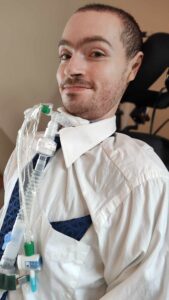
Kareem Azzazi
Technology has always been more than a convenience for me. For some people, technology makes life faster or easier. For me, it often determines whether I can participate at all.
I live with Duchenne muscular dystrophy (DMD), and as my body has changed over time, the way I interact with the world has had to change too. I use a power wheelchair, I rely on caregivers, and a lot of my day depends on planning, routines, and support from other people. There are many things I cannot physically do on my own, but technology has helped me hold onto something very important: my ability to make choices, communicate, create, and stay involved.
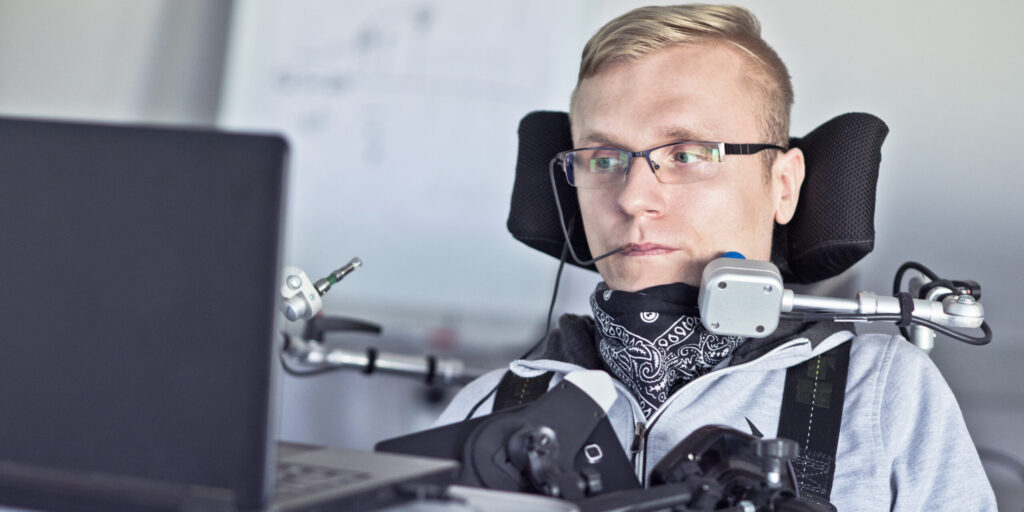
The most important piece of technology in my daily life is my eye tracker. I use a Tobii eye tracker to control my computer with my eyes. Instead of using a mouse or keyboard, I look where I want the cursor to go and use my eyes to click, type, browse, and work.
That might sound futuristic, but to me it is part of my everyday life. It is how I write messages. It is how I research ideas. It is how I create content. It is how I stay connected with friends, communities, and opportunities. My eye tracker is not just a tool I use; it is a bridge between what I want to do and what my body allows me to do.
It is not always easy. Eye tracking takes patience. The setup must be right. The lighting, monitor placement, calibration, and even how tired I am can affect how well it works. Some days it feels natural. Other days, the cursor does not want to cooperate and something simple can take longer than it should.
But even when it is frustrating, I try not to take it for granted. Without it, I would lose access to a huge part of my life. With it, I can still show up.
A big part of who I am is tied to creativity. I create content online under the name TheSaturverse. I stream, make videos, play games, and work on ideas that combine gaming, storytelling, music, and community. I play modded Minecraft using eye tracking, which is not exactly the easiest way to play. Modded Minecraft is a unique way to play Minecraft with modifications that will add concepts like magic and technology (and plenty of other unique things, machines, and items). Minecraft was not built with my setup in mind, but I enjoy figuring out how to make it work anyway.
That is part of my relationship with technology. I am always adapting, adjusting, and finding a different way in.
Content creation gives me a space where I can be more than my diagnosis. I am not just someone receiving care. I am a creator. I am a gamer. I am a host. I am someone with ideas, opinions, jokes, projects, and goals. Technology gives me a way to put those parts of myself into the world.
It also helps me with independence in smaller, everyday ways. Independence does not always mean doing everything without help. Sometimes independence means being able to explain what I need clearly. Sometimes it means being able to send a message, control a device, join a conversation, or decide without someone else having to guess for me.
That kind of independence matters. It gives me more control over my day. It helps me feel less separated from the world around me. It reminds me that even when I need help physically, I still have a voice.
One thing I wish more people understood about adaptive technology is that it is deeply personal. There is no perfect device that works for everyone. The best technology is the technology that fits the person using it. It must fit their body, their energy, their environment, and their actual goals.
For someone just starting to explore adaptive technology, my advice is to begin with the life you want to build, not just the device. Ask yourself what you want more access to. Do you want to write? Go to school? Work? Play games? Make videos? Talk to friends? Be more involved in your care? Once you know what matters to you, it becomes easier to find the tools that support it.
Technology does not erase the hard parts of disability. It does not make every day easy, and it does not remove every barrier. There are still moments when access feels complicated. There are still days when I wish things worked better, faster, or with less effort.
But technology gives me a way in.
It gives me a way to communicate, create, connect, and participate. It helps me keep building a life that feels like mine. Not a perfect life. Not an inspirational story made for other people. Just my life, with the tools that help me keep going.
For me, technology is not just about access to a computer. It is access to identity. It is access to creativity. It is access to community. It is one of the biggest reasons I can continue showing the world who I am.
Next Steps and Useful Resources
- For more information about the signs and symptoms of Duchenne Muscular Dystrophy (DMD), as well an overview of diagnosis and treatment concerns, an in-depth review can be found here.
- For information about technology created by an ambassador, read MDA Ambassador Guest Blog: Entrepreneurship, Advocacy, and Innovation: Building a More Accessible Future from the Inside Out
- Learn more about Duchenne Muscular Dystrophy in DMD FAQs. Find more resources on MDA’s Education Materials webpage.
- MDA’s Resource Center provides support, guidance, and resources for patients and families, including information about DMD, open clinical trials, and other services. Contact the MDA Resource Center at 1-833-ASK-MDA1 or ResourceCenter@mdausa.org.
- Stay up to date on Quest content! Subscribe to Quest Magazine and Newsletter.


Disclaimer: No content on this site should ever be used as a substitute for direct medical advice from your doctor or other qualified clinician.