Simply Stated: Updates in Paramyotonia Congenita
By Sujatha Gurunathan | Monday, September 28, 2026
5 Second Summary
Simply Stated is a Quest series designed to simplify your neuromuscular disease journey with easy-to-understand facts about tests, treatments, scientific terms, and the latest research.
Paramyotonia congenita (also known as Von Eulenberg disease) is a rare inherited disorder that causes episodes of muscle weakness, stiffness, or paralysis (inability to move). These episodes typically affect the face, neck and upper extremities, and can last from minutes up to hours. They are often triggered or exacerbated by cold temperatures or repeated muscle activity/exercise. While paramyotonia congenita is considered ultra-rare, with an estimated prevalence of less than 1 in 100,000 people, it can significantly affect the daily comfort, function, and quality of life of people living with this disorder.
Symptoms of paramyotonia congenita
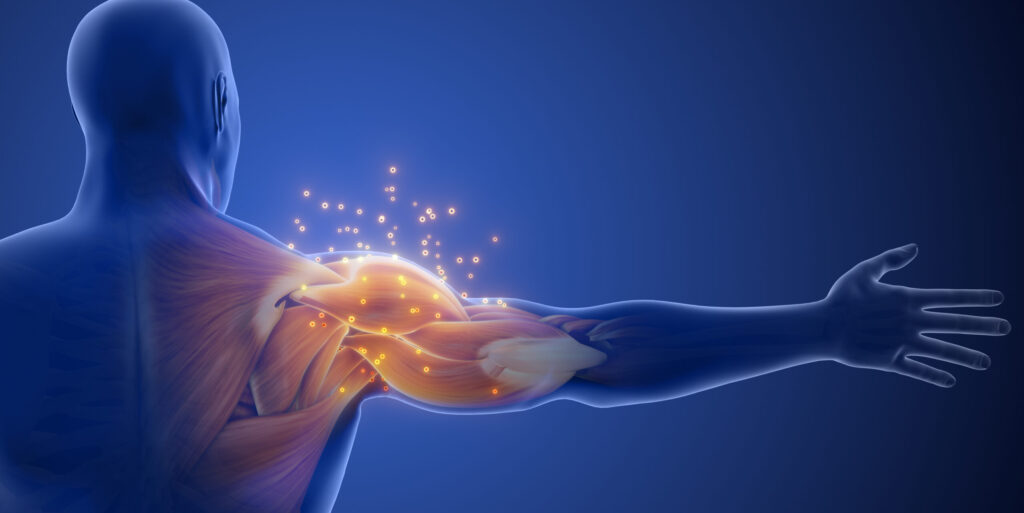
The symptoms of paramyotonia congenita typically begin in infancy or early childhood. People with this disorder experience episodes of muscle stiffness in which muscles have difficulty relaxing after contraction (known as myotonia). The face, eyelids, neck, arms, and hands are most commonly affected, although the legs and muscles involved in breathing may also be affected.
A key feature of paramyotonia congenita is paradoxical myotonia, in which muscle stiffness becomes worse, rather than better, with repeated movements or sustained activity. Exposure to cold can also trigger or worsen stiffness. With prolonged cold exposure or strenuous activity, stiffness may progress to episodes of muscle weakness or, in some cases, paralysis. These episodes typically last minutes to hours, although their duration and severity can vary among individuals. Long-term, paramyotonia congenita is considered nonprogressive, meaning that it does not typically cause a gradual worsening of muscle weakness or permanent loss of muscle function over time.
While comprehensive, patient-facing resources on paramyotonia congenita are limited, information on the condition, including clinical features, genetics, diagnosis, and management, is available through ScienceDirect Topics, which provides access to relevant chapters and reference materials on paramyotonia congenita.
Cause of paramyotonia congenita
In most cases, paramyotonia congenita is caused by variants in the SCN4A gene, which provides instructions for making a voltage-gated sodium channel found in skeletal muscle cells. Sodium and other ions (charged particles) play an essential role in generating and transmitting the electrical signals that allow muscles to contract and relax. Sodium channels in the membranes of skeletal muscle cells help regulate the movement of sodium ions into the cells.
Variants in the SCN4A gene can alter the structure and function of these sodium channels, causing abnormal sodium flow into skeletal muscle cells. This disrupts normal electrical signaling and the ability of muscles to contract and relax properly, resulting in the muscle stiffness and episodes of weakness characteristic of paramyotonia congenita.
Paramyotonia congenita is inherited in an autosomal dominant pattern, meaning that one altered copy of the SCN4A gene can cause the condition. In many cases, a person inherits the variant from an affected parent, although the condition can sometimes result from a spontaneous (de novo) change in the gene.
Diagnosis of paramyotonia congenita
Diagnosis of paramyotonia congenita is based on characteristic symptoms, medical and family history, and findings from electromyography (EMG) and other testing. Cold- and exercise-induced muscle stiffness, often followed by temporary weakness, are key clinical features. Genetic testing can confirm the diagnosis by identifying the disease-causing variant in the SCN4A gene.
Current management of paramyotonia congenita
Treatment for paramyotonia congenita focuses on reducing symptoms and avoiding known triggers. Staying warm and avoiding sudden exposure to cold, prolonged strenuous activity, and other triggers may help prevent episodes. Guidance from a neurologist or other specialists may be helpful.
There is no medication specifically approved for paramyotonia congenita. Medications that help control abnormal muscle activity, such as mexiletine and other sodium-channel blockers, are sometimes recommended by clinicians to address symptoms. Evidence supporting these treatments remains limited, however, highlighting the need for more effective therapies.
There are currently no clinical trials specifically for paramyotonia congenita that are recruiting, but as researchers continue to learn more about the condition and its underlying mechanisms, there is hope that new and more effective treatments will become available in the future.
MDA’s work to further cutting-edge paramyotonia congenita research
MDA is committed to advancing research and therapeutic development for paramyotonia congenita, and has funded close to $1.5 million in research grants since its inception. These and other studies may help researchers to better understand paramyotonia congenita, inform development of new treatment approaches, and lay the groundwork for future clinical trials aimed at improving care and quality of life for people living with this disorder.
MDA’s Resource Center provides support, guidance, and resources for patients and families, including information about paramyotonia congenita, open clinical trials, and other services. Contact the MDA Resource Center at 1-833-ASK-MDA1 or ResourceCenter@mdausa.org.
Next Steps and Useful Resources
- While comprehensive, patient-facing resources on paramyotonia congenita are limited, information on the condition, including clinical features, genetics, diagnosis, and management, is available through ScienceDirect Topics, which provides access to relevant chapters and reference materials on paramyotonia congenita.
- Learn more about paramyotonia congenita here.
- MDA’s Resource Center provides support, guidance, and resources for patients and families, open clinical trials, and other services. Contact the MDA Resource Center at 1-833-ASK-MDA1 or ResourceCenter@mdausa.org
- For more information about the signs and symptoms of Neuromuscular Diseases, as well an explanation of the causes of disease, an in-depth overview can be found here.
- Stay up-to-date on Quest content! Subscribe to Quest Magazine and Newsletter.


Disclaimer: No content on this site should ever be used as a substitute for direct medical advice from your doctor or other qualified clinician.