Young Leader Living with Muscular Dystrophy Champions Aiming High and Setting Goals
By Rebecca Hume | Monday, February 23, 2026
5 Second Summary
Quest for Success explores the different paths that individuals with neuromuscular disease have taken to reach their potential and pursue dreams. This series spotlights individuals from our community and shares their journey to independence and accomplishment.
Harvard graduate Caroline LeMay’s education helped pave the way on her quest for success. Now, she is dedicating her career to increasing access to education for others.

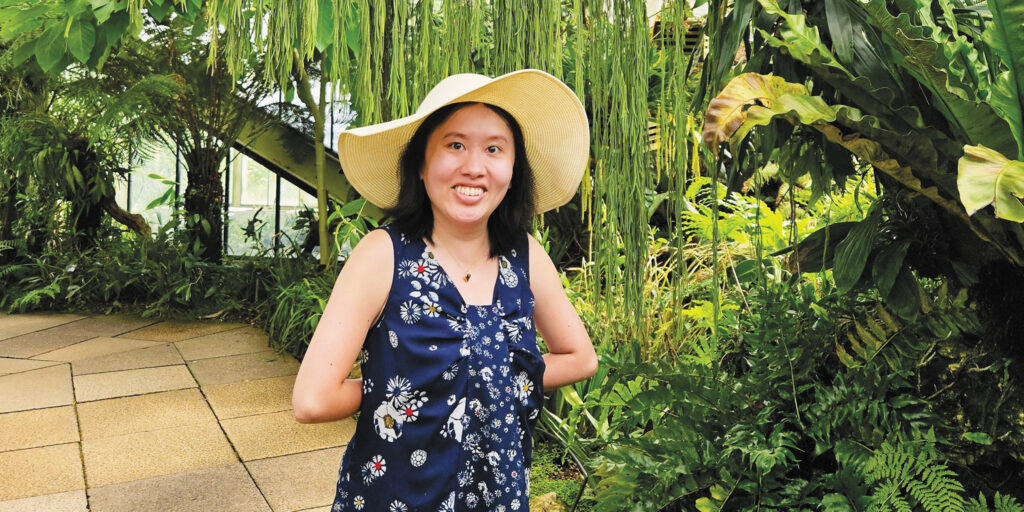
Caroline LeMay, her husband, and their dogs
The 27-year-old already has an impressive résumé, with positions as a financial analyst for J.P. Morgan Markets, a special advisor to a municipal government CEO, and roles across several nonprofits. She is bringing her intellect and life experience to her current role as Chief of Staff for the international nonprofit School of Leadership, Afghanistan (SOLA).
Caroline, who lives with collagen VI congenital muscular dystrophy (CMD), works closely with SOLA’s board and oversees cross-departmental strategic initiatives. Her role helps ensure that the Rwanda-based boarding school provides a safe and empowering environment for Afghan girls to continue their education and prepare to pursue college and careers worldwide. In Afghanistan, girls are not permitted to seek higher education and have few opportunities to pursue their dreams. As a young female leader herself, Caroline is passionate about creating opportunities for others who can help change the world. And as someone living with a disability, she knows the importance of overcoming obstacles to education and chasing her dreams.
An early desire to excel
“When I was young, my parents were really important in my journey of establishing confidence in my own abilities,” Caroline says. She recalls her father, a biochemistry professor with a PhD, urging her to rely on the power of her mind when planning her future. He and her mother, who holds a master’s degree, maintained that college was not only attainable but expected.
“The emphasis on education has always been important in my family,” Caroline says. “My parents raised me to recognize that my diagnosis is not a reason not to pursue my goals. Having those champions and, now that I am older, being that kind of champion for other people to set goals and aim high, is critical.”
In school and extracurricular activities, Caroline strengthened her ability to advocate for herself as she sharpened her mind. In high school, she received accommodations to leave class early to travel to the next class and type her exams instead of handwriting them. Navigating stairs and walking long distances were challenging with muscle fatigue and chronic pain issues. She used a walker in high school and college then began using a mobility scooter in business school.
College and workforce accommodations
When Caroline was accepted to Harvard as an undergraduate, she met with the disability services office and arranged accessible housing and classroom accommodations, and she registered for the school’s accessible van service. She built a network of friends and mentors who prioritized her inclusion, hosting gatherings at accessible locations and pushing her to think bigger about her career.
During her sophomore year, she began working at a Harvard-affiliated nonprofit in a building without an elevator. Her colleagues moved the office from the third floor to the first floor for her.
“That was one of my first times navigating conversations about workforce accommodations,” she says. “I was very up front about what I needed.”
As Caroline began her career, she focused on building networks and connecting with programs that were committed to inclusion. She attended a fellowship through Live Connect, a program that partners high-achieving individuals with disabilities with companies committed to inclusion. “That program was great because I met a lot of peers with a variety of disabilities. It was powerful to meet peers at the same stage of career and ambition,” she says.
Caroline interned and eventually worked for J.P. Morgan before attending Harvard Business School and completing a fellowship in government with the City of Cambridge. She credits networking and connecting with others for opening the doors to these opportunities and shares that every company she worked for has been proactive in meeting her accessibility needs.
Bolstering the mind and building networks
Recognizing the importance of the mentors she has had on her journey, Caroline counsels parents of children with neuromuscular diseases to instill strong educational values and motivate their children to develop their passions and use accommodations.
“My advice is always to focus on the things you can do. In this day and age, we live in a society and economy that prioritizes the mind over body in many professions,” Caroline points out. “My husband and I both have successful jobs that we can do from home with a laptop. In terms of technology, the time to be working with a disability is now because it doesn’t have to impact your job prospects.”
For Caroline, the key to success has been focusing on the power she holds in the “mind economy,” surrounding herself with valuable mentors, friends, and family who support her goals, and seeking companies that welcome people with disabilities.
“Building that community has been the biggest thing,” she says. “Having a supportive network pushes you to do things you might not initially feel comfortable with so that you can continue to expand your comfort zone.”
Rebecca Hume is a Senior Specialist and Writer for Quest Media.
Next Steps and Useful Resources
- Listen to a Quest Podcast conversation with Russell Shaffer, a leader at Disability:IN, about disability inclusion in the workplace.
- Stay up to date on Quest content! Subscribe to Quest Magazine and Newsletter.


Disclaimer: No content on this site should ever be used as a substitute for direct medical advice from your doctor or other qualified clinician.