The Why Behind MDA’s Campaign to Support Family Caregivers
By Shannon Wood and Mark Fisher | Thursday, April 30, 2026
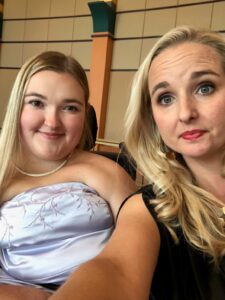
Carlee Weber and Nicole Lucas
This month, the Muscular Dystrophy Association (MDA) is launching an important advocacy campaign urging Congress to advance policies that improve the lives of family caregivers in the neuromuscular community. At a time when policymakers are actively weighing changes to home and community-based services and the cost of caregiving continues to rise, it has never been more urgent for Congress to address the challenges experienced by family caregivers.
MDA is pursuing a variety of creative tactics in this campaign, including educational materials like short videos and graphics to raise awareness about the needs of family caregivers in the neuromuscular community. These items demonstrate the vital partnership between individuals living with neuromuscular conditions and the family caregivers who help support their independence and community participation.
One of these videos highlights the family caregiving journey of Carlee Weber and Nicole Lucas, members of the neuromuscular community in Pennsylvania. We asked Carlee, who is 24 years old and lives with SMA, and her mother, Nicole, to share more about what inspired them to join MDA in this campaign.
How would you describe your journey with family caregiving?
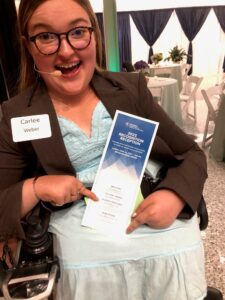
Carlee Weber
Carlee: My parents have been my primary caregivers until recently. I never had to worry about whether someone was going to show up for a shift because my parents were always there for me. In the summer of 2024, I moved 3.5 hours from home for law school. Because of the red tape involved with moving between counties, I had no caregiver coverage for my first two weeks of law school. My mom’s involvement as my caregiver during this time was instrumental to my success. She gave me the steady support I needed to reach new heights. Now, I live with my boyfriend, and he is my primary caregiver. Loved ones will give me the care I deserve because caregiving is more than a job to them. It’s about partnership and accomplishing things we never thought were possible.
Nicole: One of the most difficult yet rewarding challenges as a mother. I have played many roles as Carlee’s caregiver, many times as her advocate to receive health care and accommodations that she requires. Other times, I have been a chauffeur, partner, and side kick.
Why did you want to participate in this campaign and video project?
Carlee: I wanted to participate in this campaign to show the imperative aspects of having family caregivers. Family caregivers were a vital part of my story, especially living in a rural area for most of my life. It can feel impossible to hire enough people to maintain the level of care I need. My family stepped in to fill in any gaps, which were more frequent than we anticipated. When I went to college, my home health agency said my case was too complex and they wouldn’t take someone on who required 24/7 care. I know that family caregiving isn’t the answer for everyone, but it was for me. For a long time, I felt embarrassed to bring my mom along everywhere. I want people in my shoes to remember that it’s nothing to be ashamed of. If your independence is facilitated by a family member, it’s still important to celebrate your independence and thank the people who have helped you along the way. (But don’t feel like you need to thank people for every single task they help with).
Nicole: I feel that we have a somewhat unique perspective as Carlee has been so successful, but it all comes with sacrifice, missed days of work, expensive adaptations, and scary moments with her health.
The video is just a snapshot of your partnership. Nicole, could you share more about your experience as Carlee’s caregiver? What have been the biggest highlights and the biggest challenges?
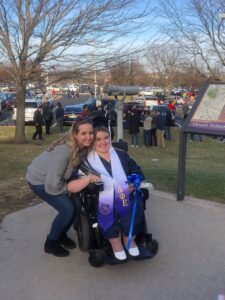
Carlee and her mother at graduation
Nicole: There has been so many of both, it is hard to narrow it down. Sometimes out of the greatest challenges have come the greatest highlights. Early in Carlee’s life I have been so proud watching her overcome obstacles that many people would find insurmountable just to have a place in this world. She did it all with such charisma and grace. Attending world finals for Odyssey of the Mind with her able-bodied peers her freshman year of high school was incredible. Not everyone had to take their mom, but I got to tag along for many of her adventures as she became an adult with her own goals and visions for her life. The biggest challenge has been always being available to care for her so that she can accomplish whatever she put her mind to. I have spent countless days by her side in the hospital, missing work and the rest of the family. The older she got and the more she wanted to do, the more it was essential that I always be available as her caregiver. We have never been able to rely on outside agencies to help. I was determined to never let the lack of caregivers be the reason she doesn’t have success. She received her undergraduate degree from Penn State. I spent many days escorting her around campus, attending sorority events, and caring for her in the dorm. When she decided to attend law school I came to Pittsburgh to get her “settled in.” It became apparent after our first week here that she needed more caregiving hours than we could receive outside help with. The law school is 4 hours from our home, so I made the decision to leave my position as a dental hygienist of 23 years and stayed with her as much as she needed to get through school.
Carlee, how would you describe the partnership between you and your mother? How has your caregiving journey evolved as you’ve grown older?
Carlee: For a long time, my mom acted as my secretary. She would handle the never-ending stream of phone calls with insurance and scheduling most of my appointments. She always made sure I knew how to take care of everything but helped me get everything done. When I moved into my first apartment, it felt like both my apartment and my mom’s apartment. For my first year of law school, I knew I’d be facing the most physically and mentally taxing time of my life. My mom helped me by cooking for me and taking care of household tasks. I took on more of the administrative tasks and worked on hiring a new team. My mom was doing things she had done for me at home, but I had more control over how I wanted everything to be done in my own space.
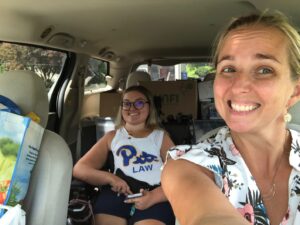
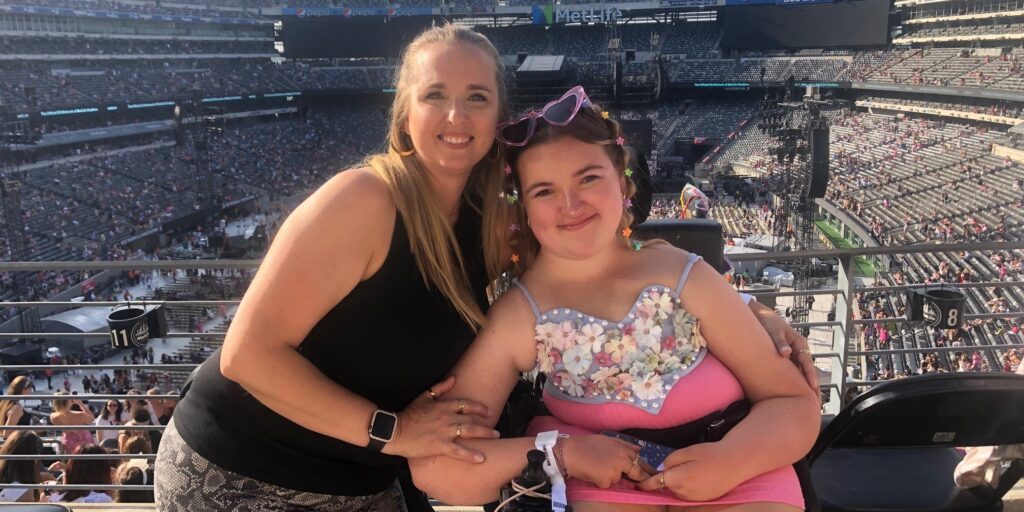
Carlee and Nicole traveling
My mom drove 3.5 hours to me for the week then 3.5 hours home for the weekend. When she was gone, my boyfriend would drive 2 hours to me for the weekend, then 2 hours back to his apartment to work through the week. I know my mom was facing a lot during this time, so it was important that she had time to be herself, away from me. She decided to quit her job to ensure that I could stay in law school and she adjusted to a new routine. Change is difficult for anyone, so I wanted to support my mom enough to prevent burnout through this all.
Sometimes it’s difficult to remember that her role as my mom and her role as my caregiver are two distinct roles. Learning how to balance those roles has been challenging, but love is the foundation. My mom has always made it a priority to set me up for a life where I didn’t need her for caregiving—not because she doesn’t want to be my caregiver—because she wants me to be my own person, separate from her. Now, we’re at a point where she can be more my mom than my caregiver, and it’s another new season of life to navigate.
What are you hoping that people take away from this campaign?
Carlee: I hope people realize that caregiving is a necessary career. Family caregivers often fill in gaps of caregiving. Sometimes this means quitting a job to ensure adequate care for a loved one. In these situations, we need to provide family caregivers with other benefits they would be offered through any other career. Just because family caregivers weren’t sought after and hired for this particular role doesn’t mean they should be uncompensated or undercompensated for their time. I also hope that people understand the sacrifices family caregivers make—not because of the person with a disability—because of a lack of resources in the healthcare and employment sphere. We are not a burden, but the system burdens family caregivers by expecting them to work full time and provide full-time, uncompensated or undercompensated caregiving services.
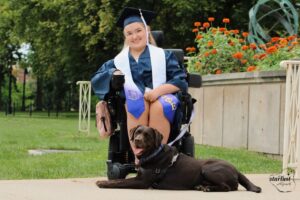
Carlee Weber at her graduation
Nicole: Family caregivers are an essential part of the disabled community, allowing our family members to achieve the life they deserve. Support for the caregivers is therefore essential to the success of the community.
Family caregivers are an essential part of the neuromuscular community and beyond. Carlee and Nicole are perfect examples not only of how family caregivers help influence the lives and outcomes of people living with disabilities, but how they then go on to influence and contribute to the world around them. When we support family caregivers, the whole world wins!
Next Steps and Useful Resources
- Join our advocacy efforts to support caregivers here.
- Stay up-to-date on Quest content! Subscribe to Quest Magazine and Newsletter.


Disclaimer: No content on this site should ever be used as a substitute for direct medical advice from your doctor or other qualified clinician.