Collaboration Between Novartis and Becoming rentABLE Is Opening More Doors to Accessible Travel
By Rene Ryan | Monday, November 16, 2026
Accessible travel should start with possibility — not uncertainty about whether your vacation rental’s doorway is wide enough to enter, the shower is accessible to you, or a promised accommodation will be there when you arrive.
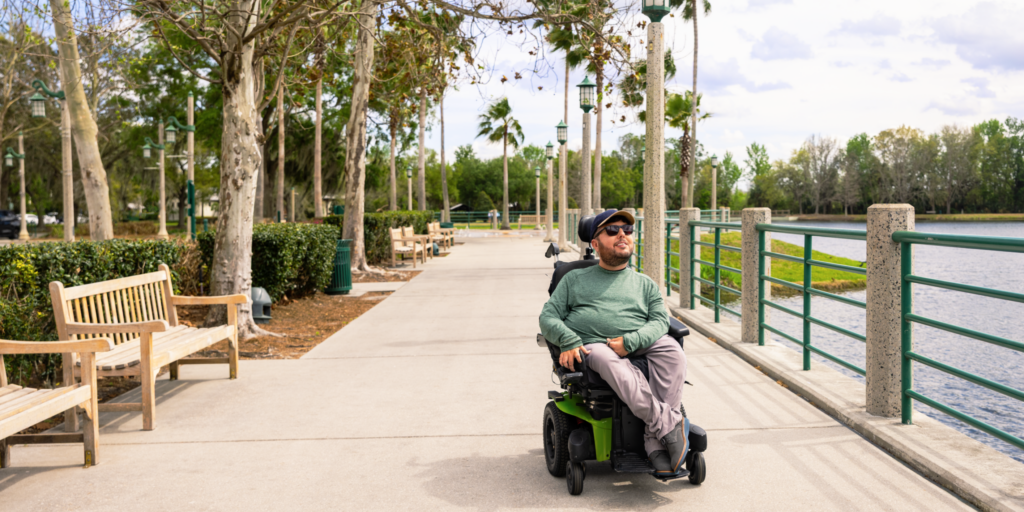
For accessible travel expert Cory Lee, who lives with spinal muscular atrophy (SMA) and uses a power wheelchair, this popular type of vacation lodging once felt beyond reach. “I always assumed that vacation rentals would just not be possible for me,” he says.
Drug developer Novartis, which has two approved gene therapies for SMA, also noticed this issue and, through its SMAshing My Limits And Going Places campaign, aims to broaden possibilities for people living with SMA and others in the disability community. Novartis joined forces with the accessible short-term rental platform Becoming rentABLE to add 100 verified accessible rentals across the United States. Twenty-five are experience-focused properties, such as cabins, yurts (round, tent-like structures), and beach bungalows — places that invite travelers to imagine new possibilities.
Cory calls Becoming rentABLE “an absolute game changer.”
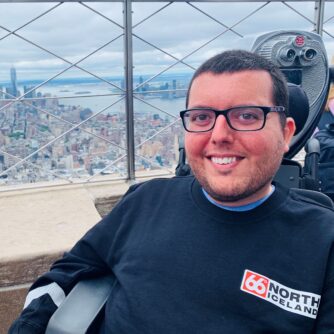
Cory Lee
Expanding vacation options
An estimated 9,000 to 9,500 Americans live with SMA, and 64% are adults, according to Cure SMA’s State of SMA 2025 Report.
The collaboration between Novartis and Becoming rentABLE grew from conversations with the SMA community about barriers that make travel feel out of reach. Tracey Dawson, PhD, Senior Vice President and Therapeutic Area Head for Neuroscience at Novartis, says the company wanted to address more than medical care.
“It’s not just about the drug; it’s about the whole lived experience that a patient has,” Dr. Dawson says. “And not just the patient — the family. How can we make that experience better for them, too?”
Travel is an experience many SMA community members are interested in — they just need to know that it is within reach.
That possibility is personal for Becoming rentABLE founder and CEO Lorraine Woodward. She and her two adult sons live with muscular dystrophy. After years of difficult travel, she built an accessible beach house where her family could relax together, and she began renting it out.
Nearly 600 families have stayed there. Their stories convinced Lorraine that she could help change a widespread problem.
“That’s what this campaign is doing,” she says. “It’s providing that opportunity of seeing things differently — seeing experiences.” Or, as she puts it more simply, “It helps families say, ‘We can,’ instead of, ‘We can’t.’”
Look beyond the word accessible
Becoming rentABLE does not treat accessibility as a single label. The platform helps people search for short-term rentals with accessibility features that work for them. Its 63 filters include doorway width, bed height, shower type, parking surface, dining-table clearance, and pool lifts. Features are verified through photographs and measurements.
“Vacation rentals are not one size fits all,” Lorraine says. “It’s about meeting your needs for you to determine what is accessible.”
A 32-inch doorway may work for one traveler and not another. A walk-in shower may have a threshold that blocks someone in a wheelchair. Even the microwave height can affect someone’s experience in a vacation property.
Cory advises travelers to begin by thinking about the accommodations that make everyday life work at home. Measure your essential equipment and separate true requirements from features you can adapt.
Once you know your requirements and preferences, you can look for those features in a vacation home. They might include:
- A step-free route from parking or drop-off through the entrance
- Doorway widths and maneuvering space for your mobility device
- Bed height, under-bed clearance for lifts, and space around the bed for transfers
- A roll-in shower with no threshold and a shower chair if needed
- Placement of grab bars near the toilet, shower, or tub
- Accessible kitchen controls, countertops, and dining surfaces
- Room for a companion or caregiver to assist safely
Ask questions without apology
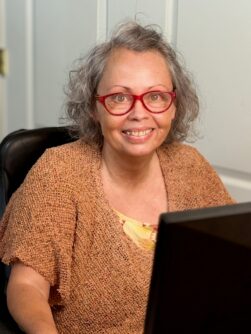
Lorraine Woodward, founder and CEO of Becoming rentABLE
Lorraine advises that if a listing does not answer a question, ask the host directly. “There’s no limit on questions,” she says. First, identify what you or your family member needs, then request the exact information that will help you decide.
Cory recommends asking a host or manager for current photos or video of the actual home or rental unit you’re considering, not a representative unit. “It really gives me a lot more confidence as the traveler when I see photos and videos of the actual space that I’m getting,” he says.
Think through the entire experience you want: Can you easily enter the home or unit? Roll smoothly on the flooring? Maneuver in the bedroom and bathroom? Join everyone at the dining table or in the pool? Save the answers and photos you receive and reconfirm any essentials before you arrive.
Accessibility laws may apply depending on how lodging is owned and operated. The Americans with Disabilities Act (ADA) covers hotels, motels, inns, and other types of lodging open to the public, but it does not cover all private short-term rentals. State and local laws may add some protections. Travelers can consult US Department of Justice lodging guidance or call the ADA Information Line at 800-514-0301.
If a property is not as described, photograph the issue, contact the manager, host, or owner immediately, and clearly state what you need — such as a safe modification, a relocation, or a refund.
More than a place to stay
Verified information creates room for joy. At an Orlando vacation rental, Cory found an adjustable bed, a Hoyer lift, a roll-in shower, and a private pool lift. He could swim with his niece — an experience worth booking again.
“I really hope that eventually every vacation rental that is accessible can easily be found,” Cory says.
Dr. Dawson shares that ambition. “Accessibility, irrespective of property, should just be the norm,” she says. Every verified property gives another traveler a reason to dream bigger — and a way to turn that dream into a reservation.
Through the SMAshing My Limits And Going Places campaign, Novartis and Becoming rentABLE are helping people with disabilities imagine new possibilities — and confidently plan what comes next.
Next Steps and Useful Resources


Disclaimer: No content on this site should ever be used as a substitute for direct medical advice from your doctor or other qualified clinician.