
What Is a VUS? Variants of Unknown Significance in Genetic Testing and Why They Matter
By Amy Bernstein | Monday, February 23, 2026

Chris Weihl, MD, PhD
New genetic testing technologies are improving the diagnostic journey for many people with neuromuscular diseases. Now, doctors can test 100 or more genes simultaneously when they suspect a patient may have a muscular dystrophy or other inherited neuromuscular disorder. According to Chris Weihl, MD, PhD, a neurologist and Director of the MDA Care Center at Washington University in St. Louis, this increases both the likelihood of making a diagnosis and the rapidity of the diagnosis.
However, as more genes are tested regularly, more variants of unknown significance (VUSs) are found. This can lead to confusion for clinicians and people searching for a diagnosis.
“I don’t think we appreciated the number of variants of unknown significance that we would identify in patients,” Dr. Weihl says of the advances in genetic testing. “It can be just as frustrating to a patient because they’re left in this area of limbo.”
What are variants?
Your DNA contains genetic instructions for the development and function of every part of your body. Genetic testing, also called genetic sequencing, analyzes your DNA to look for changes in genes, called variants or mutations. Some of these changes cause diseases (pathogenic), while many are harmless (benign).
Humans have about 20,000 genes. Scientists have identified hundreds of pathogenic gene variants, but there are still a lot they don’t know.
A VUS is a change in a gene, but scientists are not sure yet whether it causes a disease or is harmless.
A simple way to think about a VUS
Scientists sometimes explain a VUS in terms of a recipe. Imagine instructions for baking a cake:
- If the recipe says “1 cup salt” instead of “1 cup sugar,” we know it’s a problem. Think of this as a pathogenic variant.
- If the recipe calls for whole milk and you use skim milk instead, the cake will still taste good, and we know this change doesn’t matter. Think of this as a benign variant.
- If there’s an instruction in the recipe that you’ve never seen before, we don’t know whether it alters the cake. This is a VUS.
Why do VUS results happen?
There are several reasons:
- Genetics is still a growing science.
- Some genetic changes are very rare.
- There may not be enough people studied yet with the same variant.
- We don’t know yet how this variant affects the body.
Over time, as more people get genetic tests, scientists may be able to reclassify a VUS as either benign or pathogenic:
- If many people with a certain VUS do not have a disease, they’ll determine it is benign.
- If a significant number of people with a VUS have the same disease, they’ll classify it as pathogenic.
“I’m hopeful that, as we sequence more patients and understand more of the variation of genetics, there’ll be fewer variants of unknown significance,” Dr. Weihl says.
What to do if your genetic test results include a VUS
If you have one or more VUSs in your genetic test results, the most important next step is to talk with a neuromuscular specialist or genetic counselor. They can look at the whole picture and decide what, if anything, to do next.
They might start by looking for more information about your VUS or similar variants to help determine if it is more likely to be benign or pathogenic. There are several collaborative scientific efforts — some of which MDA helps fund — to safely collect and share genetic information among researchers and clinicians to help them track and classify VUSs.
Your doctor or genetic counselor might also recommend that a family member be tested to see if they have the same VUS. If the family member has the same variant but does not have the same symptoms, the VUS is more likely to be benign.
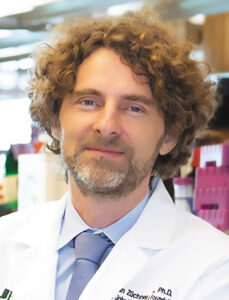
Stephan Züchner, MD, PhD
Your doctor might recommend additional tests, such as a muscle biopsy or imaging, to look for signs that the VUS might be linked to your symptoms.
“I would say around 60% of the time we can resolve a VUS, but 40% of the time we’re still left in that area of limbo,” Dr. Weihl says.
It’s important to ask your doctor if you should revisit your results or retest in the future, because genetic tests are continuously updated as new disease-causing variants are identified.
Stephan Züchner, MD, PhD, Chief Genomics Officer at the University of Miami Miller School of Medicine, recommends reviewing prior inconclusive test results or repeating genetic testing about every five years until you receive a genetic diagnosis.
Important questions to ask about your results
Here are helpful questions to bring to an appointment with your doctor:
- Could this VUS explain my symptoms, or is it probably unrelated?
- Are there other tests that could help clarify what’s going on?
- Should any of my family members be tested?
- Could this VUS be rechecked in the future?
- Should I meet with a genetic counselor?
Ongoing care
Even when genetic testing does not give a clear answer, neuromuscular specialists often can provide a clinical diagnosis based on your symptoms, family medical history, and other diagnostic tests. A clinical diagnosis can help doctors treat your symptoms.
“You still have a diagnosis,” Dr. Weihl reassures patients who have inconclusive genetic test results. “You still have a disease that I understand, and I still can support you.”
Staying engaged with your neuromuscular care team ensures that you’ll receive appropriate ongoing care, and you’ll be informed about genetic discoveries, disease registries, clinical studies, and new therapies.
Amy Bernstein is a writer and editor for Quest Media.
Next Steps and Useful Resources
- MDA has an agreement with Invitae and Labcorp to offer genetic testing for many types of muscular dystrophy at no cost through MDA Care Centers.
- Find more sponsored genetic testing programs for neuromuscular diseases.
- Download MDA’s educational materials about Genetics and Genetic Testing.
- Stay up to date on Quest content! Subscribe to Quest Magazine and Newsletter.


Disclaimer: No content on this site should ever be used as a substitute for direct medical advice from your doctor or other qualified clinician.