

Navigating College Scholarships and Financial Assistance with a Disability
By Steve Wright | Monday, December 15, 2025
Like many high school students, students with neuromuscular diseases may be looking at college as their next step. But with college tuition costs continuing to spiral, according to U.S. News & World Report, you might be wondering how you’ll afford it.
The key may be combining scholarships, grants, and other financial aid programs and benefits. Here, current college students and an expert provide tips for finding funding to help you start and finish college.
Start early
One key to getting financial assistance is starting early. According to MDA’s College Planning Timeline, 10th grade is a good time to start making a college budget plan. While researching schools, reach out to their disability or accessibility offices to ask about scholarships and financial aid options for students with disabilities.
College scholarship applications are generally due in the fall or spring of a student’s 12th-grade year. The deadline for the Free Application for Federal Student Aid (FAFSA), a program everyone should apply for, is usually June 30 in the year you are applying for. State deadlines may vary.
More tips from an education and disability advocate
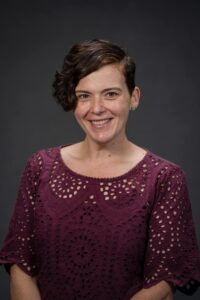
Annie Tulkin founded Accessible College, LLC.
Annie Tulkin, MS, CEO and Founder of Accessible College, LLC, partnered with MDA to compile essential resources for college-bound young adults with neuromuscular diseases. Find links to webinars and other information at Accessible College and the Muscular Dystrophy Association (MDA): Working Together to Support Students.
Annie offers these essential tips for students:
- Before applying for college funding, understand each funding source’s requirements and how much time you will need to meet them. Many scholarships require personal essays and letters of recommendation, which take time to write.
- Look for scholarships offered by organizations that support people with your diagnosis. (For example, MDA’s scholarship for students with neuromuscular diseases.)
- Work with your high school counselor. Most high schools have access to college planning platforms that can help find financial aid.
- Use the Swift Student Form to create a Disability Expenses Request Letter and submit it to your college or university’s financial aid office. Federal law allows financial aid officers to consider disability-related expenses when determining the amount of financial aid a student can receive.
- For ongoing financial support, stay in contact with your college or university’s financial aid office and disability or accessibility office.
Consider public benefits
For support with expenses related to personal care attendants, accessible housing, and transportation, Annie recommends pursuing Supplemental Security Income (SSI) and Vocational Rehabilitation (VR) funds.
SSI provides monthly payments to people with disabilities who have little or no income. State-run agencies provide VR funds to help people with disabilities find and keep jobs. They may cover education-related expenses that help position a person to join the workforce.
“We all know it’s more expensive to live as a person with a disability,” Annie says. “The more funds you keep in your own pocket, the more you can live independently in school and after graduation.”
Advocate for yourself
Abby Dreyer, who lives with spinal muscular atrophy (SMA) and uses a power wheelchair, is studying business administration at Eastern Connecticut State University (ECSU). She is an MDA Scholar and wrote a Quest Blog post about transitioning to college and living independently.
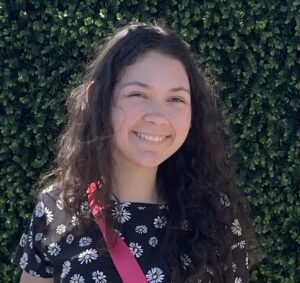
Abby Dreyer is a student at Eastern Connecticut State University.
Her small-town high school was not helpful in her college search, so Abby took on the research herself. Because she was in the National Honor Society, she looked for honors programs at universities and learned that ECSU’s honors program pays full tuition. She also contacted ECSU’s Office of AccessAbility Services, which linked her to a disability-focused scholarship that helps cover part of her housing and food costs.
“Always do your research on websites and via direct email to accessibility offices,” she advises, noting that each person knows their own needs best.
Tell your story in your applications

Grace LoPiccolo is a student at Saint Louis University.
Grace LoPiccolo, who lives with Charcot-Marie-Tooth disease and walks with leg braces, is a Saint Louis University senior, majoring in bioethics and Catholic studies. After graduating in 2026, she plans to attend law school.
The MDA Scholarship is her only disability-based financial aid. She also receives a merit-based scholarship through her school and a tuition contribution for her service as student body president.
Even when applying for funding unrelated to disability, Grace advises not to shy away from framing your eligibility, skills, and goals through a disability lens. “My general college essays were about my disability. When I applied to law school, I mentioned why I want to be a disability rights attorney. Communicate yourself as a real person who also has a disability,” she says.
Look for planning tools to help
Maxey Mapp, who lives with myotonia congenita, which causes episodes of muscle stiffness, is pursuing a bachelor’s degree in exercise and sports science at the University of North Carolina. He plans to be a physical therapist.

Maxey Mapp is a student at the University of North Carolina.
In addition to an MDA Scholarship, he receives need-based financial aid through his school, and the university has helped him find paid summer internships.
Maxey built his financial support by being organized. Before applying, he created an account on fastweb.com, an online scholarship database, to keep track of the scholarships he was applying for and when they were due.
“You need to stay on top of scholarship applications — most require essays and letters of recommendation. Some ask you to create a 30-second video. Pay attention to deadlines and the time you need to meet them,” he says.
MDA makes an impact
Scott Wiebe, MDA’s Director of Community Programs, is thrilled that applications for MDA Scholarships are opening soon. The highly competitive scholarships pay up to $5,000 for first-year awardees and $2,500 for existing recipients who renew the scholarship.
“The scholarships are based on merit in leadership and community involvement,” Scott says. Now in its third year, the program receives about 200 applications and awards scholarships to the top 10 ranked applicants.
MDA Scholarships are not just for high school seniors — anyone with a neuromuscular disease who is in college, a trade school, or a vocational program is eligible.
Scott is proud that MDA is making a positive impact by being part of the support system for scholars with disabilities who are tomorrow’s business leaders, disability rights attorneys, physical therapists, and more.
Next Steps and Useful Resources
- Download MDA’s College Planning Timeline.
- Learn how to apply and prepare for college in the online MDA Access Workshop on Higher Education.
- Watch the MDA Virtual Learning webinars What Does College Look Like These Days? and Personal Care Attendants at College.
- Read the College Experience series on Quest Media for more personal stories and insights into navigating college life with a disability.
- Stay up to date on Quest content! Subscribe to Quest Magazine and Newsletter.


Disclaimer: No content on this site should ever be used as a substitute for direct medical advice from your doctor or other qualified clinician.