MDA Ambassador Guest Blog: A Different Kind of Adventure – The Ups & Downs of Living with LGMD
By William Quickel | Tuesday, September 22, 2026
5 Second Summary
MDA Ambassadors play an essential role in furthering MDA’s mission while representing and empowering the neuromuscular disease community. Quest Ambassador Guest Blog series provides a platform to share their personal stories, perspectives, and experience.
William Quickel lives in East Tennessee. He was diagnosed with a rare form of limb-girdle muscular dystrophy (LGMD) in 2021, when he was 27 years old. He has shared his story through his YouTube Channel and currently works for a local nonprofit that serves and supports teens and adults with autism.
There was a time when adventure meant grabbing my camera, hopping in my vehicle and exploring somewhere new. Living with limb-girdle muscular dystrophy (LGMD) type 2R has changed more than my mobility. It has changed how I define adventure.
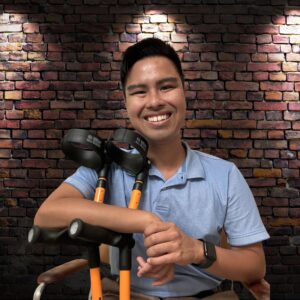
William Quickel
What used to take a few minutes now requires careful planning. “Will I need my cane or forearm crutches?” “Is the terrain accessible?” “How far will I have to walk?” “Will there be places to sit and rest?” Planning something as ordinary as visiting a park, exploring a new town, or a new store often begins long before I ever turn the key in the ignition.
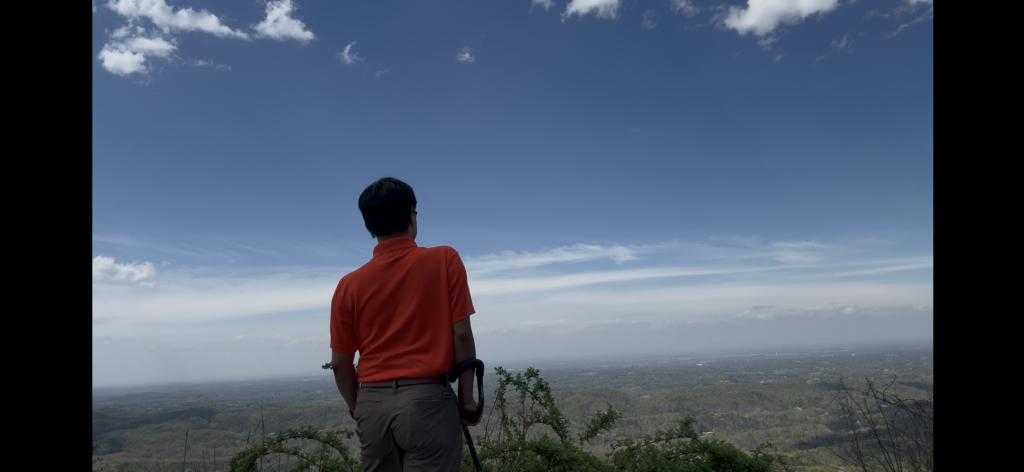
For a while after my diagnosis, I thought adventure was something I was slowly losing. But over time, I realized it hadn’t disappeared, it had simply changed. Adventure is no longer measured by how far I can hike or how many miles I can walk. Sometimes it’s having the courage to go anyway, even when I know my body may not cooperate. Sometimes it’s adapting, slowing down, asking for help, or celebrating the simple victory of making memories despite the obstacles.
Muscular dystrophy didn’t end my adventures. It showed me there’s adventure in places I never expected.
Finding new ways to move forward
Only a few years ago, life looked completely different. I was working in a physically demanding boat factory job and rarely gave a second thought to what my body could do. Climbing, lifting, walking long distances, and spending hours on my feet were simply a part of everyday life. I had plans, goals, and a picture of what I thought my future would look like. I never imagined that within such a short period of time I would begin experiencing muscle weakness, frequent falls, and eventually have to learn how to navigate life with a cane and a manual wheelchair. Everything seemed to change much faster than I ever expected, forcing me to rethink not only my future, but also the way I approached each day.
As overwhelming as those early changes were, they weren’t the end of my story. Over time, and after significant life changes outside of my disability, I learned to adapt to a new normal. With the support of forearm crutches, I regained enough stability and confidence to begin exploring again. Life looked different than it once had, but it wasn’t without purpose or possibility. I realized that while my circumstances had changed, my desire to discover new places and share meaningful experiences hadn’t.
That season inspired me to launch my first YouTube channel, @CammoCoffeeCritic. What began with visits to independent coffee shops eventually grew into something different – I started @AbleOrange_Official, a way to document adventures, highlight accessible destinations, and encourage others to keep exploring regardless of the obstacles they faced. For nearly two and a half years, I found a rhythm that allowed me to travel, create, and enjoy life in ways I hadn’t thought possible after my diagnosis. Looking back, that season taught me that adapting isn’t about giving up what matters, it’s about finding new ways to keep moving forward.
Building strength through purpose
As I settled into that season of stability, my confidence began to grow in other areas of life as well. For the first time since my diagnosis, I felt ready to return to work. I found an opportunity to support older teens and adults on the autism spectrum as they developed practical life skills and greater independence. Encouraging others to overcome obstacles while adapting to my own gave my days a renewed sense of purpose. Between work, creating content for AbleOrange, and continuing to explore whenever I could, life felt full again.
That busy season is part of the reason my channel and social media presence has been quieter over the past year. But there is another reason as well. While life was moving forward, muscular dystrophy was beginning to move forward as well. After nearly two and a half years of relative stability, I started noticing a second wave of weakness that gradually made everyday activities and filming adventures more challenging once again.
For a while, it felt like I had found my footing again. I had adapted to life with forearm crutches, returned to work, and was building AbleOrange into something that reflected my passion for adventure. Although life looked different than it once had, I had found a rhythm that gave me hope and reminded me that purpose wasn’t determined by physical ability alone.
New season, new perspective, new rhythm
But LGMD is a progressive disease, and after nearly two and a half years of relative stability, my body began changing once again. The strength I had learned to rely on slowly started slipping away. Everyday tasks became more exhausting, longer walks and hikes became more difficult, and outings that once felt routine now required more careful planning. Even carrying camera equipment or spending a full day exploring became increasingly challenging.
Alongside the physical progression came new and more life changes that reshaped my daily routine. Earlier this year I went from living independently to living with family. I’m learning that accepting support isn’t a sign of failure but part of adapting to a new season of life. As my energy became more limited, my content creation naturally became quieter; not because the passion was gone, but because my body was asking me to slow down. Once again, I find myself learning to adapt, one challenge at a time.
Somewhere along the way, I realized I had been measuring adventure by the distance I could travel instead of the courage it took to keep moving forward. That perspective needed to change. Adventure hadn’t disappeared from my life it had simply taken on a different form. Instead of focusing on everything I could no longer do, I slowly began noticing the things I still could. Progress isn’t always measured in miles or mountain views anymore. It is measured by adapting, trying again after a difficult day, or finding joy in experiences I once would have overlooked.
Living with muscular dystrophy has taught me lessons I never expected to learn. It has shown me the value of patience, flexibility, and celebrating victories that many people might never notice. Some adventures now involve making it through a busy store without becoming exhausted. Others mean spending an afternoon with family, exploring somewhere locally, or simply having enough energy to enjoy being out of the house. Those moments may seem ordinary, but they have become meaningful reminders that life can still be full of purpose and joy.
The support of my family, friends, and the Muscular Dystrophy Association has also reminded me that I don’t have to face this journey alone. Their encouragement has helped me keep looking ahead, even during seasons when progress feels slow.
Growing through changes
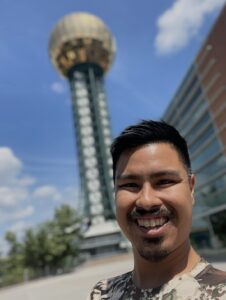
William Quickel
Although my vlogging adventures have been on hold for the past year, the underlying mission hasn’t changed. It has simply grown alongside me. Adventure is no longer defined by how far I can hike or how many places I can visit. It’s about choosing to keep exploring life with the abilities I have today, finding new ways to create memories, and sharing the reality that meaningful adventures come in many different forms.
I don’t know what the future holds, and muscular dystrophy will likely continue to reshape different parts of my life. But it doesn’t define my purpose or determine the value of my story. There are still places I hope to visit, experiences I want to share, and opportunities to encourage others going through challenges of their own. Whether my next adventure takes me across the country or simply through another ordinary day, I want to keep embracing each moment with gratitude, adapting when necessary, and remembering that every step forward still counts.
Next Steps and Useful Resources
- Learn more about Limb-girdle muscular dystrophy (LGMD) here.
- To learn more about MDA’s Young Adult Programs, visit here.
- Browse MDA’s Mental Health Hub.
- MDA’s Resource Center provides support, guidance, and resources for patients and families. Contact the MDA Resource Center at 1-833-ASK-MDA1 or ResourceCenter@mdausa.org
- Stay up-to-date on Quest content! Subscribe to Quest Magazine and Newsletter.


Disclaimer: No content on this site should ever be used as a substitute for direct medical advice from your doctor or other qualified clinician.