Life with Lily: Preparing for College with a Neuromuscular Disease
By Lily Sander | Monday, September 14, 2026
5 Second Summary
MDA Ambassadors play an essential role in furthering MDA’s mission while representing and empowering the neuromuscular disease community. Quest Ambassador Guest Blog series provides a platform to share their personal stories, perspectives, and experience.
As I prepared for college after graduating high school, my experience mirrored that of many young adults in several ways. Like my peers, I searched for a welcoming campus culture, a strong program in my intended major, and a university that offers meaningful opportunities for collaboration, research, and learning. However, my journey differed fundamentally because every step of my search and ultimate decision was viewed through the lens of my disability and specific access needs. An aesthetically pleasing campus holds little value if it is inaccessible from my mobility scooter. For me, feeling “at home” goes beyond campus demographics and student clubs; it requires an environment where disabled students feel truly supported and empowered rather than just merely “included.” Much like the rest of my life, navigating the college search and decision-making process has been a careful negotiation between my wants and my needs; they both are important, but I place a larger importance ultimately on my access needs because I know having them met is the foundation for a successful social and academic life.
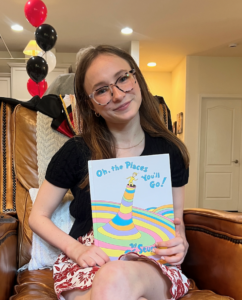
All the Places You’ll Go a book signed by all of her K-12 teachers with well wishes for the future.
Although choosing which college to attend was a difficult decision, managing the extensive checklist that followed proved to be an even greater task. In addition to completing the standard portal requirements for incoming students, I knew I needed to dig deeper. But even before officially accepting my offer, I connected with several current students with disabilities at the university to gain firsthand insight into how well their needs were met, the obstacles they faced, and the overall campus culture.
Maintaining these connections after my decision and acceptance allowed me to seek further guidance on navigating next steps, contacting the disability services office, and identifying potential accessibility barriers in the dorms and across campus. Their answers made me feel less uncertain and alone. Knowing that a supportive community of students has successfully navigated this path before me, and that others will follow, gives me the confidence to face the challenges ahead. Overcoming obstacles like campus inaccessibility, unaccommodating professors, or managing my health and studies are not new to me; I have the experience and resources to “figure things out” in a new place. Ultimately, these hurdles reinforce the importance of self-advocacy, and the fact that small, everyday acts of advocacy are incredibly impactful, empowering us while clearing the path for those who come next.
Honestly, at this point in my journey navigating higher education with a neuromuscular disease, I don’t feel like I have all the answers to give. Instead, I stand alongside those who are navigating this path with me, and I hope this post reaches current or future students who feel just as uncertain. The good news? We can be unsure about something and still navigate it with excellence. If living with a neuromuscular dystrophy has taught me anything, it’s that you don’t need to know everything from the start; you just need the right tools and the persistence to figure things out along the way.
I might not have all the answers, but I’ve put together a list of tips that helped me navigate campus tours, choose the right school, and secure accessible housing and education. I’m still learning as I go, and leaning on other disabled students has been invaluable along the way. At the end of the day, we know our needs best, and we are our own strongest advocates!
Touring campuses
- Research ahead: Do a quick dive into the campus layout and accessibility policies before you visit.
- Request accommodations early: When booking your tour, let the admissions or visitor center staff know about your accessibility needs in advance.
- Check the terrain virtually: Use satellite tools like Google Maps or Street View to scout out hills, stairs, and walking distances ahead of time.
- Observe as you tour: Pay close attention to ramp placements, automatic doors, elevator access, and general path conditions during the actual tour.
Choosing the right school
- Research the details: Take time to explore campus culture and disability services, but make sure you also listen to the lived experiences of disabled students who have been in your shoes.
- Reach out: People are often surprisingly willing to help. Don’t be afraid to send a cold email or DM to connect!
- Leverage your connections: I started by asking a friend from my high school to introduce me to someone at my target college.
- Watch your circle grow: From that single connection, my network expanded quickly, and so did my understanding of what campus life was actually like.
Securing accessible housing and education
- Prioritize your well-being: This was the hardest, and most crucial, part of my college journey. Having an accessible living space is non-negotiable; it prevents unnecessary stress, fatigue, and physical pain from piling onto an already busy schedule.
- Start early with Disability Services: Accessing your education begins with securing your legally mandated accommodations. Reach out to the disability services office as soon as possible, as there are always forms to submit, medical documentation to gather, and intake meetings to schedule.
- Be honest about your needs: Be completely transparent during your accommodations meetings. This is their job; you are never a burden or an inconvenience.
- Learn from other students: Ask fellow disabled students what accommodations work for them. You might discover helpful options you hadn’t even considered!
- Speak up and push back (if needed): If an accommodation isn’t working, say so. You have every right to say no and advocate for a change. You are the ultimate expert on your own body and needs.
- Know your rights: Don’t hesitate to advocate for yourself. And rememberthat your rights as a student with a disability are protected! Both Section 504 of the Rehabilitation Act and the Americans with Disabilities Act (ADA) protect college students from discrimination.
- Take the initiative: Unlike K-12 education, higher education laws require you to self-identify, disclose your disability, and actively request accommodations.
- Public vs. private differences: Public and private colleges may have different policies and procedures for disability services. Regardless of the type of institution, students are protected from disability discrimination under federal law.
I hope these tips, and knowing that you’re not alone in feeling uncertain, were helpful! I’d love to connect with others who are navigating this transition, too. Let’s support one another along the way. We’ve got this!
Next Steps and Useful Resources
- For more information about Charcot-Marie-Tooth disease (CMT), a full list of symptoms and causes can be found here.
- MDA’s Resource Center provides support, guidance, and resources for patients and families, including information about exon skipping therapies, open clinical trials, and other services. Contact the MDA Resource Center at 1-833-ASK-MDA1 or ResourceCenter@mdausa.org.
- To learn more about MDA’s Young Adult Programs, visit here.
- Stay up-to-date on Quest content! Subscribe to Quest Magazine and Newsletter.


Disclaimer: No content on this site should ever be used as a substitute for direct medical advice from your doctor or other qualified clinician.