James Dawson Cultivates Resilience and Adaptability as an Actor
By Rebecca Hume | Wednesday, November 18, 2026
5 Second Summary
Chicago actor James Dawson shares his path from high school theater to films, commercials, and comedy. Living with spinal muscular atrophy, he has learned to seek accessible opportunities, rely on friends, and advocate for roles that showcase his acting abilities.
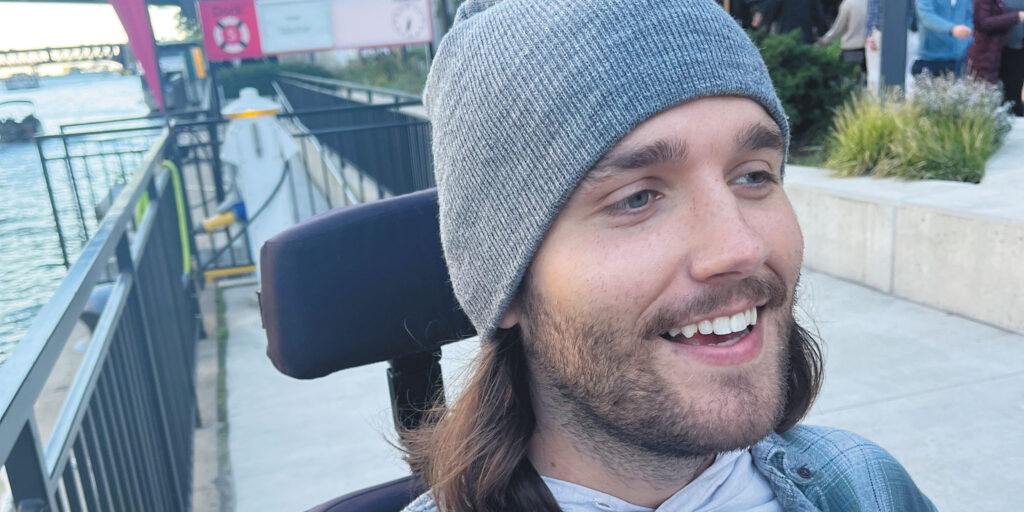
Chicago-based actor James Dawson has spent the last five years making a name for himself. As a full-time wheelchair user living with spinal muscular atrophy (SMA), he has learned that navigating the entertainment industry requires resilience, advocacy, and support.
Discovering his talent
Growing up in Kentucky, James began acting when he joined his high school theater program. He had started using a power wheelchair in sixth grade and was looking for an accessible after-school program, but he discovered a passion and talent for acting. “I remember thinking, I could actually turn this into something, and I like doing it,” he recalls.
When choosing a college, James knew accessibility in the theater program would be a determining factor. He had to pivot from his original first-choice school after discovering that the theater department was in a building without an elevator. Adaptability is a skill that most actors need to develop — and one that comes naturally to James. He accepted a scholarship at Northern Kentucky University (NKU), where the campus was more accessible, and pursued a degree in fine arts.
James lived on campus in a dorm suite to allow space for his equipment and had an automatic door opener. He had caregivers through the state’s Medicaid program and relied on his suitemates, who were his high school friends.
“The theater department at NKU was really accommodating,” James says. “Two of the shows that I did were period pieces, set in the 1920s and 1800s. For both of those, they got period wheelchairs for me and cast someone as an assistant who pushed the chairs during the show. My roles weren’t written for someone in a wheelchair, but we were able to figure out how to do what we needed to be inclusive.”
Finding his place in the Second City
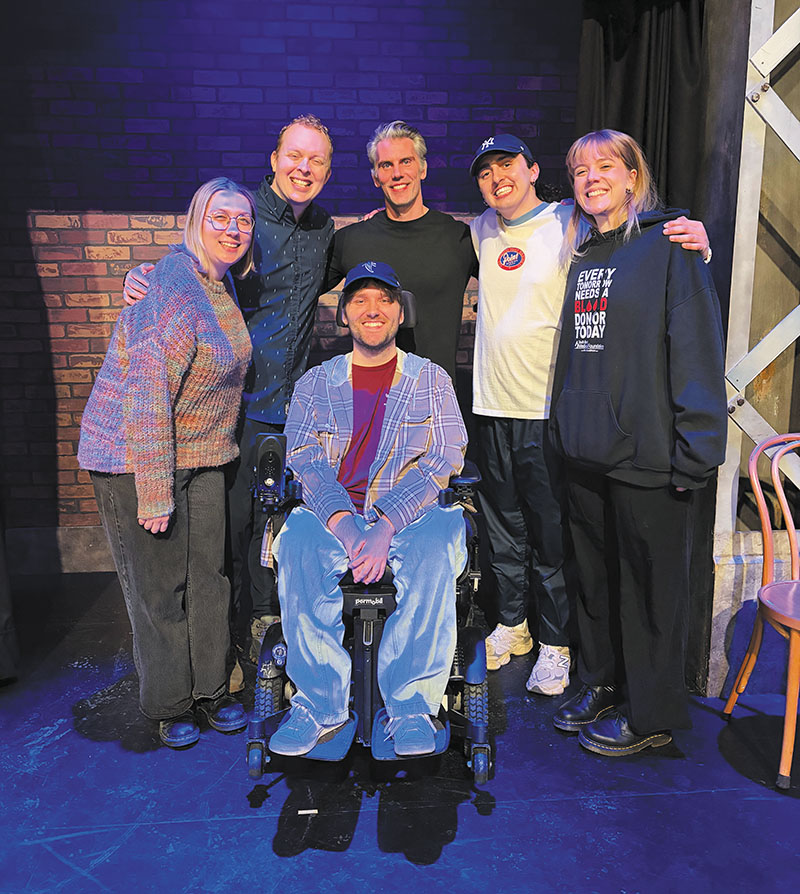
James Dawson with fellow Second City sketch comedy actors
After graduating and completing an apprenticeship, James moved to Chicago to chase his dreams. “The big three cities for acting are Los Angeles, New York, and Chicago. Chicago has film, TV, and plays, but their big thing is comedy and improv,” he says. He also factored in the support he needs when making the decision about where to move. “I had friends interested in moving to Chicago, and having people that I know and can live with is a necessity for me.”
His advice to others is to find people you can rely on and be willing to accept their help. “I feel like it is not just a disability thing, but in general, if you are willing to accept help, then you are going to go a lot further,” he says. “I would not have made it this far if I didn’t have friends in my corner.”
James enrolled in acting classes while creating online content and taking the stage at Chicago’s accessible comedy theaters. During one of his acting classes, a teacher noticed his talents and arranged an audition that led to him signing with national talent agency DDO Artists and booking two roles: a short film, “The Coder,” directed by Will Crouse, and a commercial for the University of Wisconsin-Whitewater. Since then, he has starred in several short films and commercials, continues to create video sketches, and performs live sketch and improv comedy.
“I learned pretty quickly that booking jobs is great but not always consistent, so you have to make your own stuff, too,” he says. “That keeps you rehearsing and practicing so that when opportunities show up, you are prepared for them.”
More than a man in a wheelchair
To book roles, James’ agent sends his profile and headshots to casting directors. If they are interested, they invite James to audition. His profile includes that he uses a wheelchair. “When I started out, most of the stuff that I went out for was very wheelchair specific,” James says. “I told my agent to send me out for any casting notice for a guy in a wheelchair, but to also send me out for any roles that they think I can do acting-wise.”
Submitting and auditioning for as many roles as possible is a prerequisite for any actor, with or without a disability, but James knows his wheelchair is a barrier for some casting directors. “Until I prove to them that I can act in a role that is not necessarily for a guy in a wheelchair, they are not going to cast me,” he says. “But at this point, I have gathered enough material that shows I can act.”
James has learned to choose where he focuses his energy. “There are only certain things that you can control, and the way that people look at you isn’t really one of them. Just be you, follow your dreams, and the right people will see your abilities beyond mobility,” he says. Therapy has helped him adopt a resilient mindset. “If there is a will, there is a way. It doesn’t mean it’s going to be easy — expect the challenges — but if you really want to do something, you can figure it out, and you can succeed.”
Rebecca Hume is a Senior Specialist and Writer for Quest Media.
Next Steps and Useful Resources
- Listen to a Quest Podcast chat with actor, comedian, and disability advocate Steve Way about his latest role in a Hulu series.
- Stay up to date on Quest content! Subscribe to Quest Magazine and Newsletter.


Disclaimer: No content on this site should ever be used as a substitute for direct medical advice from your doctor or other qualified clinician.