

3 Steps for a Smooth Transition From Pediatric to Adult Care for People Living with Neuromuscular Diseases
By Amy Bernstein | Wednesday, November 18, 2026
5 Second Summary
Moving from pediatric to adult care is a gradual process. From questions to ask a new provider to coordinating a new care team, young adults and neuromuscular specialists share tips to navigate the next phase of life.
On their 18th birthday, a child legally becomes an adult. This shift affects many aspects of life, including healthcare. But while kids who grow up with neuromuscular diseases generally must transition to an adult care team, the move doesn’t happen overnight. It’s a gradual process that a person living with a neuromuscular condition goes through with the care and guidance of their family and their neuromuscular care team.
Navigating the shift from pediatric to adult systems works best with early preparation and support for the patient to be involved in their medical discussions. Independence is fostered through self-advocacy and collaborative decision-making.
Neuromuscular specialists and young adults navigating this process agree that preparation and communication are the keys to a smooth transition.
Why is a care transition needed?
Lauren Elman, MD, a neurologist and Director of the MDA Care Center at Penn Medicine in Philadelphia, points out that most people over 18 receive the most appropriate care from adult providers.
“Adults are not big children,” she says. “They require distinct medical attention for adult-onset conditions, which pediatric providers may not address.”
In addition, young adults outgrow — physically and emotionally — the pediatric setting.
“A pediatric facility may not be equipped to or even allowed to care for adults,” Dr. Elman says. “There are specific challenges that adults who were diagnosed during childhood can face. And there are things that we need to pay attention to in the adult world that may not have been as relevant in the pediatric world.”
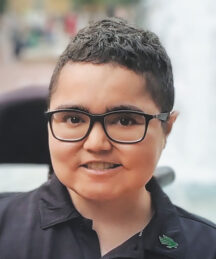
Tyus Hill
Tyus Hill, 24, of Texas, who lives with Duchenne muscular dystrophy (DMD), has reached a greater comfort level with his adult care team. “When it’s an adult doctor, they know normal stuff happens, and it’s more comfortable being able to talk about that,” he says. “It’s less awkward than at a children’s hospital.”
Health insurance companies and hospital policies may also spur the transition to adult care. Insurers generally don’t force a switch at a specific age, but eligibility, costs, and covered services change over time. While Medicaid rules vary by state, children often must reapply or transition to adult Medicaid around age 18 or 19. At age 26, adult children can no longer be on their parents’ private health insurance plans.
Differing care models
The transition from pediatric to adult care can feel daunting for patients and their families because it’s not just a move to new providers but a shift to a different care model.
Mary-Lynn Chu, MD, a pediatric neurologist at NYU Langone Orthopedic Hospital in New York City, an MDA Care Center, explains that pediatric care is family-oriented, and many pediatric neuromuscular clinics have staff who coordinate care and manage appointments for families. In contrast, adult care emphasizes patient autonomy.
“The patient plays an active role in managing their own appointments, communicating with the providers, and making decisions about whether they want a particular medication or if they need certain equipment,” she says.
MDA Care Centers use a multidisciplinary care model that brings various specialists together to provide comprehensive, patient-centered care. Often, patients can see their whole care team at one location in one visit. However, multidisciplinary clinics are less common in adult care.
John Brandsema, MD, a pediatric neurologist at Children’s Hospital of Philadelphia (CHOP), an MDA Care Center, often works with Dr. Elman to transition patients to the MDA Care Center at Penn Medicine. However, when his patients are looking for care beyond Philadelphia, they may not have access to a facility with a multidisciplinary care model. “We have multiple people all in the same shared space to optimize care for complex conditions,” he says. “In the adult medicine world, that’s not always feasible in terms of the infrastructure that might be there. It’s more expected that you advocate for yourself and coordinate the separate types of care you might need for your optimal health.”
The ideal transition
Ideally, the transition process begins at age 14 or 15.
“We want to start as early as possible to help prepare our families and patients,” says Audrey Esquivel, NP, a pediatric nurse practitioner who works with Dr. Chu at NYU Langone. “A lot of the families have been with us for a long time, so we don’t believe in just saying, ‘Here are your referrals. Good luck.’ We like to spend time with our families and the patients. We want to discuss their transition goals and what the expectations are on the adult side, so they are prepared.”
This emphasis on preparing families early helps avoid a sudden break in care. “We try to figure out if there are any gaps in their care and make sure that they have all the specialists they need, like pulmonology, cardiology, primary care, and dental,” Audrey says.
Regarding the timing of the official transfer to a new care team, Dr. Chu notes that age 19 or 20 is the standard goal. However, this is handled on a case-by-case basis, with transfers occurring earlier or later if the patient requires more time to prepare or if an adult provider is not yet available.

Sophia Dipasupil
An individualized care plan is allowing Sophia Dipasupil, 19, of Virginia, to ease into adult care during her freshman year at Harvard University. She lives with juvenile dermatomyositis, and she found a rheumatologist close to campus who is within her school’s insurance network. She’ll have an initial visit with the rheumatologist to go over her health history, then she’ll reach out to the doctor if she has any flare-ups during the school year. When Sophia goes home over breaks, she’ll have her regular visits with her pediatric rheumatologist.
“She offered to keep seeing me even as I went off to college. That was helpful because she knows my history the best,” Sophia says.
3 steps to a smooth transition
Not every individual or healthcare facility is positioned to make the ideal transition from pediatric to adult care. Here are steps you can take to make it go as smoothly as possible.
Step 1: Build kids’ independence and self-advocacy skills.
A fundamental component of a successful transition is empowering the patient to use their own voice in healthcare settings as they mature.
Dr. Brandsema starts this process during clinic visits by encouraging adolescents to discuss aspects of their care. He might ask his patient about medications they’re taking or what they would do if their orthotic strap broke. In this way, he builds up their confidence and knowledge of their own care in small steps at every visit.
“That helps to make the transition feel like it’s something that we are working toward together,” he says. “And we try to frame it more as a graduation — something to be excited about, that you’re taking a step into the next phase of your life.”
He also notes that parents and caregivers play an important role in instilling confidence in kids by giving them a chance to speak first at appointments, even if they don’t know all the answers yet.
Tyus credits his mom with pushing him to develop his self-advocacy skills during his teen years. “My mom started telling me to talk more during appointments, and that really stuck,” he says. “I was getting older, and obviously I needed to step forward more and be a little bit more independent during those doctor’s appointments. I would have gotten very lost if I had to rely on her constantly with adult care.”
Now, Tyus is in charge of communicating with his care team and making appointments. He has a shared decision-making agreement with his mom that specifies that she has access to his health information with his permission, and they’ll discuss decisions about his care before moving forward.
Step 2: Seek guidance on finding a new care team.
Pediatric neuromuscular care centers maintain lists of adult providers with expertise in neuromuscular diseases. They can make referrals to neurologists, cardiologists, pulmonologists, therapists, and other specialists. Often, these are providers they know and may already have practice transferring patients to.

Parker Herman
Parker Herman, 22, who lives in Wisconsin with spinal muscular atrophy (SMA), transferred from a care team at the UW Health American Family Children’s Hospital to an adult care team also in the UW Health system. “When I met my new pulmonologist, he said he had been talking with my children’s pulmonologist for two or three months prior to me even meeting him,” she says. “I’m very grateful for that because he saw what works and, unless something changes, we’re going to stay with the same plan my previous team had.”
Local disability organizations, support groups, online patient communities, and friends or family members living with similar conditions are also good resources for adult provider recommendations. They can often share information from the patient perspective.
Step 3: Be open to change.
Dr. Brandsema acknowledges that finding an adult care team can be challenging. Depending on where you live, the providers you need may be spread out at different locations, or they may not have experience with your diagnosis. But keep in mind that a specialist who is not a neuromuscular expert may still be a valuable member of your care team, as long as they’re willing to learn.
Your first visit with a new provider will be a chance for them to hear about your health history, medications, medical equipment, and even your day-to-day life. It’s helpful to make sure the provider has access to your medical charts before the visit. During the visit, communicate openly and honestly about your care preferences and goals, and don’t be afraid to ask questions. (See Questions to Ask a New Provider.)
An adult doctor’s office may feel different from what you’re used to in a pediatric setting. “We’re friendly, but it’s a different attitude,” Dr. Elman says. “We do not call people by their first names; it’s Mr. or Ms., and our decorations are less cheerful.”
If a provider doesn’t feel like a good fit, it’s OK to look for other options. Feeling comfortable is important for building a good doctor-patient relationship.
“It’s OK if the first provider doesn’t work out,” Dr. Chu says. “That doesn’t mean that there’s anything wrong. It just means that we’re going to keep trying.”

Sofia Echeverria
Sofia Echeverria, 27, of California, lives with nemaline myopathy. When she transitioned to adult care around age 21, she tried two doctors before finding her current primary care provider.
Sofia’s speech is impacted by her neuromuscular disease, and she sometimes needs to take breaks and use a text-to-speech app. She wanted a doctor who took the time to listen to her and made her feel safe.
Sofia’s care team also includes a neurologist and pulmonologist. One thing that helps her coordinate her care is taking detailed notes when she interacts with doctors and anybody else involved in her care. “I write down everything so I can remember it,” she says. “To this day, after living on my own for about seven years now, I’m still learning new things when it comes to my care.”
A step into the next phase of life
Transitioning to adulthood can be stressful. Pediatric care teams recognize this and can offer information about community resources and social support, not just medical care.
“We conduct assessments based on the individual and the family to get a sense of how we can support them,” says Emma Silva, LCSW, a social worker on Dr. Chu’s team at NYU Langone. This may include addressing housing, transportation, or navigating healthcare systems.
Emma also looks for opportunities for patients and families to connect with one another. “That idea of peer support is really important and can be extremely powerful,” she says. “They talk about their experiences dealing with the medical system, dealing with school, dealing with college, what employment might look like.”
Adulthood may officially start at 18, but it’s best to take the journey there one step at a time, with support along the way.
Amy Bernstein is an editor for Quest Media.
Questions to Ask a New Provider
Do you have experience with patients with my neuromuscular disease?
What is your electronic health record system (e.g., Epic), and can you share medical records with my other providers?
How can I reach you?
How far out do you schedule appointments?
Can I request a longer appointment?
What is your late policy?
What transportation options are available to reach your office?
Is there accessible parking close to the entrance?
Does the building have automatic door openers and an elevator?
Do you have height-adjustable exam tables or a patient lift?
Do you offer telehealth visits for consultations or follow-up discussions?
Be Prepared with MDA Resources
MDA Engage Events: These in-person community education programs deliver valuable information and provide space for real conversations between community members, healthcare providers, and industry supporters.
MDA Peer Connections: This program connects people living with similar diagnoses or situations to share resources and support. It is open to people living with neuromuscular diseases, caregivers, parents, spouses, and siblings.
MDA Transition Guide: Pediatric to Adult Care: This guide has information, exercises, and checklists geared for adolescents, young adults, and their caregivers. Find the guide in the Community Education Library under “K-12 Education Resources.”
Next Steps Seminar: Transition to Adulthood: This live virtual session allows youth and young adults ages 14-26 living with neuromuscular diseases to join in small-group discussions and hear from experts. Parents/guardians are also encouraged to attend.
Webinar: Transitions in Care: This free online webinar series covers knowledge, skills, and resources you need to manage the transition to adult care. Five sessions, each under one hour, are available to view on demand.
Next Steps and Useful Resources
- The MDA Resource Center provides one-on-one support via phone or email for individuals and families looking for information and resources to help them navigate healthcare. Contact the MDA Resource Center at 833-ASK-MDA1 or ResourceCenter@mdausa.org.
- Stay up to date on Quest content! Subscribe to Quest Magazine and Newsletter.


Disclaimer: No content on this site should ever be used as a substitute for direct medical advice from your doctor or other qualified clinician.