Collective Advocacy at the MDA Clinical & Scientific Conference Propels Hope and Possibility
By Paul Melmeyer | Thursday, January 8, 2026
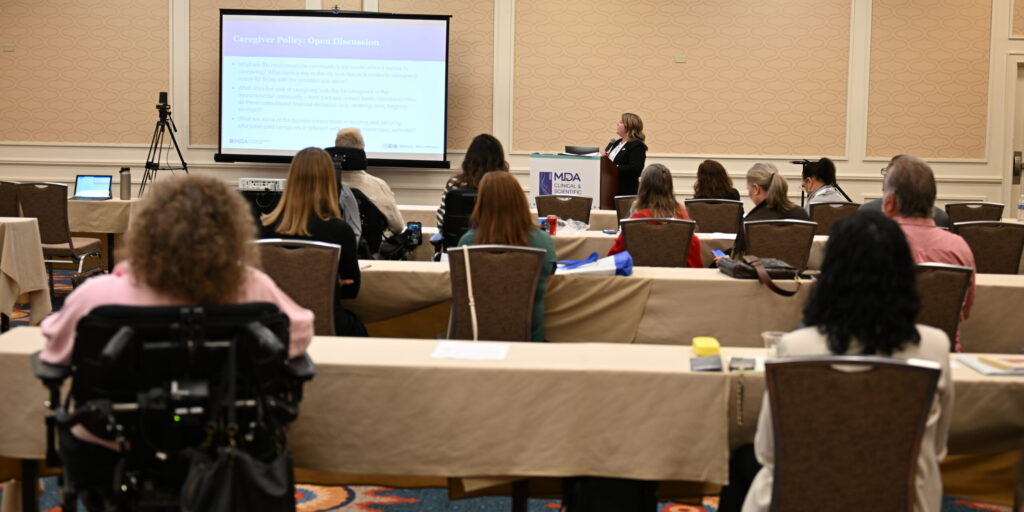
Each year, the MDA Clinical & Scientific Conference brings together clinicians, researchers, industry partners, and community members to share knowledge, spark innovation, and move the field of neuromuscular disease forward. Alongside the scientific sessions and research updates, an equally powerful convening takes place: the annual meeting of the NeuroMuscular Advocacy Collaborative (NMAC).
This gathering unites nearly 40 patient advocacy organizations to align on shared policy priorities and strengthen the collective voice of the neuromuscular community. Ahead of the 2026 conference, Quest Media spoke with Paul Melmeyer, MPP, Executive Vice President, Public Policy and Advocacy at MDA, about why NMAC matters—and what’s at stake for people living with neuromuscular disease.
For readers who may not be familiar with it, what is the NeuroMuscular Advocacy Collaborative (NMAC), and why is its role so important to people living with neuromuscular disease?
The NeuroMuscular Advocacy Collaborative brings together the neuromuscular disease patient advocacy organization community to collaborate on public policy goals. Collectively, we join upwards of 40 organizations behind common public policy and advocacy initiatives to multiply the power of our individual organizations.
What are the primary goals of the NMAC meeting at the 2026 MDA Clinical & Scientific Conference, and what outcomes are you hoping it will help advance?
MDA’s annual NMAC meeting at our Clinical and Scientific Conference allows NMAC member organizations to see each other face-to-face, and share the priorities and challenges of the individual neuromuscular disease communities that they serve. From there, we are able to chart the public policy priorities for the ensuing year, and how we may be able to achieve them.
How does input from people living with neuromuscular disease and their families help shape the discussions and priorities of NMAC?
Input from community members is at the very center of our conversations. We always start with, “What are we hearing from our community on what they would like us advocacy organizations to prioritize?” We also have many members of the community in the room with us as they lead neuromuscular disease advocacy organizations. Not only are they able to speak for their organizations, they can speak from their personal experiences living with a neuromuscular disease.
Were there any specific topics or themes at this year’s NMAC meeting that reflect emerging needs or concerns within the neuromuscular community?
In March 2025, during our last in-person meeting, the prevailing concern among the advocacy organizations present was the health of the biomedical medical research ecosystem following the proposed—and in some cases implemented—cuts to federal medical research funding programs. We also discussed the critical importance of Medicaid to accessing care and services for those with neuromuscular diseases, as well as the importance of support for caregivers, both family caregivers and professional caregivers.
How does NMAC help ensure that MDA’s research investments and clinical initiatives remain aligned with what truly matters most to patients?
While the focus of the NMAC is on public policy, conversations often stray towards collaborative opportunities in research, clinical care, provider and community education, and other ways in which our organizations can work together outside of public policy. Those conversations often continue among the organizations outside of the NMAC.
For someone reading this article who may feel far removed from research or policy discussions, how do decisions made during the NMAC meeting ultimately impact their daily life or care?
The discussions conducted within the NMAC may impact whether a campaign to influence public policymaking is successful. If we put together an outstanding collective campaign and successfully achieve our public policy goals, this may mean more research dollars go to neuromuscular disease research, or access to care is maintained or even strengthened, or access to services that facilitate independence is improved.
What excites you most about the current research pipeline or clinical advancements discussed at this year’s meeting?
The field of neuromuscular disease biomedical research and clinical care is at an important junction in which translating the research community’s discoveries to the clinic has perhaps never been more promising, but the challenges to do so are only growing more stubborn. Plus, with the role of the federal government shifting, this year’s meeting will feature discussions on how the neuromuscular disease stakeholder community will need to adjust and evolve. Both topics are timely and very necessary.
How does NMAC collaborate with clinicians, researchers, and advocacy leaders to move promising ideas from discussion to real-world impact?
The collective advocacy of the NMAC does not stop with the advocacy organizations present. Our efforts will frequently bring in the clinical community, the research community, and most of all, the patient community sharing their voices with their elected officials. And when 40 organizations are asking the community to join us in our advocacy, it is so much more inviting than when a single organization puts forward a call-to-action.
What message would you like people living with neuromuscular disease to take away from the work NMAC is doing at the 2026 conference?
Our organizations recognize that the experiences of our community drive everything we do together. It is perhaps easiest for us to collaborate together in public policy because of the importance that public policies have in the everyday experiences of those living with neuromuscular diseases. We hope to prioritize the issues that are important to you—and if we ever get it wrong, please tell us.
Looking ahead, how do you see NMAC’s role evolving as treatments, technologies, and expectations for neuromuscular care continue to grow?
Not only do we see the NMAC’s role evolving, but we see it growing. The possibilities for collaborative and collective advocacy facilitated by the NMAC are endless. Opportunities such as collective in-person advocacy, public policy research commissioned collectively, and so much more could be ahead of us if we are able. The future is bright for the NMAC’s collective advocacy.
The power of collective advocacy
As the 2026 MDA Clinical & Scientific Conference approaches, the work of NMAC offers a powerful reminder that progress doesn’t happen in silos. When nearly 40 organizations come together—grounded in lived experience, united by shared priorities, and driven by hope—the impact can be transformative. From protecting access to care to fueling research and supporting caregivers, the collective advocacy taking shape at this year’s meeting reflects a community that is organized, energized, and forward-looking. For people living with neuromuscular disease and their families, that collaboration is more than policy—it’s a source of momentum, possibility, and real hope for what comes next.
We hope you’ll join us at the 2026 MDA Clinical & Scientific Conference, taking place March 8–11, 2026, at the Hilton Orlando in Orlando, Florida. This annual gathering brings together individuals living with neuromuscular disease, families, clinicians, researchers, and advocates for four days of learning, connection, and forward momentum. Registration is open for both in-person and virtual attendance. To learn more, view the agenda, and register, visit mdaconference.org.
Next Steps and Useful Resources
- Read more about the MDA Clinical & Scientific Conference.
- Register Today for the 2026 MDA Clinical & Scientific Conference.
- To learn more, view the agenda, and register, visit mdaconference.org.
- Stay up to date on Quest content! Subscribe to Quest Magazine and Newsletter.


Disclaimer: No content on this site should ever be used as a substitute for direct medical advice from your doctor or other qualified clinician.