MDA Ambassador Guest Blog: Life Beyond the Ramp
By Chloe Crabb | Monday, August 3, 2026
5 Second Summary
MDA Ambassadors play an essential role in furthering MDA’s mission while representing and empowering the neuromuscular disease community. Quest Ambassador Guest Blog series provides a platform to share their personal stories, perspectives, and experience.
Chloe Crabb lives in Colorado with spinal muscular atrophy (SMA). She is a high school freshman and absolutely loves all things related to education and advocacy. Chloe lives with her parents, two cats named Mochi and Gracie, and her dog, Maggie. FUN FACT: Chloe loves sports cars and her dream car is a Porsche 918 Spyder.
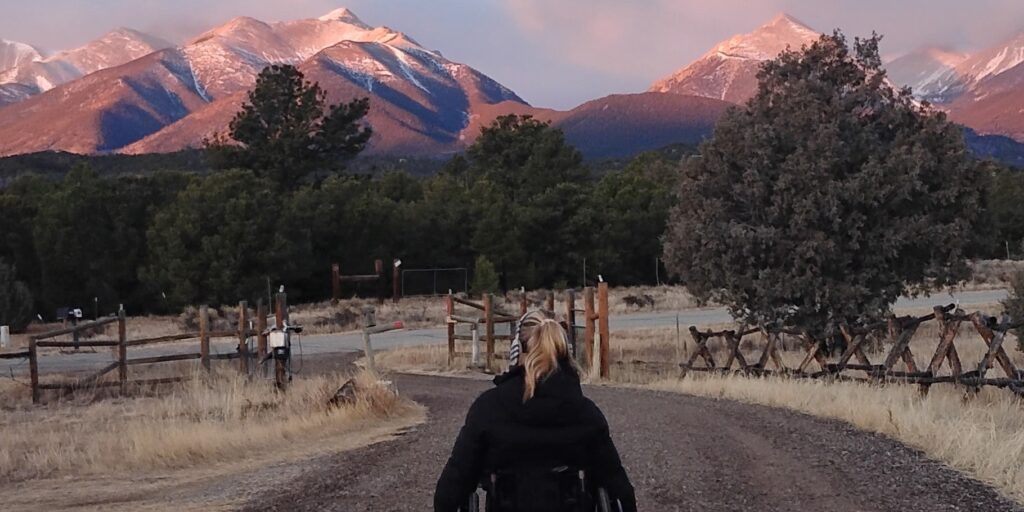
What happens after the ramp?
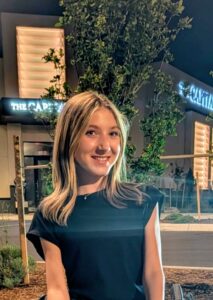
Chloe Crabb
For me, that’s where the real story begins. Living with a neuromuscular disease means that I face staggering mental tolls just to calculate logistics for where I belong or simply where I have access. Sometimes, I can get into a building but once inside, I don’t have access to resources. That’s accessibility—also known as the legal bare minimum—which can sometimes cause distress for people in the disabled community when that accessibility doesn’t extend beyond the ramp. In contrast, in buildings and spaces where you are heard, your needs are met beyond entrance, and you can be well accommodated and have independence: That’s inclusivity.
Here’s the difference: Accessibility is a low standard of legality, while inclusivity embraces basic human dignity and goes beyond the basic entryway. A ramp is merely the first coordinate in a grueling physical equation I must solve every day. The width of doorways, weight of doors, types of doorknobs, light switches, sink height, soap dispensers, toilet height, counter height, and refrigerators – this is just an extended but short list of all the things that I have to consider when going somewhere new.
My ‘accessibility’ experiences
I used to attend middle school in a town where inclusivity was rarely considered. The school had two buildings on one campus, split by grade (5th and 6th in one, and 7th and 8th in the other) with both considered “accessible”. I was in the 5/6th building, which was close to 100 years old. The first part of this equation? A steep ramp that already made it hard for me to even get into the hallway. After this, there was a bustling, thin hallway that could hardly fit all of the 5th graders (let alone a wheelchair) and made getting to class feel like an obstacle course. Not only that, but the classroom was cramped and I had to sit in the back just to have space for my wheelchair. The bathrooms were also small, which led to the school having to build a new bathroom…out of a closet. While “accessibility” was checked off in the legal boxes, it was a nightmare for a student like me trying to have access to my basic needs.
Instead of focusing on learning or connecting, much of my energy was spent on just navigating the space and advocating for myself on a level that most adults will never achieve. My final IEP at this school was an eye-opener for one of my teachers. He realized that while most kids are struggling to have energy for schoolwork, I was exhausted from not only doing schoolwork, but advocating for myself on every level imaginable. Logistics can work, but in my experience at school and the logistics alone and just checking the boxes were not enough to grant me full access. Quite frankly, I feel as though that’s how it is with a lot of places in a world that wasn’t built for people with disabilities in mind.
Accessibility vs. inclusivity
In addition to access, there is an emotional and social side to feeling like you belong. I’m going to introduce two scenarios: one negative, noninclusive scenario versus one positive, true inclusivity scenario. Let’s talk about a very common school event that occurs a few times each year: field trips.
When I was in seventh grade, our teachers planned a field trip at least once a month, and they would try to make sure it was accessible. My teachers emailed me before one such field trip: an outing to a ropes course. In this email, they mentioned that the path to the ropes course was paved and ready for wheelchair users. However, because I wouldn’t actually be able to do the ropes course, they offered that I could be a cheerleader for my classmates. Not only would I be completely missing out on the point of the field trip, but I would also be missing the peer-to-peer interactions and memories made on the field trip, leaving me with an accessible trip but an noninclusive experience.
Alternatively, I’ve been on field trips and to events in spaces that were thoughtfully planned out and built to include everybody. One of these places is the Denver Performing Arts Center.. I am able to get into this building with ease and can get around the building with full independence. The space feels like it was designed with so much intention. Furthermore, at an event I’ve been going to for the past couple of years, my experience has felt complete because I have had the opportunity to be heard as a disabled teen on issues that concern the future of disabled youth. I can be involved with the people around me seamlessly, and I think a huge component of inclusivity is the feeling that you belong.
Navigating that gap is how I play out everything in my ongoing day-to-day journey. Every day, I must use double the energy to manage both the physical environment and the social environment. Sometimes, because of this, there are days when I’m mentally drained and can only focus my energy on one environment, which isn’t balanced and honestly puts me under more stress. When I can balance it, it’s good. But I shouldn’t have to, and that’s something I wish able-bodied people knew. The disabled community shouldn’t have to balance all of the aspects of their lives around them. That’s why inclusivity is so important. I think connecting with the MDA community provides a rare space where both accessibility and inclusivity are provided, also known as a space where people can let their guard down.
Building a more inclusive tomorrow
Ultimately, a ramp is merely a starting line for accessibility, not the final finish line of true belonging. Everyone should challenge themselves–as business owners, friends, or strangers–to look very far beyond basic legal compliance and intentionally choose inclusion in our daily lives. A real community demands much more than just building physical pathways; it requires reshaping our mindset to actually include everyone fully. Open the doors, build the ramps, clear off a sidewalk, yes. But be eager and ready to share the space inside as well.
Next Steps and Useful Resources
- Learn more about Spinal Muscular Atrophy (SMA) here.
- To learn more about MDA’s Young Adult Programs, visit here.
- Browse MDA’s Mental Health Hub.
- MDA’s Resource Center provides support, guidance, and resources for patients and families. Contact the MDA Resource Center at 1-833-ASK-MDA1 or ResourceCenter@mdausa.org
- Stay up-to-date on Quest content! Subscribe to Quest Magazine and Newsletter.


Disclaimer: No content on this site should ever be used as a substitute for direct medical advice from your doctor or other qualified clinician.