MDA Ambassador Guest Blog: The Secret to Navigating Life with a Rare Disease? Say Yes.
By Alexa and Charlotte Colella | Wednesday, February 18, 2026
5 Second Summary
MDA Ambassadors play an essential role in furthering MDA’s mission while representing and empowering the neuromuscular disease community. Quest Ambassador Guest Blog series provides a platform to share their personal stories, perspectives, and experience.
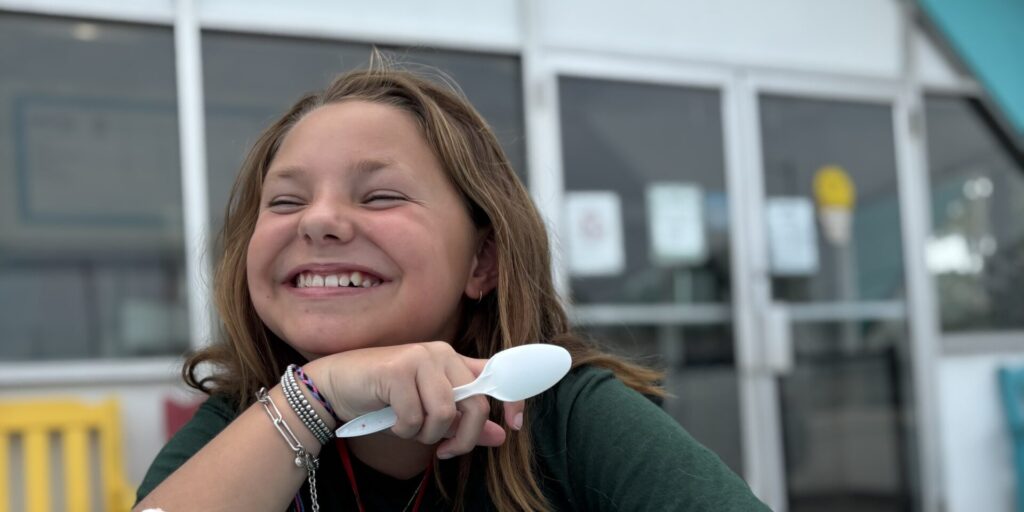
Charlotte is 11 years old and lives with LGMD2C, which was diagnosed when she was two and a half. When she grows up, Charlotte wants to get a law degree and become President so that she can make sure rare disease research is funded. Her biggest hope in life is that rare diseases are prioritized, because it seems very silly to her that with all the might and genius of humans, we haven’t been able to bring real treatments to her and her friends. She loves art, science, math, and animals.
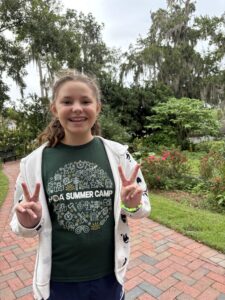
Charlotte on a walk in the botanical gardens
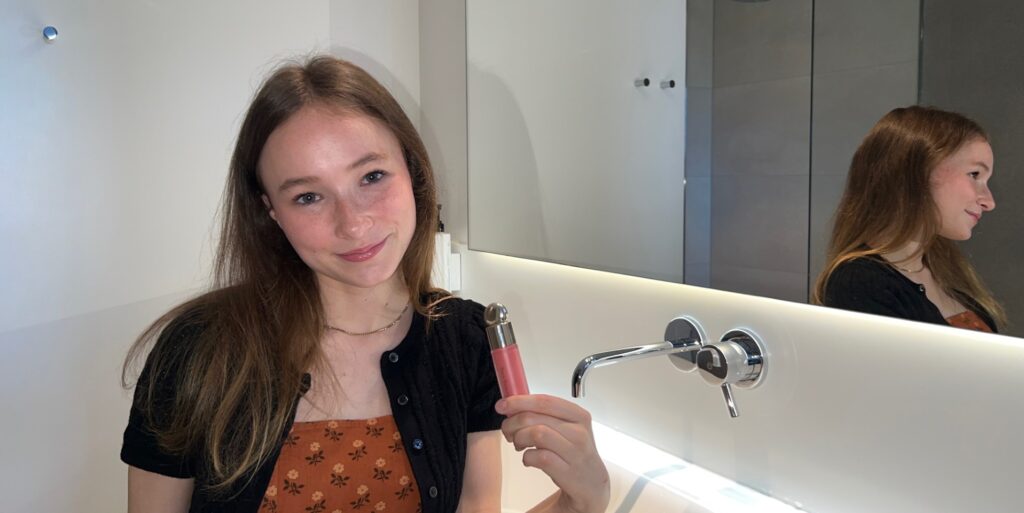
Alexa is Charlotte’s mom. She is” inching closer to 40 every day” and works as a product manager for a scientific publisher. Her favorite thing to do is make art with Charlotte and learn new crafts. We are currently exploring knitting!
When the MDA asked Charlotte and I to share our thoughts about navigating a rare disease diagnosis I said “yes!”.
I am saying “yes” to things this year.
I have said “no” a lot. No to social invitations, no to joy, no to commitments. Because everything – and if you also share a rare disease diagnosis, maybe you know – was just too much. But I think, after nearly ten years of Charlotte living with her LGMD2C diagnosis, that the secret, if I can be so bold, to navigating life with a rare disease is to say “yes” to as much as you can.
Early days of diagnosis
Looking back, getting Charlotte’s diagnosis felt like a giant, cosmic “no”. It meant that the future we imagined for her would get a lot harder, it meant the childhood we imagined for her would inevitably change, and it meant that a whole lot of things we took for granted weren’t guaranteed. In the early days of her diagnosis, I remember thinking, “How am I even supposed to do this?”
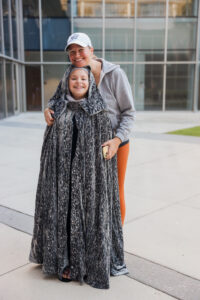
Charlotte (and mom) all dressed up for Halloween
Some of the early advice I received was to join online support forums for muscular dystrophy. We tried them – and maybe you’ve been where I was – but they weren’t what we needed at the time. Charlotte was diagnosed when her tiny little body went rigid with muscle cramps and she spiked a fever. She was admitted to the hospital and a clever geneticist observed her slightly enlarged calves and a CK that never “recovered”. We hadn’t experienced motor impacts and our only connection with the community was the diagnosis that we didn’t yet relate to.
I isolated myself. I am not the most social person to begin with, and I like to process alone – and this was a big, monumental thing to process. Charlotte was only two and a half at the time and our family had just moved to a new state, and we didn’t have roots yet. Isolating was the easiest thing to do. And maybe at the time it was the only thing I could do.
With a diagnosis like Charlotte’s, those roots end up in faraway places. Rare disease means that whatever life’s handbook is, you have to rewrite it. You plant roots in the places where you can both grow.
Learning to live a new normal
We spent a lot of time in denial, convinced that she would be less affected or that any day now there would be a clinical trial. Our denial was punctuated by bouts of rhabdomyolysis. (Rhabdomyolysis is a rapid breakdown of muscle (usually after a traumatic injury or intense exercise) that overwhelms the kidneys and can lead to kidney damage if not treated immediately.) Every time Charlotte got sick, we would pack up a bag for a few days in the hospital and prepare to explain what LGMD2C was and why we knew she had rhabdomyolysis. I remember once I spent months planning a joint birthday party with her best friend. They were turning five. Charlotte had to leave the party early, tears in her eyes after she mysteriously spiked a 104-degree fever. We waited in the ER in her party dress while she shivered in my arms.
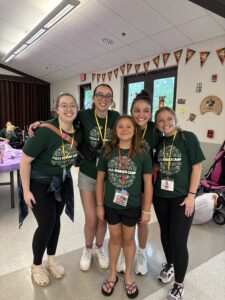
Charlotte at MDA camp with her cabin counselors
It became hard to trust the people we should have been able to. Our faith in teachers and school administrators and doctors and nurses was replaced by hypervigilance and oversight. In the second grade, immediately after returning to school post-Covid, Charlotte would come home crying for hours every night, because gym class was too hard. She couldn’t jump on the trampoline and couldn’t roller skate. We asked the school to exempt her from gym class. They told us she was allowed to opt-out of activities but not allowed to leave the class altogether.
Navigating rare disease meant that we felt abandoned by the places where we were supposed to feel the most safe. Nothing was conventional and everything needed a new foundation. The way we learned how the world worked wasn’t reflected in this space and we needed to learn a new paradigm. And this new paradigm meant accepting that our lives would look different. We would need to unlearn what we knew and relearn new ways of interacting with the world.
I tried to protect Charlotte from the knowledge of her disease for a long time. I was struggling to wrap my head around what this diagnosis meant for her life, and I just wanted her to be a kid. I didn’t want her to think about what this might mean for her long term or internalize that she was different.
But she is different. And Charlotte wanted you all to know that this was the hardest part for her, too. That it was so hard for her to understand why she was different from her peers and why this disease happened to her. And looking back, she felt too young to understand but didn’t have a choice. She wishes she had more time with her muscles to be a kid; she doesn’t mind being disabled, but she doesn’t ever want to lose her independence.
Why am I sharing my thoughts like this?
Because navigating a rare disease diagnosis isn’t linear. There isn’t just one story to tell of how we went from the shock of the diagnosis in that doctor’s office in January of 2017 to organizing across the spectrum of Sarcoglycanopathies to help our children. It’s 1,000 little moments and small lessons that slowly build you into a new human. Just like new parents spend their children’s whole childhood learning how to parent, reflecting back on those years knowing that the lessons they learned were cumulative and hard won. The same is true for navigating a rare disease.
Saying yes
So, the meandering path to tell you about navigating a rare disease diagnosis was to tell you why I am saying “yes”. Because the most important things I learned were the things I never expected.
That one day, a girl named Blythe would text me and say that she also had LGMD2C and if Charlotte ever wanted to talk to her, that would be ok. She would go on to tell Charlotte that a silver lining of this disease is you always know who your friends are. I needed to hear that, too.
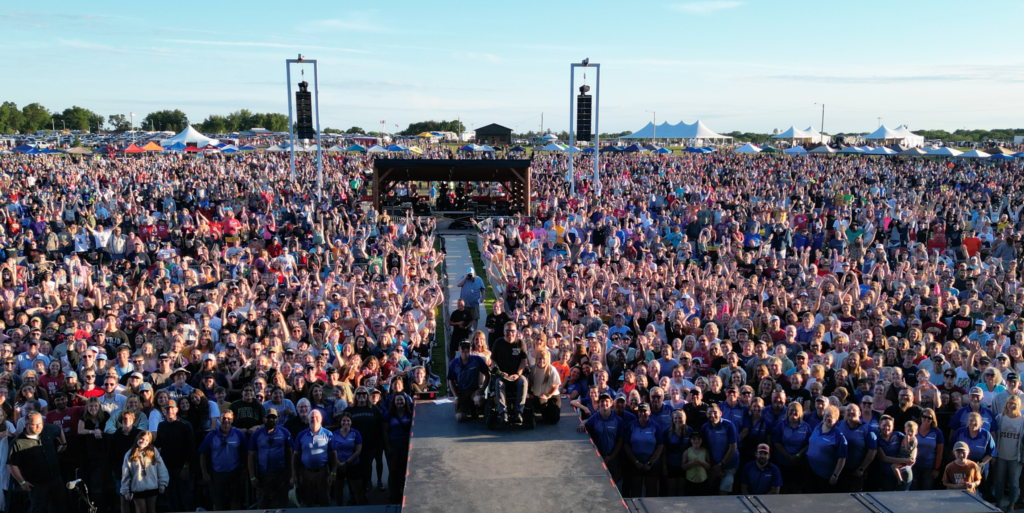
And that MDA Summer Camp would give Charlotte a sense of belonging that we had looked for in every corner of our lives but only found when she could be surrounded by kids that have lived the same experiences as her and where her disability didn’t mean she was singled out.
And that the Dion family would reach out to me to work together to take charge of how to get clinical trials to patient groups. And not only would they launch the first clinical trial for LGMD2C in the United States, but I’d get to work with them to help keep it going.
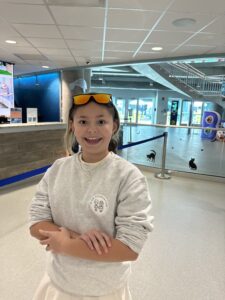
Charlotte at the aquarium
The nature of rare disease is that you won’t always find people with the same diagnosis near you, so maybe you’ll make friends with a mom whose child survived cancer and she will be one of the people in your life that you relate to most.
Finding a medical team that aligns with the goals you have for your child or that knows their diagnosis intimately is vital. You’ll form closer bonds with them than most people do with their physician’s office. They’ll get to know you and that’s important. A deep trust between your family and your specialists will help you ask questions without fear and make decisions with confidence.
You’re living life for the first time with a wrinkle that means many people in your life will not have any context for. There isn’t one right way to navigate this, but I can say from experience that isolation is one of the wrong ways – I learned the hard way – and maybe that’s just part of the process. You might need to go down a lot of paths to find the right one, but you can only do that if you say “yes” to something new.
Next Steps and Useful Resources
- Learn more about Limb-girdle muscular dystrophy (LGMD) here.
- Browse MDA’s Mental Health Hub.
- MDA’s Resource Center provides support, guidance, and resources for patients and families. Contact the MDA Resource Center at 1-833-ASK-MDA1 or ResourceCenter@mdausa.org
- Stay up-to-date on Quest content! Subscribe to Quest Magazine and Newsletter.


Disclaimer: No content on this site should ever be used as a substitute for direct medical advice from your doctor or other qualified clinician.