2026 MDA Clinical & Scientific Conference Opening Highlights the Power of Collaboration
By Amy Bernstein | Tuesday, March 10, 2026
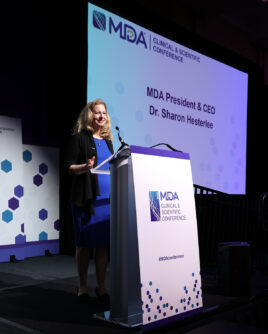
Sharon Hesterlee, PhD, MDA President and CEO
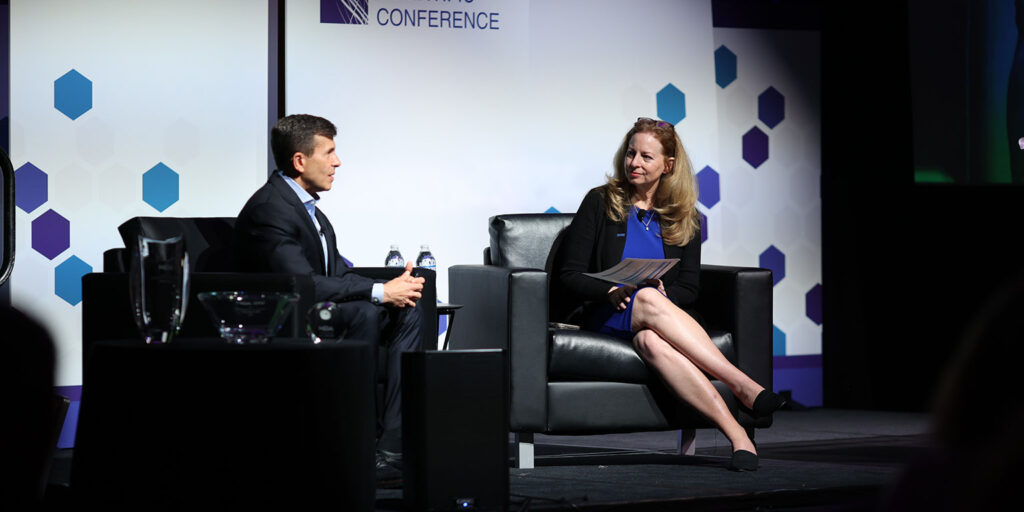
On March 9, Sharon Hesterlee, PhD, MDA President and CEO, welcomed more than 2,400 people attending MDA’s annual Clinical & Scientific Conference, both in person at the Hilton Orlando in Florida and virtually. The conference is the largest global gathering of neuromuscular clinicians, researchers, industry partners, advocacy organizations, and community members.
After acknowledging “a new sense of responsibility” in her role as MDA’s leader, Dr. Hesterlee provided an overview of the extraordinary progress and unique challenges facing the neuromuscular field today. Seeing new scientific technology translated into approved drugs and therapies that can make a real difference in the lives of people living with neuromuscular diseases is deeply satisfying, she said, but it also raises new questions and barriers as the science outpaces the infrastructure to approve and deliver therapies.
“That reality places responsibility on all of us,” Dr. Hesterlee said. “It’s incumbent on this community not just to advance science but to work together to align scientific progress with the institutions and systems that might stand in the way.”
This is where she sees MDA playing a vital role. “For more than 70 years, MDA has served as a convenor, bringing together groups like this,” she said. “That role has never been more important than it is today.”
Meeting challenges with hope
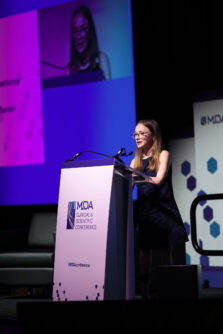
MDA National Ambassador Lily Sander
The importance of overcoming challenges was exemplified by MDA National Ambassador Lily Sander, who invited the audience of neuromuscular experts to walk in her shoes. “When was the last time you felt completely exhausted — not just tired after a long day, but the kind of exhaustion that settles deep into your bones?” she asked.
The high school senior described her experience of living with fatigue as a symptom of Charcot-Marie-Tooth disease (CMT). “My mind pushes forward, eager to do more; my body asks me to pause. That tension shapes daily decisions in ways that many people never have to think about,” she said. Yet fatigue, being an invisible symptom, is often misunderstood.
By sharing her experience, Lily hoped to impress upon conference attendees the importance of listening to the people most affected by their work.
“Accessibility is not simply about removing barriers. It is about creating pathways — pathways that allow patients not only to receive care, but to help shape the future of that care, and one of the most powerful ways to create those pathways is by listening to the voices of the patients themselves,” she said. (Watch Lily’s speech.)
Next, John Crowley delivered the conference keynote address. In his role as President and CEO of the Biotechnology Innovation Organization (BIO) and a founder of two biotech companies, John brought a national leadership view on innovation and the path ahead for the neuromuscular field. In his role as father to two children with early-onset Pompe disease, John brought a very personal perspective.
His family’s story of fighting for the development of the first enzyme replacement therapy (ERT) for Pompe disease was dramatized in the film “Extraordinary Measures.”
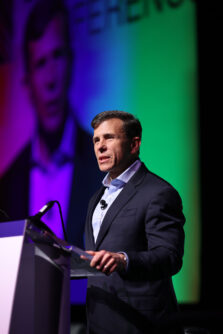
John Crowley, President and CEO of the Biotechnology Innovation Organization
“In many ways, the film was a vehicle for our family to be a proxy for the many families, children, and adults living and thriving in the world of rare diseases … and to show in one family’s journey what it takes to live, to thrive, to navigate a very complex system to make newer and better medicines,” he said.
After his children were diagnosed, John left his job at Bristol-Myers Squibb to co-found Novazyme Pharmaceuticals, later acquired by Genzyme Corporation, where he helped advance experimental science that led to the first ERT for Pompe. He took a risk and argued that risks are sometimes necessary in the rare disease world.
Today, the challenges to taking those risks often have to do with the infrastructure around research funding and healthcare. “We’ve never had more technologies than we have today. … Lord knows we have enough unmet need … There’s lots of capital available. So why are we struggling?” he asked.
His answer: “There’s too much uncertainty in science, too much uncertainty in the regulatory process. And after [a biotech company goes] through all of that, runs that gauntlet, now we have the uncertainty and confusion and complexity of making sure that our inventions are paid for and that patients have 100% access to these medicines.”
To overcome these challenges, John described a “virtuous circle” of academic research, government agencies like the National Institutes of Health, advocacy organizations like MDA, small biotech companies, entrepreneurs, and late-stage investors working together to promote innovation and access.
In his leadership role at BIO, John regularly speaks with regulators and lawmakers in Washington, DC. He’s found bipartisan support for removing barriers to developing therapies and increasing access to them for the people who need them. He feels optimistic about the future. (Watch John’s keynote address and conference highlights.)
The opening morning of the conference also included three award presentations recognizing people who are making an impact in the neuromuscular field. Read MDA Awards Honors Those Driving Progress in Neuromuscular Research and Care to learn more about this year’s awardees.
Education and idea sharing
The three-day conference features a packed agenda of more than 30 sessions, with some of the world’s foremost experts in neuromuscular disease exploring bold new ideas to improve the lives of people living with neuromuscular diseases.
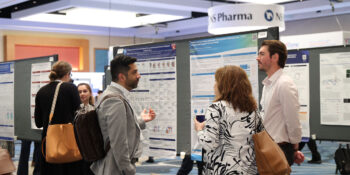
Attendees exploring and discussing scientific poster presentations.
Afternoon sessions provided conference attendees with the latest information on topics ranging from innovative technologies (e.g., Beyond 2D: Utilizing Curi Bio’s 3D Engineered Muscle Tissues for Predictive Disease Modeling) to practical knowledge about coordinating healthcare (e.g., The Role of Psychology in Supporting Patients & Families Receiving Gene Therapy).
The Exhibit Hall and Poster Sessions also gave attendees the chance to explore more than 500 research posters and connect with fellow clinicians and researchers to spark new conversations and collaborations. On Wednesday, the conference will feature 63 oral abstract presentations showcasing emerging research.
This year’s conference highlights MDA’s role as a convener, bringing together people from all areas of the neuromuscular field — from drug researchers working in laboratories to doctors and therapists caring for people with neuromuscular diseases — to learn about the real-world impact of their work and share visions for the future.
2026 MDA Clinical & Scientific Conference by the Numbers
2,020 in-person attendees
403 virtual attendees
40 countries represented
195 speakers
32 sessions
63 oral abstract presentations
500+ research poster presentations
27 Patient Advocacy Pavilion participants
Next Steps and Useful Resources
- Read more about the MDA Clinical & Scientific Conference.
- Stay up to date on Quest content! Subscribe to Quest Magazine and Newsletter.


Disclaimer: No content on this site should ever be used as a substitute for direct medical advice from your doctor or other qualified clinician.