
MDA Ambassador Guest Blog: Embers of Resilience Through Depression
By Joshua Vinson | Wednesday, May 13, 2026
5 Second Summary
MDA Ambassadors play an essential role in furthering MDA’s mission while representing and empowering the neuromuscular disease community. Quest Ambassador Guest Blog series provides a platform to share their personal stories, perspectives, and experience.
Joshua Vinson enjoys rain, camping, and cooking. Joshua works as a Quality Assurance Specialist in medical records processing and lives with Laing distal myopathy.
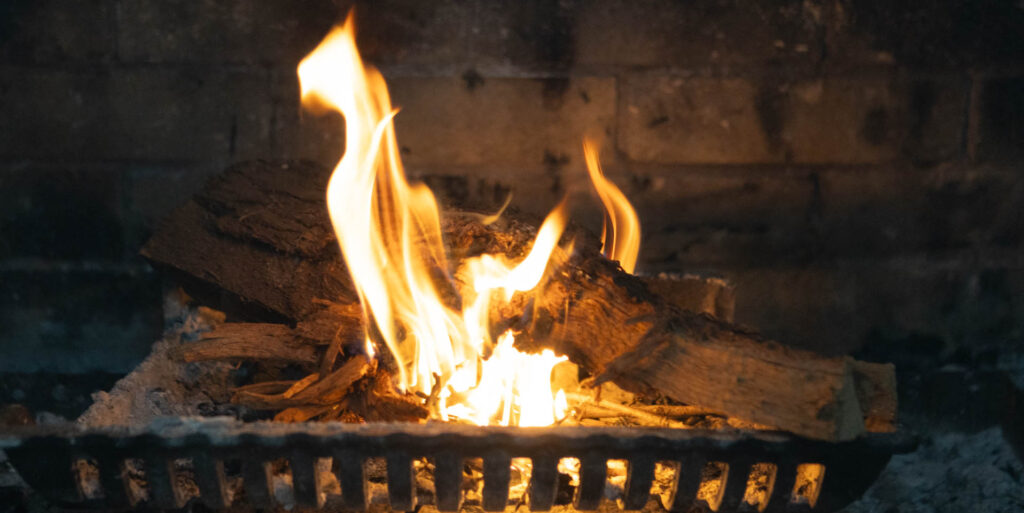
I think about fire a lot. I see the campfires I used to sit around before I grew too weak for weekend camping trips. I reminisce about the large bonfires we’d create in the evenings, far out in remote campsites before I relied on a BiPap machine to make it through the night. From a smattering of small sparks to blustering tongues of flame, gradually built into a roaring pillar of brilliant light and heat, the fires we coaxed to life felt like a kind of unifying, natural power. It was never done alone, and it was a lifeline in the wilderness.

Joshua Vinson
I also think about the fires found back at home. Controlled fire, of course, though in my warm state of Texas those flames built in the fireplace are rare. These occasions are most often holiday-centered, memories of family and tradition, of thankfulness and cheer. There is melancholy here, too; more than a few of these cherished memories are of those who have since passed, and I wonder at times how soon I will be the one being remembered as my loved ones gaze into the flames. But the fire is still comforting. It grows, dies down, and ebbs and flows, and a prodding or two with some added fuel brings it surging back as our hero in the winter.
Depression is complex, chemical, and confounding. As a disease, it has many potential roots; from the physiological and genetic causes, to the psychological and traumatic origins, depressive disorders can uproot lives and warp our thought patterns beyond recognition, taking us to dark places otherwise unimaginable. Even without a predisposition to depression, simply living with a chronic illness places us at a far higher risk than the general population. Surviving with constant negative physical feedback, as well as the certainty of declining health and independence, is a wearying prospect for anyone. For those of us with progressive diagnoses, it is reality.
So, what do we do? Depression is real, the source is physical, and the gloom is not entirely without justification. How exactly does one grapple with such negativity when there is a truth that cannot be washed away?
When darkness is enticing, when depression feels reasonable, and when we are at our weakest, there is an image I hold onto.
Resilience begins as my Ember
When there is no strength in my body, no light in my soul, I look deep inside and can only dwell on the fact that I am alive at all. That despite the pain, despite the weariness, despite every single attempt and failure that brought me to this low point, I am still here, right now, thinking. My thoughts race, spiraling, and that in itself proves that the clock is still counting. In those moments I see the flicker of light, however small, and I know that the Ember is still alive. Because I have any thought at all, I am still here.
I let everything slow, for as long as that takes (and it can take a very, very long time, but deep breaths help if you can remember them), and I grasp toward that tiny, flickering light in the void. My heartbeat steadies, my breathing becomes less ragged, and I hold the Ember in my shaking hands.
That light, that source of life, can be quite varied for different people, those of different walks of life and avenues of inspiration. For some, the light is their God, for others, family or community or art or some intrinsic motivation. What matters is that the small light we can glimpse in the darkness is fostered.
So, I build the fire in my mind. I blow gently on the ember, the dying but not dead flame, and I stack the fuel together around the burgeoning warmth. The flames don’t need to be big. They just have to grow.
Depression, like an NMD diagnosis, is not something that is simply beaten. We struggle, for life, appreciating the good and enduring the bad. And the fire we build inside ourselves to fight it will never fully banish the shadows. Similarly, we can’t expect to build a brilliant flame the instant we need to be saved.
We start small, grounded, and steady. Nurture the flames of resilience by focusing on what exists in the moment, every physical sensation and sight and sound and smell that ties you to the world, and then on the people around you, whether or not you like them in these dark moments. Appreciation can come later. Feelings can be reevaluated. Forgiveness and acceptance for both parties can come when the suffering has dimmed, when the fire is brighter than the pain. We have to accept what is, taking time to rest in the light.
Over time we add on the fuel of thankfulness, for everything that can be counted on, as difficult as that can be. Each daily certainty, every joy that can be uncovered, is a stick piled onto the now blooming crimson flower.
As the fire grows further still, as weeks pass, routines and responsibilities become the great logs on the bonfire. These, despite feeling at first like burdens, are the most crucial element of resilience, even more so than the ember that pulls me from the dark. Routine is the symbol of our strength, both the sign that we have come far enough to care for something on our own, and the canary in the coal mine when we begin to slip away from the light.
The fuel-logs of routine form a structure for our inner fire. They give us daily purpose, a sense of accomplishment, and generally are the elements of our lives that naturally make us feel healthier (exercise, cleaning, self-care, cooking food for ourselves). But as a warning sign, too, routines are invaluable. Even with our awareness steady, our mind and body rested, and all the thankfulness in the world, we can and will still falter. When this happens, reach out. Notice that the shelves are dusty, that the clutter is growing, that maybe you hair hasn’t been washed quite as well this past week, and take a step back.
Find support, and reconsider the number of logs on the fire. Don’t smother the flame, and when help is needed, ask before the light dims further. Fire doesn’t have to be tended alone. Build your fire with those you trust, and burn brightly. Find what only you can do, and live brilliantly.
Next Steps and Useful Resources
- Learn more about Distal muscular dystrophy (DD) here.
- Browse MDA’s Mental Health Hub.
- MDA’s Resource Center provides support, guidance, and resources for patients and families. Contact the MDA Resource Center at 1-833-ASK-MDA1 or ResourceCenter@mdausa.org
- Stay up-to-date on Quest content! Subscribe to Quest Magazine and Newsletter.


Disclaimer: No content on this site should ever be used as a substitute for direct medical advice from your doctor or other qualified clinician.