Stars in the Shower: How Listening to My Body Led Me to a Second Diagnosis
By Amanda Norman | Tuesday, May 26, 2026
“Just because you have a rare neuromuscular disease doesn’t mean you’re immune to having other things.” I readjusted on the paper-covered table while my neurologist’s words hung in the air. Could this be something else altogether?

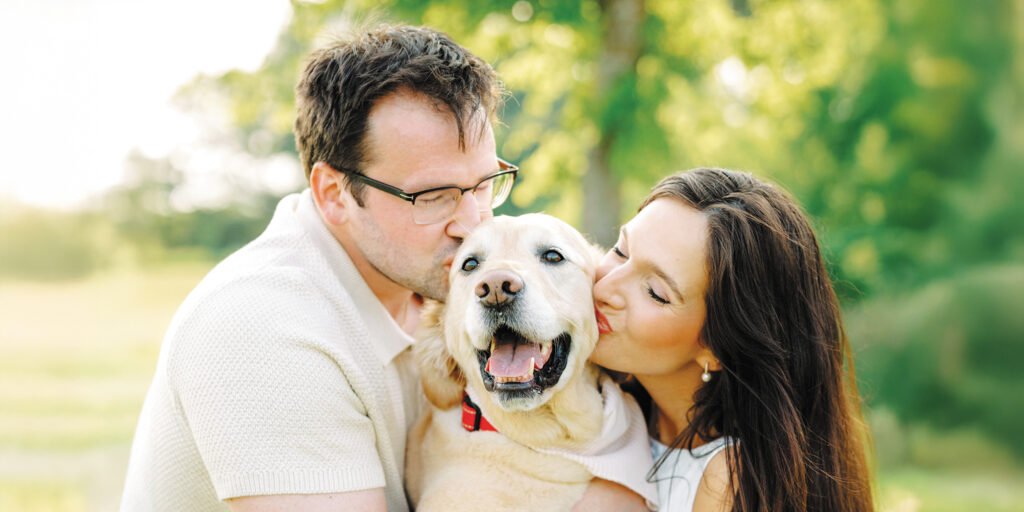
Amanda Norman and her fiancé, Dimitri
I’m Amanda. I’m 28 and live in Texas with my loving fiancé and our golden retriever. I have limb-girdle muscular dystrophy type 2L (LGMD2L), a rare, progressive neuromuscular disease. Like many with this disease, I’ve spent my life with more questions than answers, wondering about my future and waiting for a cure.
I was diagnosed at 14, but symptoms surfaced in my early 20s. This transition was isolating, leading to depression and anxiety. At 25, I felt that sharing my LGMD journey could help others (and maybe help me too!), so I created my platform, Her Chronic Wellness. My motto was “Sharing my chronic journey, and hoping it lightens yours.” But within months, it turned into something bigger: a space for advocacy, friendships around the world, and, to my surprise, healing. These are all tools I’d end up needing for my next diagnosis, but more on this to come.
I’ve seen a lot of providers in my lifetime, and something that continues to surprise me is how often I have to educate them on my disease. I’ve sat in rooms while doctors typed slowly, asking me to spell it again:
“L-I-M-B…”
I don’t blame them. There is a heavy lack of education around LGMD. It’s rare, and every subtype looks different. But it’s a unique patient experience, educating providers on my disease, because it blurs the lines between what they know to be true versus what I know to be true.
My body is very reactive. I’ve always been susceptible to illness and injury, often hospitalized for things a healthy person would fight off. I keep a photo album of symptoms in my phone: rashes, excessive bruising, dilated pupils, and alopecia spots. My doctors labeled me “autoimmuney,” and it became standard to dismiss new symptoms with a shrug and a nod to my muscular dystrophy.
“You’re just highly inflammatory because of your LGMD,” they’d say.
In January 2025, norovirus landed me in the hospital for two days. After I recovered, something was different. My “autoimmuney” symptoms were worsening. I was constantly dizzy and on the verge of fainting. I was seeing stars in the shower. Brushing my teeth sent my heart rate soaring. I couldn’t catch my breath and couldn’t stay awake. I was desperate for answers.
Which led me back to that paper-covered table, with a neurologist who finally spoke words I’d never thought to ask: Could this be something else altogether?
I opened @HerChronicWellness. I posted stories, asked questions, and researched. I talked to anyone I could find experiencing something similar. The deeper I went, the more one term kept coming up: postural orthostatic tachycardia syndrome (POTS). It’s a form of dysautonomia, often triggered by a virus, and guess what? It’s known to disproportionately affect “autoimmuney” women.
I needed proof, so I turned to what doctors like best: data. I wore an Oura ring and a Visible band daily, tracking my every move and my heart rate at all times.
Time: 8 AM | Activity: Blow-dried my hair Heart rate: 156 BPM
I tagged every spike with the associated activity. I printed pages and pages of data and marched over to the cardiologist.
There I sat, explaining LGMD to my cardiologist while she thumbed through the pages of data. I explained my POTS suspicion and braced for dismissal. To my surprise, she actually agreed. I wore a Holter monitor for two weeks, which confirmed my abnormal heart rates. I did the infamous tilt table test. And within a few months, I had a confirmed diagnosis: POTS.
I thought I’d feel more victorious. I’d found the culprit, listened to my instincts, researched, collected data, and advocated for myself. But relief and grief collided. I had answers, but I also had a second lifelong condition without a cure. I had to process what it meant to now carry two diagnoses.
We started treatment immediately: heart medication, increased electrolytes, and lifestyle shifts. I bought a shower chair and began prioritizing rest. I uncovered my biggest triggers: lack of sleep, overexertion, temperature, and stress. Slowly, for the first time in months, I began moving through my days without feeling like I’d collapse.
Living with a chronic illness is complicated. Sometimes it’s one thing; sometimes it’s five. If there’s anything this season has taught me, it’s that your body is worth listening to. Trust your doctors. Trust yourself more. Lean into community. Be curious enough to question what feels off and consistent enough to track the patterns. Data is more than just numbers; it’s your body speaking a language doctors can understand. And sometimes, that’s the very thing that helps give you your life back.
Amanda Norman is a user experience designer in Dallas, Texas. You can find her on Instagram at @HerChronicWellness.
Next Steps and Useful Resources
- A gamut of emotions hits anyone receiving a neuromuscular diagnosis. Learn about expert-recommended strategies and resources in Coping With a Difficult Diagnosis.
- Listen to an MDA Podcast conversation with Jax Cowles about “life hacking” to solve everyday accessibility.
- Stay up to date on Quest content! Subscribe to Quest Magazine and Newsletter.


Disclaimer: No content on this site should ever be used as a substitute for direct medical advice from your doctor or other qualified clinician.