Accessible Birding: An Inclusive Window to Nature and Wildlife
By Barbara and Jim Twardowski, RN | Tuesday, May 26, 2026
“A birder is someone who experiences the joy of birds,” says Paul Miller, president of the Sacramento Audubon Society and an accessible birding field trip leader.
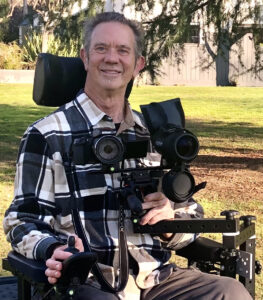
Paul Miller is an accessible birding field trip leader.
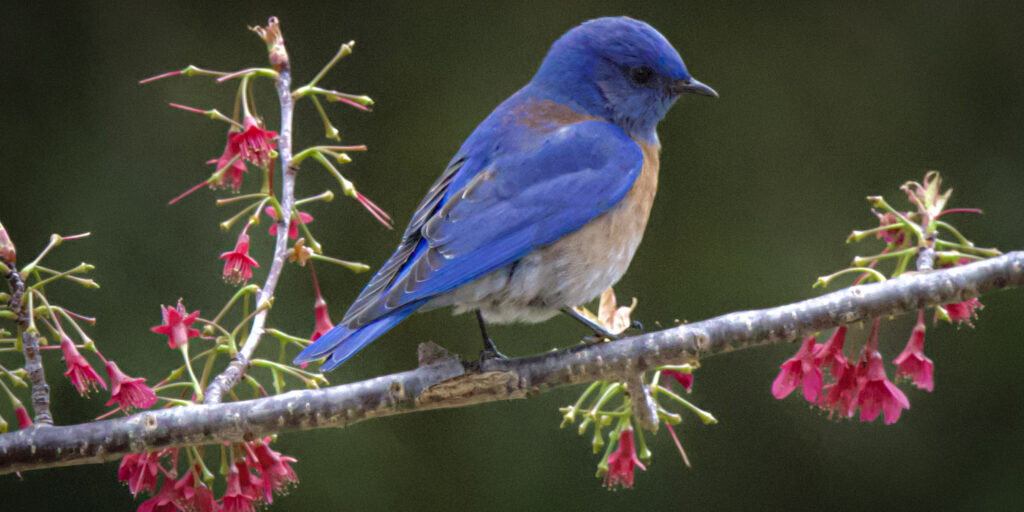
According to Paul, birding and birdwatching are among the most accessible ways to enjoy nature and wildlife. Though the terms birding and birdwatching are often used interchangeably, they are different ways to appreciate birds.
Birding is an active hunt to observe and identify birds in their natural habitats. Birders generally use binoculars and may carry bird guides, cameras, and other equipment.
Birdwatching is simply looking at and listening to birds. It can be done anywhere — for instance, near a backyard birdbath — and without any equipment.
All you really need to experience the joy of birds is to sit, watch, and listen.
Birding with a disability
Paul, who lives with facioscapulohumeral muscular dystrophy (FSHD), discovered birding about 10 years ago. After retiring from a career in transportation planning in Sacramento, California, he enrolled in an eight-week birding course with an outdoor field trip.
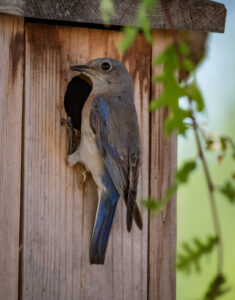
Birdwatching is an easy way to enjoy nature right outside your window. Photo by Paul Miller.
At the time, Paul wore leg braces and used a cane. FSHD causes progressive weakness in the lower legs, face, and upper arms and shoulders.
On the field trip, Paul’s guide pointed to a bird nesting high in a tree. “I lifted my binoculars up, and I literally couldn’t get them to my eyes. I thought, ‘Oh, shoot! This isn’t gonna work,’” he says.
Afterward, Paul searched online for adaptive birding equipment and found nothing. So, he devised a way to attach binoculars to a camera monopod (a single-leg support pole). This allowed him to look through his binoculars without holding them, getting close-up views of birds’ patterns and colors, as well as their feeding and nesting behaviors.
“From there, I was just hooked on the experience of being in nature and observing these magical spirits,” Paul says.
For the past decade, Paul has devoted thousands of hours to bird-related adventures and advocacy, with a special interest in making the hobby welcoming to people with disabilities. As chair of the Sacramento Audubon Society’s Accessibility Committee, he helped create an Accessible Birding webpage that identifies accessible birding locations in the Sacramento area.
Adaptive birding equipment
Paul continues to use his engineering skills to design adaptive birding equipment.
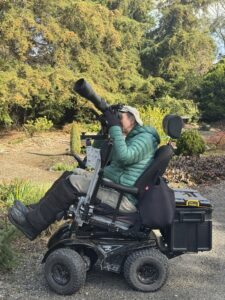
Paul adapts birding equipment for his mobility.
As his body changed, he transitioned from using a cane to a walker. Eventually, he found using a walker drained his energy, so he transitioned to a power wheelchair.
At each stage, Paul has adapted birding equipment for his abilities and mobility devices. He added a power focus mechanism to his binoculars so they can be focused with a button (rather than small wheels that you rotate), eliminating the need for finger dexterity. He also designed and built adjustable mounts to attach a spotting scope and camera to his wheelchair. (He shares examples of his adaptive equipment at FSHDbirder.org.)
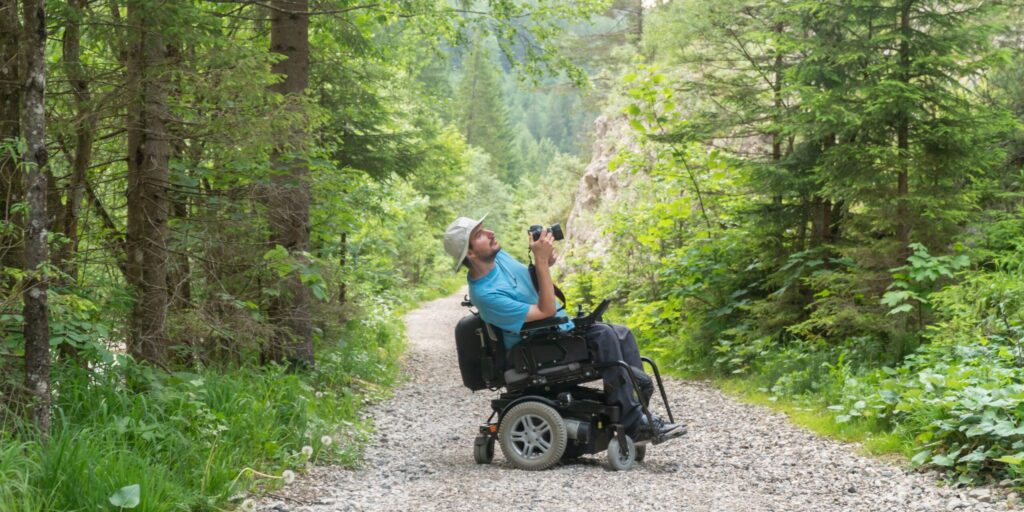
Paul purchased a wheelchair-accessible van and uses an all-terrain power wheelchair. His rugged wheelchair can navigate mud, sand, and gravel on outdoor trails. (Many state parks offer loaner all-terrain wheelchairs. Read more about accessible parks and recreation areas.)
While adaptive equipment helps Paul enjoy his pursuit of birding and bird photography, he notes that birding and birdwatching can be inexpensive, low-tech activities. The main point is to get outside and enjoy the restorative effects of nature.
Nature is therapeutic
Dozens of scientific studies have found that spending time outdoors can improve physical and mental well-being. For example, exposure to sunlight and natural green spaces can keep mild depression at bay, reduce the risk of cardiovascular disease, enhance brain function, and improve sleep.
Paul has always been an outdoor enthusiast. He finds spending time in nature is healing, mentally and spiritually. “It gives me a profound sense of peace and well-being,” he says.
Birds provide one of the most accessible ways to see and enjoy wildlife because they are all around us in almost any environment.
Whether he is on a trail with his binoculars or sitting on his back porch, Paul can observe and appreciate birds in the wild.
“Our natural world is both magical and sacred. Allowing yourself to spend time, slow down, and really experience this magic is pure therapy,” he says.
How to start watching birds
Developing an appreciation for birds can be as simple or as complex as you want it to be. Here are some tips to get started.
Go where the birds are:
- If you have trouble navigating long distances or rugged terrain, go to an accessible park or lake where birds gather, and find a spot to sit close to them.
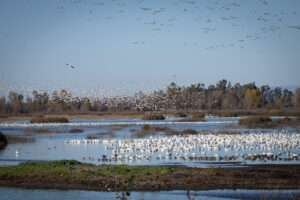
Viewing birds in and around water may be easier than looking up at trees. Photo by Paul Miller.
- Try viewing birds from an accessible fishing pier, where they are frequently at eye level or diving into the water — for some, this might be more comfortable than looking up at trees.
- Search for accessible birding locations across the US and beyond using the National Audubon Society’s Birdability Map. The crowdsourced map is constantly being updated with details about trails, bathrooms, parking, ramps, shade, and more.
Find tools that make it accessible and fun:
- Binoculars are the go-to tool for birders because they give you a close-up view of birds that are far away. But if binoculars feel heavy and hard to handle, consider using a monocular, which you look through with one eye. This optic device is smaller, lighter, and designed for one-handed use.
- Aiming and focusing any optic device on fast-moving birds can be frustrating. Sometimes it’s more enjoyable to relax and watch with your eyes or listen to their songs. Enhance your relaxation with books about birds or mindful birding from the Access Birding Bookstore.
- Download the free Merlin Bird ID app, which can identify birds based on their songs. The app works offline, so you can use it anywhere.
Make it social:
- Birding and birdwatching are popular — 37% of Americans participate, according to the 2022 US Fish and Wildlife Service Survey — so you’re likely to meet other people who enjoy the hobby.
- In Paul’s experience, people who enjoy birds are generally kind and accepting. “I love meeting new birders in the field,” he says. “They have always been welcoming to me and others with disabilities.” He recommends contacting your local Audubon Society chapter or other environmental/conservation organization in your area to find birding groups and field trips.
- Read Five Tips to Increase Socialization this Spring for more ideas.
Next Steps and Useful Resources
- Find more Quest content to help you explore new activities.
- Read more Quest content about connecting with the MDA community.
- Stay up to date on Quest content! Subscribe to Quest Magazine and Newsletter.


Disclaimer: No content on this site should ever be used as a substitute for direct medical advice from your doctor or other qualified clinician.