MDA Ambassador Guest Blog: Strong Enough to Carry Grief AND Gratitude with FSHD
By Skye Anderson | Monday, June 15, 2026
5 Second Summary
MDA Ambassadors play an essential role in furthering MDA’s mission while representing and empowering the neuromuscular disease community. Quest Ambassador Guest Blog series provides a platform to share their personal stories, perspectives, and experience.
Skye Anderson lives in North Carolina, and is an advocate living with facioscapulohumeral muscular dystrophy (FSHD). She is passionate about accessibility, spreading awareness, and empowering others with disabilities to use their voice. In Skye’s free time, she enjoys expressing herself through art, cheering on the Carolina Hurricanes, and connecting with others through shared experiences.
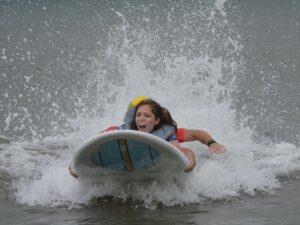
Adaptive Surfing with Life Rolls in Wilmington, NC
I remember the day I realized I was losing a huge part of my identity. At 18 years old, basketball wasn’t just a hobby; it was my life. But my body could no longer keep up. I sat on my parents’ deck crying, questioning who I am and what I would do without the thing that shaped so much of me. I was losing a version of myself that I didn’t know how to let go of.
That day became the first of many times that I would have to grieve the loss of a life I thought I would live. At the time, I didn’t understand that grief wouldn’t happen all at once. It would come in waves. Each time I was forced to let go of something I thought was permanent, something else would quietly take its place. Sometimes it was a new perspective. Sometimes it was a deeper understanding of myself or others. And sometimes it was seeing the world through a lens I never would have without my diagnosis.
Adapting and reshaping perspectives
Over time I began to see that losing a version of myself didn’t mean I had to stop living all together. It meant I had to learn how to adapt and reshape my idea of what life looks like, even if it felt uncomfortable at first. I started leaning into having FSHD instead of trying to force myself to fit into a world that was not designed with people like me in mind. As my body became weaker physically, I noticed myself becoming stronger mentally.
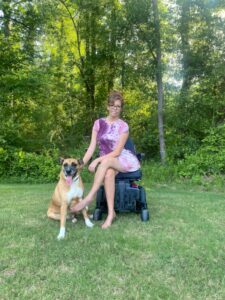
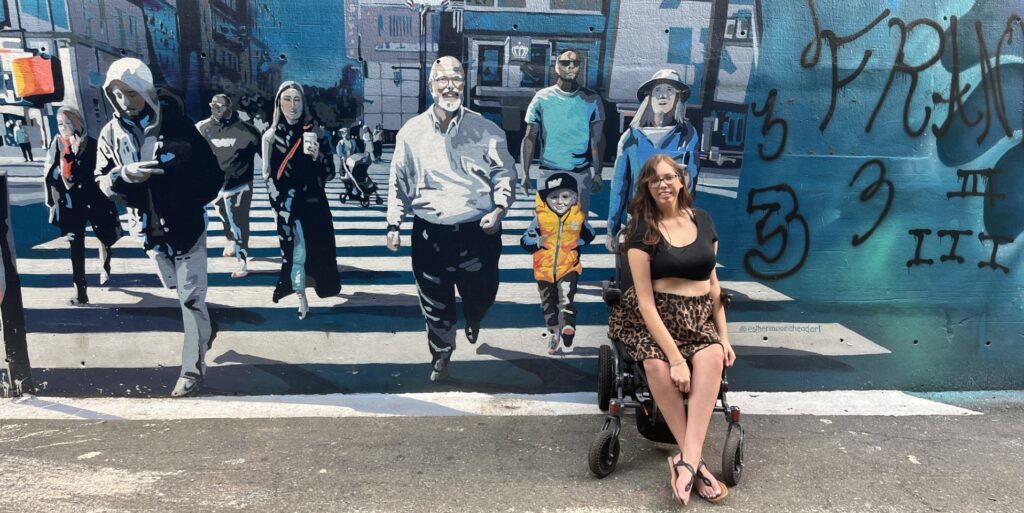
Taking my dog for a roll
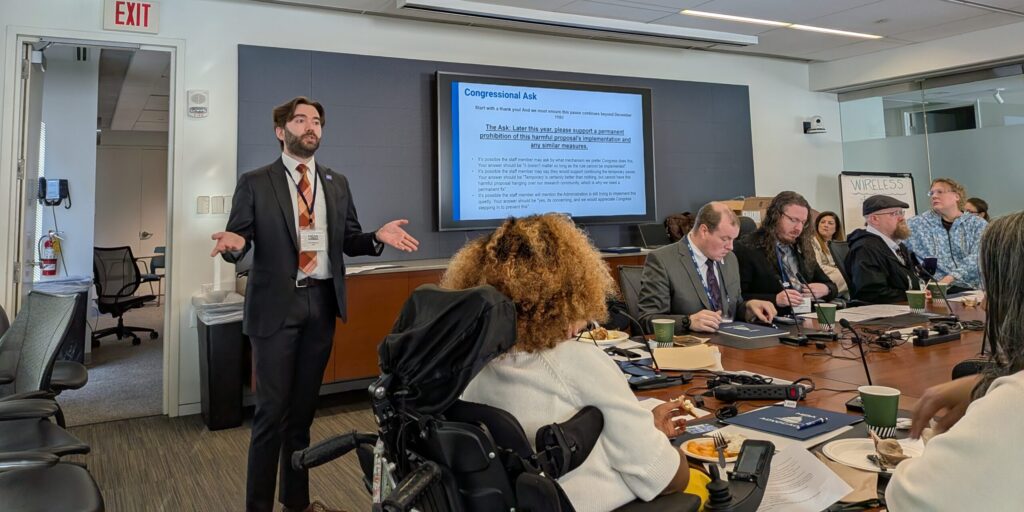
What started as learning how to navigate my own diagnosis slowly turned into using my voice to help create awareness and change. As an MDA ambassador, I began speaking to sponsors participating in MDA fundraisers, helping host fundraisers for MDA Walks, joining local fire stations for Fill the Boot campaigns, participating in panels on various topics, and eventually speaking on Capitol Hill to advocate for real change for the neuromuscular disease community.
None of this came naturally or easily. I doubted myself often. I questioned my confidence and wondered if people would begin to see me differently than I saw myself. However, with every speech, event, and uncomfortable moment I pushed through, my confidence strengthened. What once felt intimidating began to feel empowering. I started realizing that my voice carried weight, and that my experiences could help other people feel seen and understood.
Finding freedom and purpose
Just as I thought I had finally adjusted to the changes in my life, another wave crashed over me: the realization that I needed a wheelchair. Once again, my identity felt like it was shifting beneath me. I wasn’t ready, even if my body was. Accepting a wheelchair felt like giving up, giving in, and admitting that my disease had taken something else from me. To me, it was a visual symbol of weakness.
I was wrong.
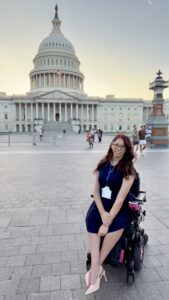
After speaking on Capitol Hill during MDA Hill Day
My perception changed again.
The wheelchair gave me a new sense of freedom and I started living more. Instead of exhausting myself trying to keep up or allowing pain to consume my enjoyment, I could finally focus on the experiences that actually mattered to me. I could travel more, attend more hockey games, more concerts, keep up with my nephews, and attend their baseball games. I was participating in life with a peace of mind I hadn’t felt in a long time.
My anxiety around falling began to fade. I no longer had to constantly worry about people bumping into me, uneven terrain, or whether a seating situation would physically exhaust me before I could even enjoy the experience. The wheelchair stopped feeling like a symbol of weakness and became a symbol of independence.
Once I started feeling that freedom, I couldn’t get enough. I pushed myself to do things that once felt completely out of reach, like surfing, even if those experiences looked differently than I initially imagined. That became one of the biggest lessons FSHD taught me: different does not mean less.

Surrounded by love, doing something I love
Living with FSHD has changed my life in ways I never could have prepared for. There are still moments of grief, frustration, defeat, and uncertainty. There are still versions of myself that I miss. But there is also growth, purpose, community, and joy through experiences that I may never have discovered otherwise.
To anyone struggling with a diagnosis or grieving changes in their own life, I hope you know that a meaningful life is still possible, even when it looks different than you imagined. There is still joy to experience, purpose to discover, and a future worth investing in. You are still allowed to grow, dream, adapt, and take up space in this world exactly as you are.
Next Steps and Useful Resources
- For more information about the signs and symptoms of Facioscapulohumeral muscular dystrophy (FSHD) , as well an overview of diagnosis and treatment concerns, an in-depth review can be found here.
- Learn more about Facioscapulohumeral muscular dystrophy (FSHD) in our Simply Stated article.
- Find support for your mental health needs in MDA’s Mental Health Hub.
- To learn more about MDA’s Advocacy program, visit here.
- To learn more about MDA’s Young Adult Programs, visit here.
- MDA’s Resource Center provides support, guidance, and resources for patients and families. Contact the MDA Resource Center at 1-833-ASK-MDA1 or ResourceCenter@mdausa.org
- Stay up-to-date on Quest content! Subscribe to Quest Magazine and Newsletter.


Disclaimer: No content on this site should ever be used as a substitute for direct medical advice from your doctor or other qualified clinician.