Quest Podcast: Nothing Left to Prove: A Conversation with Kiersten Riggs
By MDA Staff | Wednesday, October 21, 2026
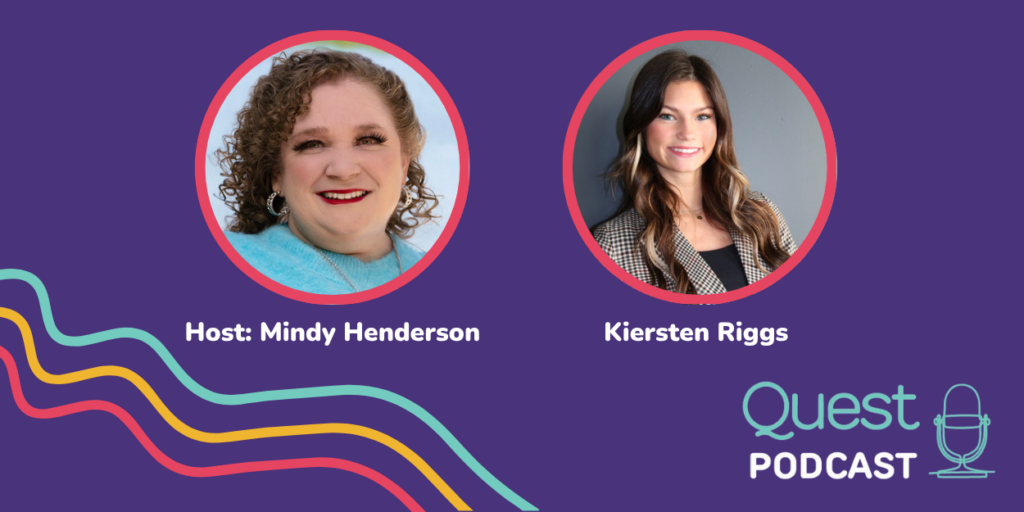
In this episode of the Quest Podcast, we chat with Kiersten Riggs, a 24-year-old rare disease advocate from Tulsa, Oklahoma, who was a varsity cheerleader when her family first heard the words Friedreich’s ataxia (FA). Kiersten opens up about being diagnosed alongside her older sister, the four years she spent hiding from the FA community before becoming one of its loudest voices, and the rude encounter with a bartender that accidentally launched her advocacy career. She speaks candidly about using a mobility aid for the first time, the difference between help that empowers and help that quietly takes independence away, and what happened when she finally put a photo of her walker on her dating profile. Kiersten shares her experiences, expertise, and heartfelt perspective on diagnosis, sibling journeys, self-advocacy, and giving yourself permission to stop proving anything to anyone.
Read the interview below or check out the podcast here.
Mindy Henderson: Welcome to the Quest Podcast, proudly presented by the Muscular Dystrophy Association as part of the Quest family of content. I’m your host, Mindy Henderson. Together, we are here to bring thoughtful conversation to the neuromuscular disease community and beyond about issues affecting those with neuromuscular disease and other disabilities, and those who love them. We are here for you, to educate and inform, to demystify, to inspire, and to entertain. We are here shining a light on all that makes you, you. Whether you are one of us, love someone who is, or are on another journey altogether. Thanks for joining. Now let’s get started.
Today on the Quest Podcast, I’m talking with Kiersten Riggs, a 24-year-old from Tulsa, Oklahoma, who is diagnosed with Friedreich’s ataxia at 16 years old. Today, Kiersten has turned her own experience with rare disease into advocacy, using her work in her own social media and at bio news to help raise awareness, build community, and help others feel a little less alone. But our conversation goes well beyond diagnosis. We’re going to talk about growing up with a progressive condition, independence, relationships and dating, navigating changes in mobility, and what it means to build a full life while leaving room for both the hard things and the hopeful ones. Kiersten, thank you for being here.
Kiersten Riggs: Thank you so much for having me. I’m so excited to talk and share a little bit about my advice and experience living with FA.
Mindy Henderson: Absolutely. Well, you are a bright light and I know our listeners are going to love this conversation, so I’m going to dive in with the first question. You were 16, like I said, when you were diagnosed, you were a varsity cheerleader. For listeners who may not know your story, take us back to that time. What was happening that eventually led to your diagnosis and what do you remember about being 16 and suddenly having this new information about your future?
Kiersten Riggs: Yeah, so it was during the summer. I was a varsity cheerleader, so I was practicing. I could do all these back flips. I was the girl who would get put in the air, balance on one leg during cheer. At the time, my mom kept saying that my sister is meandering when she would walk. And she went on a cruise for her senior trip, the heat was really getting to her. She was holding onto the rails going up and down the stairs. And so my parents were doing all of these tests on her and they couldn’t quite figure out what was going on. But my sister learned the balance test at the doctor’s office, so she would come home and practice it. It’s where you close your eyes and hold your arms out, and if you sway, that’s an indication that something is wrong.
And so I would watch her do it at home and I would do it and I would sway. And I was like, “What my sister is going through, I’m going through it too.” And my parents were like, “You’re just trying to get attention. This is really serious going through something. You don’t have it.” And I was like, “Okay.” And so then someone, I forget what doctor, but someone was like, “This is a neurological disorder. You should see a neurologist.” And no one in Tulsa really knew about a lot of things, like the pediatric neurologist, because she was still 17 and then she turned 18 later in the summer. So the pediatric neurologist said she was normal. My primary care doctor was like, “No, she’s definitely not.” And so we went to Houston. That’s when my parents heard the words Friedrich’s ataxia for the first time, but they wouldn’t tell me because they didn’t want me to look it up. They looked up FA, they realized it was genetic and they were like, “Oh, Kiersten wasn’t lying.”
They tested my sister for it and there was a two-week span of waiting. And then they told me that it is something serious. We’re not going to tell you what it is. But they tested my reflexes in my legs because with FA, you don’t have reflexes, and it didn’t kick back. So I could just tell by my dad’s face that I had what she had. And so the test came back for her. It was positive. So they finally told me what it was. But I wasn’t sure if I had it, but I figured I did. So I waited for two weeks and it came back positive. So they got me into a clinical trial the next morning. It was kind of funny because it was Halloween weekend. My test results came in Friday, so my parents knew I had it, but they didn’t tell me till Sunday, to have one last weekend without me knowing. And then they told me Sunday night and they were like, “By the way, you’re flying to Florida in the morning for a clinical trial.”
Mindy Henderson: Wow. I have so many thoughts listening to your story. I think a lot of times parents are in such a hard position when their kids are going through something like this, and I’m sure it must be so hard to know how to guide your kids through something like this, what to say, what not to say. What was going through your mind knowing that, yes, your sister had something, but you couldn’t know what it was. Did that make it more scary or less scary? Did you understand why they wouldn’t tell you the actual name?
Kiersten Riggs: I understood why. I feel like I was very just numb and emotional. I remember going to cheer practice and just crying, and everyone was like, “What’s wrong?” And I was like, “I don’t know yet. I don’t know what’s wrong.” And I remember… Because if both parents are carriers, you have a 25% chance of getting it. So I remember going to a football game and we were in the bus and I just kept seeing the speed limit sign, 25 speed limit, and it just kept reminding me. And it was all I could think about.
Mindy Henderson: Sure.
Kiersten Riggs: But yeah, I was just like, I don’t even know, it just felt kind of numb.
Mindy Henderson: Wow. Was it confirmed through a blood test? Is that how they ultimately diagnosed both of you?
Kiersten Riggs: Yeah.
Mindy Henderson: Okay. I haven’t spoken to a lot of people, one or two, but not a lot of people where both siblings had the same condition. What was it like to have a sister who understands FA from the inside? From what I’ve heard from you and understood, your experience and your progression aren’t identical to each other. Tell me what the sibling experience has been like for you.
Kiersten Riggs: Yeah, so I will say when we were first diagnosed, it was hard to have a sibling with it just because we handled it completely opposite. I did not want anyone to talk about FA around me. I didn’t want to be reminded of it. I didn’t want to think about it. And my sister, she was like, “I want to advocate. I want to raise awareness. I want to post it to everyone I know.” And I didn’t want people I know asking me about it, and I just didn’t want the constant reminder. So it was a little difficult at first, but now that we are adults and we both have adult things going on, like dating and work and navigating difficult conversations having a disability, it is amazing.
Obviously, I don’t wish that either of us had FA, but it is very nice to have that community of people who understand. Because I can ask my sister, “Hey, I’m going to use a walker for the first time and I’m terrified. If someone’s rude, how do I navigate that conversation?” Which my sister and I, our progression is very similar, which it’s actually not common for siblings to have similar progression. It just happened that way. She’s two years older than me, so I’ll say I mimic her if we were the same age. I’m two years behind her on progression. Now I will say, I can walk a little better when she was my age just because I move around a lot. So if you use it, you’ll be a little more coordinated. But yeah, it’s been amazing having a sister to go to.
Mindy Henderson: There may be people listening that are in a similar sibling type situation. Are there things you wish you had done differently in those early days to support one another? Or, it’s your journey, it’s your story, and I’m a big believer that the way that things happened is maybe the way that they were supposed to. But looking back, is there any advice you would give to somebody in this situation?
Kiersten Riggs: Yeah, I wish we would’ve been closer when we first got diagnosed, but she also went off to college, so we weren’t around each other. But also being 16 and 18, your perspective on life is a lot different. And I wish we would’ve given each other advice earlier on. And I should have talked about it more, but everyone’s journey is completely different. And I tell people this when they’re newly diagnosed, plug yourself into the community when you’re ready. Because I went to my first FA event two weeks after I was diagnosed, and it really scared me because I did not know what to expect with FA. And so I hid in my little hole for four years, and now I’m the biggest advocate. My FA community is there for me. I’m so blessed to have my FA community. So it’s just like, when you’re ready, plug yourself in.
Mindy Henderson: Yeah. I think community… I love that you said that because community and connection is so huge when you’re dealing with something like a rare disease and knowing other people who are going through something similar is such a help. And I’ve said it before, I think the neuromuscular community is one of the most welcoming, supportive communities that I’ve ever had the pleasure to be a part of. It’s like you said earlier, it’s a mixed bag. Because you wouldn’t wish for this, but I think the community is one of those bright spots that comes about as a result of it. That has been my experience. But I think you’re right, it’s an emotional journey. And I think it’s really important to listen to yourself and what you need and do things when you’re ready.
Kiersten Riggs: For sure. And I was going through something a week and a half ago, and I was really sad. And it was an FA situation where someone said something to me. And I’m in a FA group chat with a hundred people, and I tend to be super positive about FA. So when I say something that I’m going through something, got so many texts, eight responses in the group chat from guys and girls giving me their perspective. People call my personal phone and I literally cried, because I was like, “This community is beautiful.” I just gained a second family and a huge community. And I’m like, “These people care about me so much.” And even one of my friends, I’ve only met her once in person, and when I said something in the group chat, she kept following up with me to make sure that I was okay. And it just meant the world to me.
Mindy Henderson: It’s amazing. I had a similar experience. I do a lot of advocacy work also, and I went on a trip once and had a really rough experience flying, and I posted about it. And Keely Cat-Wells, who’s a prominent disability advocate, she’s wonderful, and I’ve had the pleasure of getting to know her a little bit, and she sent me a text and was just like, “Hey, we’re here if you need to talk.” And it’s this open-armed community that’s incredible. I’m curious, you talked about being kind of fearful early on, and when did that change? How did you go from being kind of afraid and overwhelmed to being, just a few short years later, this incredible advocate that’s sharing your story and doing such a service to the rest of the community?
Kiersten Riggs: It’s kind of a mix of things. I went to an FA neurologist, and he told me that everyone’s progression is different, so do not compare yourself to other people. And he told me that he doesn’t think I’ll ever get the heart condition that comes with FA cardiomyopathy. And so that was a big weight off my shoulders because, well, online it says there’s a life expectancy and reading that is scary. “Don’t pay attention to that. I don’t think you’ll get the heart condition.” And he told me, “I wouldn’t be surprised if you’re still walking in your 30s or 40s.” And so I was like, “Oh, okay. I shouldn’t compare myself to what the internet says, 5 to 10 years after you have symptoms, you’ll lose your walking. It’s different for everyone.” So that helped me have peace with FA and not freak out so much. And I’m very hopeful about treatment and clinical trials, and I fully believe that there’s going to be a cure someday. I really hope for one.
And as far as advocacy, I think what drove my advocacy was frustration. I went to a bar and grill one time, and I was on vacation, and I’d been shopping at the outlet malls, and I tried to order a beverage, and the bartender was like, “I’m not going to serve you. You just stumbled to the bathroom.” And I was like, “I have a neuromuscular disease.” And he just kept shaking his head and he was like, “I don’t care. I’m not going to serve you.” Which, this has happened before a few times, and I’ll tell the bartender and they’re just like, “I’m so sorry.” And they feel so bad, but this guy was really rude and it fueled advocacy in me. And I made a TikTok talking about this situation, and it actually blew up and got millions of views, articles written about it.
Mindy Henderson: Wow.
Kiersten Riggs: With the comment section, some people were like, “If you have a disability, you shouldn’t be out drinking.” And reading the comments, that’s what really sparked my whole journey. And I had other people with disabilities reaching out and sharing their stories, and I was like, “Okay, this is what I want to do for my career is spread awareness to disabilities and make sure people know to be kind to everyone because you never know what people are going through.”
Mindy Henderson: Yeah, so true. I hate that that happened to you, but I love that you’ve turned it into something so positive and useful. After your diagnosis, you started thinking really intentionally about choosing a career that you could continue doing as your FA progressed, not knowing exactly what you might be looking at. How do you plan responsively and effectively for what a progressive condition might bring, without allowing a future that hasn’t happened yet to dictate too much of the life that you’re living today?
Kiersten Riggs: Yeah, I’m really a planner. So when I was 16, I was like, “Okay, we’re going to figure this out now before college, to get a degree to support my future.” And at the time I was making TikTok videos, so I already knew that I liked social media, and I studied marketing. And so I was like, “I want to do social media marketing,” and I knew I could do it remote. And I started my own company out of college and so it was almost like freelance work. So I had different clients and I would run their business, social media. And I knew that would be great for fatigue because I can set my own schedule, and it’s remote, so I can go to doctor’s appointments across the country and bring my work with me. And I just fell in love with it. And I think it’s also important to do what you love because you spend more time than not working.
So I worked with Bionews. They were someone I contracted with. And they offered me a full-time job, which we advocate for over 50 rare diseases. And I am very passionate about helping people who have rare diseases make money. And so it’s funny because my title is Influencer Partnerships Manager, so I control a budget each month and I get to find different content creators with these rare diseases and pay them to make social media videos for us. And if someone doesn’t really know how to make a video, I have a huge outline script of different topics they can talk about. And sometimes I’ll edit people’s videos for them if they don’t know how to do it. But I feel like I’m doing what I’m supposed to be doing, paying people who have rare diseases to help spread awareness. Because awareness is great, but also I know how hard it is to have fatigue, but want to make money. And I give people two weeks to get the video to me. So it’s like, we are flexible.
Mindy Henderson: Yeah, that’s incredible. You’re really giving people a voice and helping them use their voice, which isn’t easy for everyone to do, but it’s such a gift when people do it. You recently, I think, had the experience of using a mobility aid while traveling, and that’s a transition that I know can carry a lot of emotion. What was that experience like for you? And did it change the way that you think about mobility aids or independence or accepting help?
Kiersten Riggs: So I have a wheelchair walker that I brought with me on vacation. It was on a cruise the first time I used it, which the cruise was a rare disease cruise, so it was a great tiptoe because everyone understood. We were all in wheelchairs. When I was on that cruise, so many people were talking to me, like strangers, and no one cared that I was in a wheelchair, so that was the perfect getting my toes in the water. And then the second time I used it, I went to Nashville and it just made life so much easier. Because I went to New York the year before and I was with, well, my ex now, but we walked four miles. And so he was just holding onto me for support and that was difficult. And so bringing that wheelchair walker was so much easier because I can walk myself, but then when I want to sit, he’ll just push me.
And so it made life more fun to be able to not be so exhausted traveling. And everyone treated me normal, which I was shocked. And then that gave me the confidence to use my walker in town. Because I still live in the same town that I grew up in, so it’s like people know me. And I really went in the deep end using my walker because I went to this St. Patty’s Day festival and I saw everyone, boys I dated in high school and old friends, and everyone was still coming up to me and talking to me. And it was like no one cared about the walker, but when there was a curb and I was walking towards it, people would be aware and help me get my walker up. People would be aware to give me space because I meander without a mobility aid, so I kind of need space. So I was like, “This is so much easier.”
And there was a little dance floor. And I love to dance and so me and my friends went to the dance floor. And I brought my walker and I was able to sit in it when I was tired and people included me in this little circle.
Mindy Henderson: Oh, I love it.
Kiersten Riggs: So it was easier.
Mindy Henderson: Yeah, that’s really great. And I’ve heard other people as well say that there can be a lot of resistance to those mobility aids and sort of what they initially believe that they represent, but that once they make the transition and give it a try, it opens doors and makes things so much easier. I love how you talked about being able to conserve energy by using it. And by extension, I think that means you can experience more things, which is great.
Kiersten Riggs: For sure.
Mindy Henderson: And by the way, I love cruising. I think cruising is one of the most accessible ways to travel for somebody with a mobility related condition like ours. And it’s, everything you need is right there. You get to see lots of cool places, get some luxury while you’re at it. So I think it’s really fun. You’ve talked about something that I think is going to resonate with a lot of our listeners, the fear that people might stop inviting you places because they think that your disability will slow them down. How have you navigated that feeling? And what would you want friends and family members who are listening, what you would want them to understand about inclusion that they may not realize?
Kiersten Riggs: For sure. So this is something I really feared when I graduated high school, going to college, because I still wanted to experience college and have friends and go to the games and do everything. But to be realistic, I have FA, and so I am going to slow people down. So having a strategy, it was really helpful. So I was very intentional about my friends. I knew I needed to have good friends who were understanding, and I was super upfront about my FA when I meet new people. And my friends were amazing. I found my group of girls and they just knew we might have to Uber instead of walk around campus, and that’s okay. Or they knew we need to leave 10 minutes early because we’re going to have to stop and let Kiersten breathe or sit. And everyone was holding my arms. And then when we would go out, my friends, we would get a table and I would sit down, and if they wanted to stand, they would stand around the table or sit with me.
And so everyone was just so kind and supportive. I had the best college experience. And then now that I’m not in college, I have the same friends that were my friends in middle school. So they just grew up knowing my FA and everyone’s just so good with it. They know to plan accessible things. They know if it’s not accessible, I’m going to bring my walker so I do have a place to sit. And yeah, it’s just been amazing. I have definitely came across people who were not understanding and I never hung out with them again. And I’m just like, “Well, they don’t know.”
Mindy Henderson: Yeah, their loss.
Kiersten Riggs: I’m not going to waste my time teaching them. So it’s like people are either they get it or they don’t. And so you just got to find the people who get it.
Mindy Henderson: I think it can be, again, one of those gifts that helps you weed out the people that you really want in your life and that you want to be close to and share things with. I believe that the vast majority of people in this world are kindhearted, good people. And I think that when you’re getting to know someone and you have a disability, I think it really, you see the humanity in other people and the kindness. And I personally think that that’s one of the other gifts that comes about from living with one of these conditions.
Kiersten Riggs: So true.
Mindy Henderson: Yeah. There can be such a fine line though between support that feels empowering and help that actually takes away some of our independence. How do you communicate what kind of help you need and what would you tell family members, friends, partners who genuinely want to help, but aren’t always sure when to step in?
Kiersten Riggs: Yeah. So I was actually talking to my mom about this the other day. So two years ago I told my friends and family, “If you see me struggling and it looks like I need help, just step in and help me.” Because I didn’t want people to bring attention to like, “Oh, you have FA, do you need help?” I just wanted people to help because they were being nice. And so I told my mom, “When we’re going on walks and I look stumbly, just link arms with me.” Because normally I’m yapping and I’m talking and I won’t even realize. But then if my mom were to be like, “Kiersten, you look stumbly. Do you need help?” That would make me be like, “Oh, I have FA.” And so that’s how I navigated it a few years ago. But now that I need more help a lot, I think I need to have a conversation again with people.
Because for example, when I go to the lake, getting on the boat, I can probably do it myself if I grab onto the bar and step on over into the boat, but no one gives me a chance to try. Everyone just grabs me and puts me in the boat. And so I bring that up because when I’m by myself, I have no idea if I can do things or not. Because I know I can get my walker in the car, but everyone puts my walker in the car for me. So then when I’m like, “Oh, I want to go somewhere by myself,” I’m like, “If I get there, can I get my walker out of the car?” So I think I need to tell people, “I need to start trying things on my own to see if I can be independent with these things, but be on standby if I can’t.”
Mindy Henderson: I love that. I think your mindset about it is kind of empowering because you want to do things on your own and be able to go places by yourself and all of that, but yeah, you might need a trial run with somebody, like you say, kind of standing by. So I like the way that you’re thinking about that. Yeah, you’ve also talked about medical appointments and how your parents would jump in during those appointments. And they wanted to help, but eventually you asked, I think, to be the person who speaks first. What have you learned about finding your own voice in healthcare and what advice would you give others about being a self-advocate in those settings?
Kiersten Riggs: Yeah, so I definitely recommend people writing down questions before the appointment. I recently had a doctor’s appointment and didn’t think about it and then left the appointment and I was like, “Well, that wasn’t very beneficial because I didn’t have my questions ready.” So questions really help. My parents are very smart and think about a lot of things, so I do like them to be at my appointments. But I remember last year at an appointment, my dad just kept going on and on about things that I was at the doctor to figure out. I was having some heart episodes and I wanted to figure it out. And then he was educating the doctor on clinical trials and I was like, “Dad, stay on track here.” And so we had a conversation after and I’m like, “Y’all need to let me talk.” And so my parents were like, “Oh, I’m so sorry. I didn’t know you had anything to say.”
So communication is key. So I just told them, “Can I talk first and then you guys answered your questions?” And so they do that, but sometimes they forget and I will be so straight up and I’m like, “Mom or dad, I have a question.” So I’m like, sometimes I just got to use my voice.
Mindy Henderson: I think a theme that’s emerging here is, and I feel like it should be a book for how you approach just life and the world in general. You said communication is key, and I think that would be the title of the book. So maybe there’s a book in your future.
Kiersten Riggs: Yes.
Mindy Henderson: Let’s talk about something that people love talking about, relationships and dating. How has FA affected the way that you approach dating, whether it’s deciding when to talk about a disability, allowing someone to help you, dealing with assumptions, or just figuring out what you need from a partner?
Kiersten Riggs: Yeah, this is my favorite topic.
Mindy Henderson: Oh, good.
Kiersten Riggs: I love talking about dating.
Mindy Henderson: It’s so fun.
Kiersten Riggs: Okay. So I’m single right now, but I’ve always had long-term boyfriends. I’ve had three long-term boyfriends. And before, when I started dating all of them, my FA wasn’t visibly noticeable. So I was able to go on a date with them and tell them towards the end of the date. That was kind of my strategy. And I wanted them to get to know me and not roll me out immediately because I have FA. But now that I’m single… Last time I dated, I didn’t use mobility aids. Now this time I’m like, I either need to bring my walker or they have to hold my hand when walking around. So I’ve been trying to figure out my strategy. And so I am on Hinge. It’s like a dating app.
Mindy Henderson: Oh, you’re going to go get so many messages after this.
Kiersten Riggs: I made my profile and did not disclose FA. And that was a mistake because I would match with someone and then text them. And then I had to tell them about FA and see if they accepted it or rejected it. And actually, the first guy I was talking to was so sweet and he was like, “Yeah, FA’s totally fine.” And he was like, “Let’s FaceTime later so you can tell me more about it.” We FaceTimed for four hours and I was like, “This conversation is so good.” And so we went on a date and it was great. He ended up lying about his age, so that’s not going to work.
Mindy Henderson: Oh, no. Was he way older than he said?
Kiersten Riggs: Younger.
Mindy Henderson: Younger. Oh, my gosh.
Kiersten Riggs: I know. I know. It was kind of funny, but that was a great getting my toes in the water. And he told me, he looked me up on social media, so he already knew about my FA and educated himself on it. So what I learned from that experience is having a FaceTime call before the date helps me feel a lot more comfortable with FA. And so then there was this other guy I was really interested in, and I texted him about my FA, and he said he was fine with it, but I could tell he was a little hesitant. And so we Face Timed and I told him more. And the next morning I woke up to a text, a long text of him saying that he didn’t realize it was progressive, and it was just too much. And that text broke me because I’ve never been rejected for FA before, to my face at least. No one’s ever told me that. And that was always my biggest fear of not being able to find someone because of my FA.
And so that’s what I sent in the FA group chat. “I just got this text, I’m dating again. I’m really sad. How do I navigate this?” And so I switched my dating profile. I put a picture of me and my walker on there and I described it a little bit. And I was scared, I thought people are going to see it and they won’t even want to get to know me. And I woke up the next morning with 50 plus likes and I was like, “Wait, people don’t care, like I thought they would.” And then I got the sweetest text from someone. He said that he saw one of my FA videos online and he really wants to get to know me and my story more. And I was just like, there are good people. And putting it out there is so much easier because if I get rejected now, I will never know. All they have to do is X my profile. So yeah, that’s where I’m at in my process of navigating FA, but I’ve still met so many great guys despite having FA.
Mindy Henderson: Well, again, so many thoughts. First of all, I’ve kind of been off the market for a long time now. But dating, for anybody, dating is hard and rejection’s not fun. And I know that when I was dating and on the apps and things, I wasn’t interested in having my time wasted. And so I know that it’s something that a lot of people struggle with, knowing what to do. And do I put the picture? Do I not put the picture? And I put the picture because I knew that, again, it was going to weed out the people that I wasn’t interested in getting to know either. They weren’t going to be my people. So I think oftentimes you’re so bright and positive, and I think that that can actually be pressure that gets put on us a lot of times, to be positive or resilient all the time. What do you do with the days when FA is just hard? And have you learned strategies for how to change your mindset or pull yourself out of a dark place?
Kiersten Riggs: For sure. So I will say, I am a very happy, positive person. What you see online is definitely me. I would say I’m happy 97% of the time, and then 3% of the time I do have my bad FA days. It is so normal, if you fall, if you get rejected dating, you are going to have those hard days where it’s sad. Now, I like to call my friends. I like to talk it out. I like to cry. Crying is so important because if I cry, I’m good after my cry. If I don’t cry, I will hold it in for a few days and kind of be down for those few days.
Mindy Henderson: Letting that emotion… Honoring it almost and letting it be what it is, I think that that’s really important. Your professional life and your advocacy have come together in a really interesting way. You use social media, like we’ve talked about, to raise awareness about rare disease, and you’ve even had someone say that seeing one of your videos helped put her on the path toward an FA diagnosis. What does it mean to you to realize that sharing your story and your experiences can have that kind of impact?
Kiersten Riggs: Yeah, it means so much to me. Just being able to be there for other people through this super hard diagnosis, because I remember when I was young and just got diagnosed. I just want to be there for people, but I had no idea posting videos about FA would help someone get diagnosed. So what happened was there was this girl and she knew something was going on, but she didn’t know what it was yet. And she had a neurologist appointment booked for a week or two out, and her cousin came across my video and said, “This sounds like what you have. You have the same movements as her, you sound like her.” And so she sent it to the cousin and she was like, “Yes, this is what I have.” And so she showed the neurologist and the neurologist was like, “This is so rare. I doubt you have this.” It came back positive.
So yeah, she got diagnosed with FA from my video, which is so crazy to think. And I am just happy she has a diagnosis so she can do clinical trials and get on treatments to help. And now she’s one of my good friends. And I texted her last week about things, and just having that community is amazing.
Mindy Henderson: Yeah, that’s so great. If you could go back and sit next to 16-year-old Kiersten who had just heard the words Friedrich’s ataxia and who had no idea what her adult life was going to look like, what would you want her to know now?
Kiersten Riggs: I would want her to know, “No freaking out, because you were about to have the best time of your life.” I freaked out initially, but then I really had the mindset of, “Well, if you can only walk for 10 more years, make it the best 10 years you can.” And I had fun. I traveled and I just experienced so many fun things and I was never say no to doing anything. And yeah, I just live my life like a movie. I just try. I think life is this big opportunity and this big adventure to find fun. And so I definitely have that mentality.
Now, I think it’s very important when someone is newly diagnosed… A lot of people find me on social media and reach out to me. And I give them my phone number and I call them, and typically they cry and they’re scared and I’m just like, “That’s how I was, but just know, your progression is going to be different than everyone else’s. You are still going to have so much fun in life. You’re just going to have to find accommodations to be able to still do the things you love.” But every single person on earth has some sort of thing that they struggle with, and this is just ours. And it’s hard, but we’re human and you can still live life to the fullest.
Mindy Henderson: For sure. I swear, I want to hang out with you once a week and I want to learn how to live my life like a movie. I love that. I feel like that’s another book.
Kiersten Riggs: Yeah, I would definitely say I have this playlist called Vibes and it’s just a whole bunch of happy euphoric music. And I’ll play it in the car, play it when I’m working, and my brain is just like, “Life’s so fun.”
Mindy Henderson: Oh, that’s so great. I love that for you. That’s amazing. Yeah. So I have started kind of ending interviews with a couple of just sort of fun, rapid fire questions. And so I have a few for you, if that’s okay. I’m wondering first, what’s one thing that makes your life with FA easier that you wish you’d discovered sooner?
Kiersten Riggs: I would definitely say communicating with people. I feel like before I used mobility aid, for the longest time I tried to not tell people and just fit in and struggle with FA in private. And it’s a lot easier communicating that I’m going to need help instead of awkwardly standing there and waiting for other people to realize that I’m struggling.
Mindy Henderson: Yeah, I love that. That gave me goosebumps a little bit. What’s one thing that people can do to be a better friend or ally to someone living with a disability?
Kiersten Riggs: I would say inviting me to things and planning fun things to do, which my friends have been great at that. Just making sure life’s fun still. Which, I love card games, so my friends will come over and play games and that’s accessible because I’m not really leaving my house. That’s super easy. And yeah, I just find friends that have similar interests to me. And I have got involved in a church group, and bringing my walker is a lot easier because my friends know to put it in the car. And last night we had a church night last night and we were standing up and worshiping and I was like, “I need to sit down.” And so someone was like, “Oh, let me turn your walker around for you so you can see and not have to turn in your chair.” So yeah, people just being aware and making life easier with FA is really heartwarming.
Mindy Henderson: I think with me, I don’t think this is an actual love language, but when people take the time to notice something about me or something that I need or that’s maybe not obvious, but is going to make something easier or help me participate, that makes my heart explode. It’s my absolute. I think that’s one of the best ways someone can show me that they care about me. I love that. Yeah. So finish this sentence. I wish more people with disabilities gave themselves permission to…
Kiersten Riggs: I would say to stop putting so much pressure on yourself. To show the world that you are capable of so much despite having a disability. Because I know I am capable of a lot, but I put so much pressure on myself. I was like, “Okay, I have FA. I have to show people that I can still be a workaholic.” So I started two businesses and I worked full-time, but had three side hustles going on. And yeah, it was a lot. And I just felt the need to prove that. Because I always worry, dating, I would have to bring more to the table because I’m lacking mobility help around the house. I really needed to step up in other aspects. But I put way too much pressure on myself because like I said, everyone has their struggles, everyone has their things. This is mine, and I don’t have to overcompensate in other areas because of it.
Mindy Henderson: That’s really good. That’s really, really good. I know that I’ve been guilty of almost trying to prove what I can do and sort of bite off too much because I want show people that I’m so capable. And the fact of the matter is we are capable. We don’t have to prove anything. I love your answer to that question.
Kiersten Riggs: Thank you.
Mindy Henderson: Thank you so much for your time and for being here. I hope this won’t be the last time. I hope you’ll come back and we can have another conversation.
Kiersten Riggs: I would love to. I had so much fun talking with you today, and thank you so much for having me.
Mindy Henderson: You’re so welcome. I will look forward to continuing to watch your journey on social media. We’re going to put all your contact information in the show notes so that people can find you and also watch your journey. So thank you again.
Kiersten Riggs: Thank you so much.
Mindy Henderson: Thank you for listening. For more information about the guests you heard from today, go check them out at mda.org/podcast. And to learn more about the Muscular Dystrophy Association, the services we provide, how you can get involved, and to subscribe to Quest Magazine or to Quest Newsletter, please go to mda.org/quest. If you enjoyed this episode, we’d be grateful if you’d leave a review. Go ahead and hit that Subscribe button so we can keep bringing you great content, and maybe share it with a friend or two. Thanks everyone. Until next time, go be the light we all need in this world.


Disclaimer: No content on this site should ever be used as a substitute for direct medical advice from your doctor or other qualified clinician.