MDA Ambassador Blog: Steps of Strength: Finding Hope and Community on Our Duchenne Journey
By Katie Brooks | Monday, December 29, 2025
5 Second Summary
MDA Ambassadors play an essential role in furthering MDA’s mission while representing and empowering the neuromuscular disease community. Quest Ambassador Guest Blog series provides a platform to share their personal stories, perspectives, and experience.
Katie Brooks is a mom of two incredible little boys, Dominic and Daniel. She was born and raised in Austin, TX and moved to Atchison, KS to attend college at Benedictine College. She has worked in special education since 2007 and is currently an Early Childhood Special Education Coach for the Shawnee Mission School District in Kansas City. The boys and I love being outside, building with Legos, all things baseball, and being together.
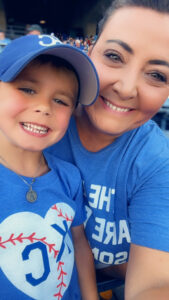
Danny and I cheering on our KC Royals this past summer. He’s Bobby Witt Jr.’s biggest fan!
As our first year serving as an MDA Ambassador family draws to a close, it’s impossible not to reflect on the journey that has brought us here – a journey of challenges, hope, and ultimately finding community and a deeper purpose.
I still remember clearly the day our world shifted. Our son, Daniel, was three when we first heard the words “Duchenne muscular dystrophy” in 2022. At that moment, everything was a blur—medical terms we’d never heard before, tears I couldn’t stop, and a deep ache that no parent can prepare for. In the three years since that day, we’ve faced challenges we never imagined—doctor visits, some physical changes, and emotional waves that come and go—but we’ve also discovered a strength we didn’t know we had.
To begin, I had expressed concerns about Danny’s mobility when he was under two. I worried that he wasn’t crawling or had any interest in walking at 20 months old. I was told I was being “dramatic” by a medical professional, and I knew our time together needed to come to an end. We made the switch to a new pediatrician, and I finally started to feel heard about my worries. During Daniel’s three-year checkup, our primary care doctor noticed that he wasn’t making any progress on the growth chart. This was the start of countless appointments trying to pinpoint what was going on with his little body. I wasn’t prepared for what came next—for hearing that something in his muscles, something written into his very DNA, would slowly take away his ability to walk, to run, to move freely.
There was shock, then fear, then a kind of quiet grief that I didn’t know how to name. I didn’t know how I would ever explain something I didn’t yet understand myself.
Drowning in information
The first year after diagnosis was a haze of medical terms, specialists, and sleepless nights. Our family was suddenly thrown into a world of acronyms—CK levels, exon deletions, clinical trials, steroid protocols. I’d scroll through medical journals, stories from other parents, and hope that maybe, just maybe, the diagnosis had been wrong.
We immediately jumped into what Danny needed. We met with doctors. We worked on the exercises they gave us at home. We practiced our skills and Danny worked so hard. We began advocating—asking questions, pushing for answers, showing up to appointments with notes and binders. I realized that being a Duchenne parent means wearing many hats: caregiver, researcher, advocate, therapist, and most of all, a safe place for your child to land.
Finding our way and hope
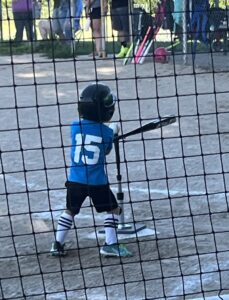
Danny showing his skills at the ballpark.
Somewhere in the middle of the chaos, we began to find our footing. We learned to celebrate every victory. I met other Duchenne families through PPMD and the MDA. There’s a strange comfort in talking to people who don’t need explanations—who understand the ache behind your smile and the quiet bravery it takes to get through each day.
During this year, the FDA also approved a landmark milestone that offered hope for families like ours — the ELEVIDYS gene therapy was approved by the FDA for use in individuals with Duchenne muscular dystrophy (DMD). At the time of the approval, therapy had been limited to very young, ambulatory boys (ages 4–5) with DMD. Danny was turning four and half two days after the announcement. He was the first boy in the Kansas/Missouri area to receive this treatment in November 2023. He continues to show no signs of the disease effecting his mobility.
This therapy delivers a shortened version of the dystrophin gene—called “micro-dystrophin”—to help muscle cells produce the protein that Duchenne boys lack. It’s not a cure, but it’s a step forward. For families like ours, it’s a sign that the world is paying attention—that research, persistence, and love can move mountains. Knowing that science is catching up to hope gives us strength to keep going, to believe in better days ahead for Danny and for so many others.
Our world
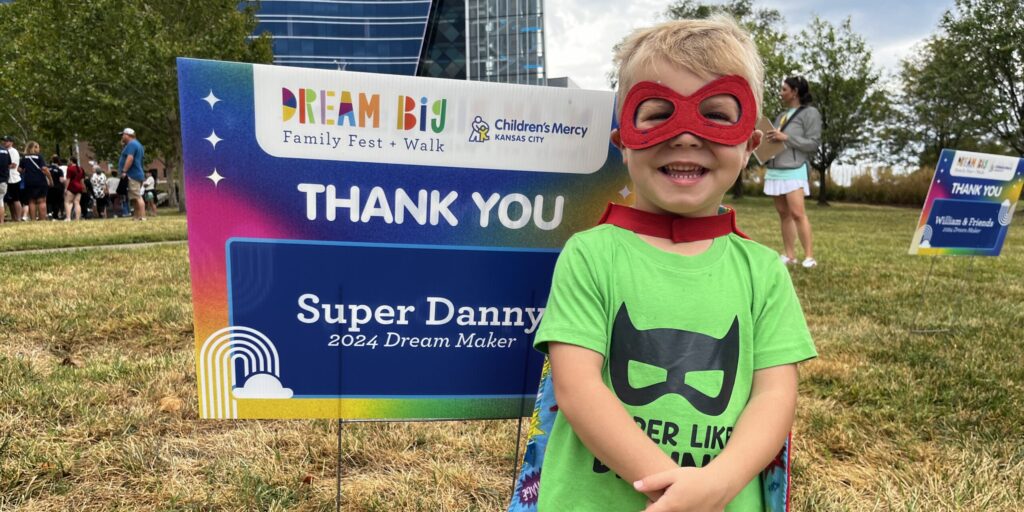
Now, three years later, the fear is still there—but it’s softened. It lives beside gratitude and love and a fierce determination to make every day count. My son is six now, almost seven. He loves superheroes and Legos and being silly. He played t-ball in the spring and loves riding scooters with his big brother. He doesn’t yet understand what Duchenne means for his future, and for now, that’s okay. We let him be little. We let him try everything. We encourage him to continue being him.
This past summer, Daniel and I became Ambassadors for the MDA. We have met with the KCK Fire Departments and helped “Fill the Boot” during Labor Day. Sharing his story gives a face to this condition. It raises awareness, builds empathy, and reminds the world that progress in research isn’t just about science—it’s about giving kids like Danny the chance to live fuller, longer lives. If our words can help even one newly diagnosed family feel less alone, or inspire one more person to support research, then telling our story is more than worth it.

Danny at a MDA “Fill the Boot” event in October with the KCFD Captains.
What I’ve learned
Getting Danny’s story out into the world feels important—not just for us, but for every family walking this road. When Duchenne is talked about, it’s often through numbers, medical terms, or research updates. But behind every statistic is a child like Danny—a little boy with a huge smile and a heart that fills every room he enters.
I don’t know what the future holds, and that used to terrify me. I encourage those who are facing this world to find your support group. Reach out to PPMD. Get connected with the MDA. Find those people who are living a similar path and grieve and celebrate with them. Be an advocate. Be loud about the need for more testing and treatment. Be the voice for those who need your support.
Next Steps and Useful Resources
- For more information about the signs and symptoms of Duchenne Muscular Dystrophy (DMD), as well an overview of diagnosis and treatment concerns, an in-depth review can be found here.
- For a comprehensive look at therapies for DMD, read Simply Stated: Therapeutic Strategies to Treat DMD and Simply Stated: Emerging Therapies to Treat DMD.
- Explore ongoing and enrolling clinical trials at mda.org/clinical-trials or ClinicalTrials.gov.
- Learn more about Duchenne Muscular Dystrophy in DMD FAQs. Find more resources on MDA’s Education Materials webpage.
- MDA’s Resource Center provides support, guidance, and resources for patients and families, including information about DMD, open clinical trials, and other services. Contact the MDA Resource Center at 1-833-ASK-MDA1 or ResourceCenter@mdausa.org.
- Stay up to date on Quest content! Subscribe to Quest Magazine and Newsletter.


Disclaimer: No content on this site should ever be used as a substitute for direct medical advice from your doctor or other qualified clinician.