
The New Diagnostic Journey: Advances in Genetic Testing Speed Rare Disease Diagnosis
By Amy Bernstein | Monday, February 23, 2026
5 Second Summary
Next-generation gene sequencing technologies are shortening the diagnostic journey for neuromuscular diseases. Faster, more accurate genetic testing helps families get answers sooner and opens the door to clinical trials, proactive care, and emerging gene therapies.
In the early 2000s, it took a decade for Monkol Lek, PhD, a Yale geneticist, to learn that the worsening weakness in his legs was caused by limb-girdle muscular dystrophy type 2G/R7 (LGMD2G/R7).

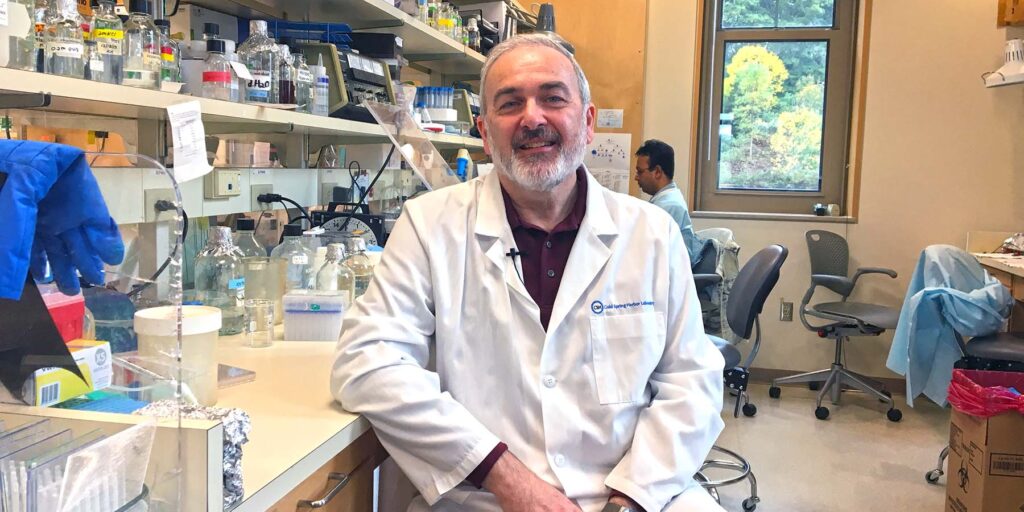
Angela Lek, PhD (left), and Monkol Lek, PhD (right)
However, if someone with Monkol’s family history and symptoms visits the doctor today, there’s a good chance they’ll get the same diagnosis in a matter of weeks.
Over the last 15 years, continuous advances in technologies for genetic testing and identifying disease-causing genes have dramatically improved the diagnosis of neuromuscular diseases. We are already seeing how this can reshape the rare disease diagnostic journey from a frustrating search for answers to a more hopeful quest to treat, care for, and thrive with a neuromuscular disease.
Next-generation gene sequencing
The technology currently used for diagnostic genetic testing is called next-generation gene sequencing. According to Angela Lek, PhD, MDA’s Chief Research Officer, who is married to Monkol, next-generation sequencing actually refers to a group of technologies that enable rapid reading of human DNA and RNA, including the whole genome and exome.
It’s a marked shift from reading genes one at a time, as was the standard practice before next-generation sequencing enabled reading multiple genes simultaneously. In terms of efficiency, it’s equivalent to moving from using the “hunt and peck” method on a keyboard to typing with all 10 fingers.

Chris Weihl, MD, PhD
“In previous genetic testing, you had to intentionally choose the gene you were testing based on what condition you thought the person might have,” says Chris Weihl, MD, PhD, a neurologist and Director of the MDA Care Center at Washington University in St. Louis. He explains that this could lead to a long, hit-and-miss process. “For example, for a disease like LGMD, there are more than 35 genes that can cause the same clinical features. You would choose a gene, and if you weren’t right, then when the patient came back to clinic, you would choose another gene. Now, we can test those 35 genes and more at once. It increases the likelihood that we’re going to identify a diagnosis and the rapidity of making the diagnosis.”
A genetic test that analyzes multiple genes to find genetic mutations associated with specific diseases is called a gene panel. Gene panels usually group together genes with known disease-causing mutations that lead to similar diseases. These panels vary from small, targeted tests (e.g., two genes for an SMA panel) to large, broad tests (e.g., more than 200 genes for a comprehensive neuromuscular panel). This allows doctors to use patients’ family histories, clinical examinations, and previous testing to make informed decisions about what gene panels to order.
Several sponsored genetic testing programs offer gene panel testing at no cost if a doctor orders it because they suspect a neuromuscular disease. MDA has an agreement with Invitae and Labcorp to offer the Detect Muscular Dystrophy Program at no cost at MDA Care Centers. This sponsored genetic testing program includes a comprehensive neuromuscular disease gene panel, as well as panels focused on LGMD, dystrophinopathies, and other muscular dystrophies.
“These panel tests for genes associated with muscle diseases and conditions that mimic them offer a cost-effective and efficient way to reach a diagnosis,” Monkol says.
Identifying genes
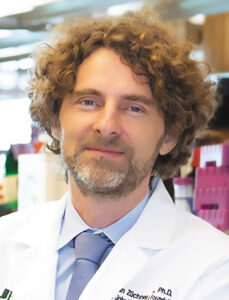
Stephan Züchner, MD, PhD
As the genetic testing landscape was evolving, scientists were also making dramatic strides in identifying genes that can cause diseases.
“The world of genetics in neuromuscular disease has really changed in the last 15 years,” says Stephan Züchner, MD, PhD, Chief Genomics Officer at the University of Miami Miller School of Medicine. “We went from knowing a few dozen disease-causing genes to hundreds.” That number continues to grow.
Changes in genes (called mutations or variants) are a normal part of the human genome, and many of these changes are harmless. Researchers determine that a variant is causing a disease when they observe that all people tested who have that variant have a particular disease, and people without the variant don’t have the disease.
“In neuromuscular disease genetics, we are looking for rare events,” Dr. Züchner says. When a disease or disease subtype affects only a few thousand people or fewer, it takes more time and testing to pinpoint the genetic cause.
Next-generation sequencing gives scientists the ability to look at more genes at once in more diverse groups of people, adding to the databases of human genetic data and the knowledge of which genetic variants are commonly found in which populations. This leads to more discoveries of disease-causing genes.
As disease-causing genes are identified, doors are opened to more gene-targeted therapies.
“Genetic testing and genetic therapy are two sides of the same coin,” Dr. Züchner says. “Very few gene therapies are on the market, but there are dozens and dozens in development, and companies are actively looking for new targets that they can develop gene therapies for. That’s why I think the discovery part is so important.”
Dr. Züchner gives an example of a 2020 research paper he co-authored on the discovery of mutations in the sorbitol dehydrogenase (SORD) gene that cause a form of Charcot-Marie-Tooth disease (CMT).
“It turns out this is the most common recessive type of inherited neuropathy,” he says. Because there are already approved drugs for other diseases involving the SORD gene, a treatment was developed quickly.
“Within six months of the publication, a company had begun clinical testing in patients of such a drug to test safety,” he says. This drug is now in a phase 3 clinical trial.
The importance of genetic diagnosis
Getting a diagnosis through genetic testing is the most accurate way to identify your specific disease and its cause. In addition to putting a name to your condition, having a genetic diagnosis may allow you to enroll in clinical trials for gene-targeted therapies and receive new therapies when they become available.
“A lot of new therapies are specific to a gene, or even a particular mutation in that gene that’s causing the disease,” Monkol says. Angela points out that insurance typically does not cover such therapies without a documented genetic diagnosis.
A genetic diagnosis may also help you proactively manage your condition. “In some diseases, there’s a strong correlation between the gene mutation and disease progression, so it allows you and your healthcare team to know, for example, if there are going to be cardiac complications 10 years down the line. Then they could have a plan to manage it even before it manifests,” Monkol says.
However, even with next-generation sequencing, not everyone who gets genetic testing receives a genetic diagnosis. “The gene panels only sequence what we know,” Dr. Weihl explains. “Even if I’m sequencing 180 genes, I’m only looking at those 180 genes.”
Humans have about 20,000 genes, and scientists have only identified a fraction that are associated with diseases so far.
New disease-causing genes are constantly being discovered, and gene panels are updated. Whether you have not had genetic testing before or you received inconclusive results from a previous test, it’s worth asking your care team about genetic testing. Dr. Züchner suggests reviewing prior inconclusive test results or repeating genetic testing about every five years until you receive a genetic diagnosis.
No matter your diagnosis, staying engaged with your MDA Care Center or neuromuscular care team not only helps you manage your disease but also helps you stay informed about ongoing research. Neuromuscular clinicians keep up-to-date on genetic discoveries, disease registries, enrolling clinical studies, and impending therapies.
MDA Care Centers also give you access to neuromuscular clinicians with training in genetics and genetic counselors. The growing complexity of genetic testing means a specialist is generally needed to order gene panels, interpret results, and deliver a genetic diagnosis. They can also counsel you before and after testing about what to expect and how to inform family members about the results.
Can diagnosis get even better?
While next-generation gene sequencing is enabling faster, more accurate genetic testing and diagnosis, it hasn’t yet eliminated the diagnostic journey.
For instance, it’s common for genetic test results to include a variant of uncertain significance (VUS), which means that a gene appears to have a variant; however, it is not known if that variant causes a disease.
According to Dr. Weihl, there is a need to continue sequencing more patients and healthy individuals from all areas of the world to deepen our understanding of the human genome and expand libraries of disease-causing genes and variants. This will lead to fewer VUSs and clearer genetic testing results.
Collaboration among scientists to collect and share data is an essential part of this process, according to Dr. Züchner. As an example, he points to the MDA-supported Genesis Project database, which allows researchers to upload deidentified genetic data and analyze the aggregated data. This platform has contributed to more than 100 discoveries of disease-related genes, including SORD neuropathy.
The next frontier in gene sequencing is long-read sequencing. This technology enables in-depth analysis of complex genetic changes on long stretches of DNA, such as repeats, deletions, or inversions. These changes need to be studied more in neuromuscular diseases.
Long-read gene sequencing is more expensive and requires powerful computers to handle large datasets, so it is currently used mainly in research settings. However, considering how rapidly this technology is developing, it might not be long before it appears in standard genetic testing.
A swifter journey
For all the talk of progress in genetic testing and gene therapy, it’s easy to lose sight of the fact that about 50% of people living with neuromuscular diseases do not have genetic diagnoses. And although MDA encourages community members to get genetic testing — and works to make it accessible and affordable to everyone — many people do not receive conclusive test results.
Still, the best bet to change an inconclusive result to a genetic diagnosis is to stay engaged with your neuromuscular care team and revisit genetic testing frequently.
“I want people to know that it’s not the end of the road if you don’t get a confirmed genetic diagnosis,” Angela says. “There are still so many things we don’t know, and there are a lot of patients still seeking answers. That’s where we look to the realm of research.”
Fortunately, the researchers in this article are among those pushing this realm toward better outcomes. The progress made over the past 15 years has changed the landscape of the diagnostic journey. The momentum the research community has achieved will only continue to improve the efficiency of genetic testing and, by extension, the experience of living with a neuromuscular disease.
Amy Bernstein is a writer and editor for Quest Media.
Words to Know
DNA: A molecule found in every cell that contains genetic instructions for the development and function of every part of the body
Exome: The part of the genome consisting of exons, which are the portions of genes that code information for making proteins
Genes: Segments of DNA that control the expression of one or more traits or functions
Gene sequencing: The process of analyzing sections of DNA
Gene panel: A type of genetic test that looks for variants in multiple genes, often grouped into a single test because they cause similar diseases or symptoms
Gene variant (or mutation): A change in the DNA code
Genetic testing: Medical testing that involves analyzing a genetic sample (such as a cheek swab or blood) to identify changes in DNA. This can help diagnose a genetic disorder.
Genome: The entire set of DNA instructions found in a cell. In humans, the genome consists of 23 pairs of chromosomes located in the cell’s nucleus.
RNA: The molecule in cells that copies, translates, and delivers DNA instructions for making proteins
Next Steps and Useful Resources
- The conversation about genetic mapping and new therapies continues in a Quest Podcast episode with leaders in the field.
- What should you do if your genetic test finds a variant of uncertain significance (VUS)? Experts in genetics and neuromuscular diseases weigh in.
- Stay up to date on Quest content! Subscribe to Quest Magazine and Newsletter.


Disclaimer: No content on this site should ever be used as a substitute for direct medical advice from your doctor or other qualified clinician.