Letter from the Editor: How New Higher-Dose Regimen for Spinraza Brings More Hope
By Mindy Henderson | Monday, March 30, 2026
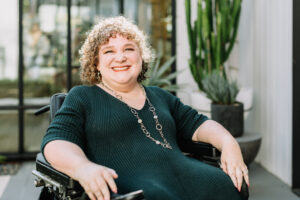
Mindy Henderson, MDA’s Vice President of Disability Outreach & Empowerment & Editor-in-Chief of Quest Media
Today I write to you with a full heart—because there is news that feels nothing short of miraculous. The FDA has approved a higher‐dose regimen of Spinraza (nusinersen)for people living with spinal muscular atrophy (SMA), and I want to share what this means for me, what I believe this means for our community, and for the promise of what’s ahead.
What’s new
Spinraza is an antisense oligonucleotide (ASO), and was originally approved as a treatment for SMA in December 2016. Its standard dose has been 12 mg, with a series of loading doses followed by maintenance every four months. Spinraza works by targeting the SMN2 gene’s RNA, helping it produce fully functional SMN protein.
The new higher‐dose regimen involves a more rapid “loading phase,” with two 50 mg doses given 14 days apart, followed by a maintenance dose of 28 mg every four.
What this means to me (and to many of us)
Living with a progressive neuromuscular disease like SMA is frightening. There are days when I watch the slow decline of my strength and work through my day feeling the inescapable, with what feels like, 50-pound weights strapped to each arm as I work on my laptop, eat, drink, and fix my hair. And there are days like one recently when I had to face the fact that I could no longer drive my car, causing me to depend exponentially more on others for the independence I had fought so hard for.
The original approval of Spinraza was my miracle. I had lived my life with hope that was given to me in the knowledge that scientists were working behind the scenes to find the answers we so desperately needed to be able to treat any one of the over 300 neuromuscular conditions the Muscular Dystrophy Association (MDA) supports. But I won’t lie. The older I got, the less likely it felt that I would see a treatment for SMA.
And then I did.
When it was first approved, I remember feeling an exhale I didn’t know I was holding in, and a renewal to my belief that it was possible to fight back against what my diagnosis threatened every single day to take away – and maybe to regain some of what had already been taken.
Now, with the availability of a higher dose, I feel that familiar surge of hope again. This is not just about wishing for more. If you think about medicine in general, you wouldn’t give a child the same amount of ibuprofen, for example, that you would give an adult. This higher dose of Spinraza recognizes that to stop, and especially to reverse, the effects of this disease, my fully grown body probably needs a heavier dose of this medication than a child might. While Spinraza was a miracle when originally approved, this higher dose feels exponentially more promising.
This approval once again reminds me to see the possibilities instead of the limitations that a disease like SMA can place on you. And I know this for sure: even though this is a treatment for SMA, the research and the science is evolving broadly with each breakthrough, and we will soon see even more approvals like this one for treatments of other neuromuscular conditions, and so many more individuals like me will have their miracle moment.
Gratitude
I want to pause here, because none of this would be possible without many, many people saying “yes” when asked to help.

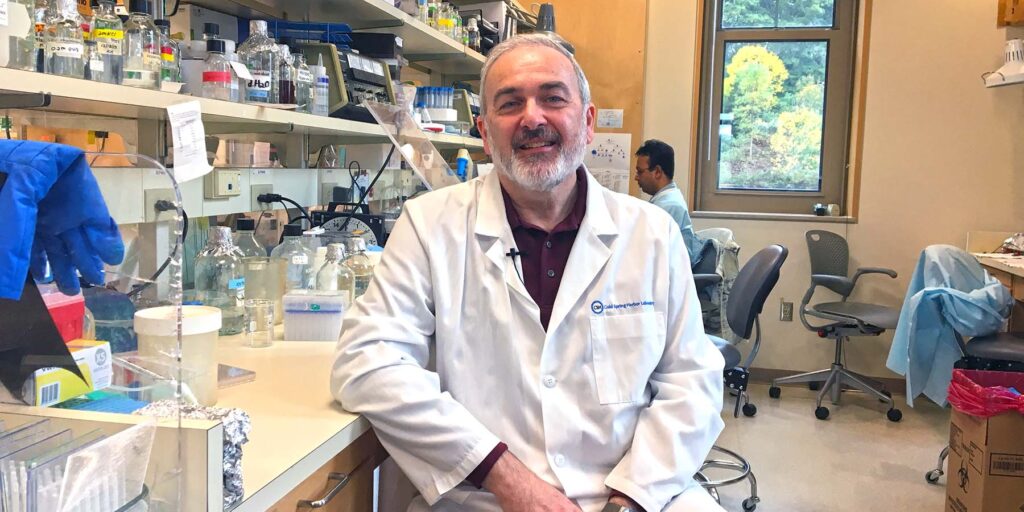
Adrian Krainer, PhD
- To the researchers: to Dr. Adrian Krainer at Cold Spring Harbor Laboratory, a key scientist behind the development of Spinraza and so many others in the research community who fought and persevered and sacrificed and found the solution to the dang problem. “Thank you,” feels so very insufficient.
- To clinical trial participants and their families: You are true heroes. You volunteered, you took risks, you put up with discomfort and uncertainty. You trusted that your participation could help others, even while you hoped it would help you. We owe so much to you.
- To funders, including MDA: I am so grateful for the investments made over the years into Spinraza research. I have been a lifelong partner to the Muscular Dystrophy Association for a reason, and that is because funding research has been a priority for them for the last 75 years. At the end of the day, what I wanted was either for SMA to have been nothing but a bad dream, or to receive something that would lessen its effects. Knowing MDA was constantly funding that research gave me hope every day of my life. They, and SO MANY others who proudly supported research that has pushed boundaries, sometimes when the path seemed steepest – you are at the very foundation of this milestone. Because of that support, the question is no longer just “can we treat SMA?” but “how well can we treat it?” And that difference matters enormously.
A message of hope
If you are reading this and you live with SMA, or care for someone who does, I want you to feel what I’m feeling: hopeful, grounded, and grateful. There is fear in this journey—fear is natural when you witness decline, when the future feels uncertain. But there is also so much power—in science, in community, in shared effort. There is light in the commitment of people who refuse to give up, who invest, who push boundaries. On a day like today, possibilities are reborn.
Because of what we have already achieved, we have more reason than ever to believe in what might come next.
To anyone who is reading this, thank you for being part of this fight—with me, with the MDA, with researchers, caregivers, clinicians, and the entire neuromuscular community. We will continue to push, to hope, and to make every day count. None of us are alone in this journey.
With gratitude and hope,
Mindy Henderson
Vice President, Disability Outreach & Empowerment
Muscular Dystrophy Association
Next Steps and Useful Resources
- Download MDA’s Spinal Muscular Atrophy disease fact sheet.
- Read more about the science behind SMA treatments in Behind the Drug: Nusinersen (Spinraza) for SMA.
- Visit the Quest Media content library to find more stories about SMA and the individuals and families who live with this neuromuscular disease.
- MDA’s Resource Center provides support, guidance, and resources for patients and families. Contact the MDA Resource Center at 1-833-ASK-MDA1 or ResourceCenter@mdausa.org
- Stay up to date on Quest content! Subscribe to Quest Magazine and Newsletter.


Disclaimer: No content on this site should ever be used as a substitute for direct medical advice from your doctor or other qualified clinician.