
Considerations and Tips to Plan for Pregnancy with a Neuromuscular Disease
By Maggie Callahan | Tuesday, May 26, 2026
5 Second Summary
Every pregnancy journey is unique. For moms-to-be living with neuromuscular diseases, the journey often involves a lot of questions, some extra preparation, and a coordinated care team.
Like many expectant moms, Savannah Jordan of California experienced a mix of excitement, nerves, and uncertainty during her first pregnancy, in 2018. But living with limb-girdle muscular dystrophy (LGMD) added another layer of questions.

Jessery Picard
Would her neuromuscular disease affect the pregnancy? Would pregnancy worsen her symptoms? Should she anticipate complications? What would the postpartum period be like?
“My doctors really didn’t have much information to give me,” says the mom of two daughters, ages 3 and 7. “They basically said as things change, we’ll figure out how to handle them.”
Jessery Picard of Florida, who lives with Charcot-Marie-Tooth disease (CMT), encountered a similar lack of guidance during her pregnancy in 2025.
“I tried to do my research about pregnancy with CMT, but I found almost nothing except for some YouTube videos from another mom with CMT,” she says.
Pregnancy with a neuromuscular disease remains an area where research is limited, symptoms vary widely, and many healthcare providers have little experience.
When information is lacking, preparation and a coordinated care team can make a meaningful difference.
“For women who want to become pregnant, it’s important to get educated about what to expect and to have a good team on your side,” says Emma Ciafaloni, MD, Professor of Neurology and Pediatrics at the University of Rochester. “If pregnancy is something you want, the important thing is to plan it right.”
Find the right care team
Lorelai Thornburg, MD, a maternal-fetal medicine specialist and professor at the University of Rochester in New York, recommends talking with an obstetrician-gynecologist (OB/GYN), ideally before you get pregnant.
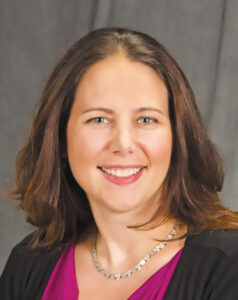
Lorelai Thornburg, MD
“Make sure your OB/GYN is comfortable caring for your pregnancy. You might need a specialist or care at a larger hospital, and that may influence your decisions,” she says.
Patients with neuromuscular diseases are often referred to a maternal-fetal medicine specialist, an OB/GYN focused on higher-risk pregnancies, including those involving chronic medical conditions.
When Megan DeJarnett, a disability advocate and influencer living with spinal muscular atrophy (SMA), was first considering having a child 12 years ago, she and her husband approached a high-risk OB/GYN in their area in Arizona.
“She didn’t have any hands-on experience with anyone with SMA being pregnant, but she said, ‘Let me do some research,’” Megan says. “That was probably the best approach I could have asked for.”
Megan uses a power wheelchair and has a spinal fusion. Her doctor recommended extra ultrasound monitoring to make sure Megan and the baby were doing well throughout the pregnancy and delivery via a scheduled cesarean section (C-section) with general anesthesia and a pulmonologist on hand. Megan had positive experiences with her two pregnancies in Arizona.
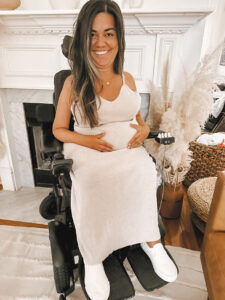
Megan DeJarnett
When she learned she was pregnant a third time, in 2024, Megan and her family were living in Nashville, Tennessee. She approached the high-risk pregnancy department at Vanderbilt Health. “They were like, ‘Yeah, we’ve had patients with SMA,’ and they already had a suggested plan for us, so it was a different experience,” she says.
As research and treatments for neuromuscular diseases advance, more healthcare providers are becoming aware of them, but women’s experiences still vary between locations and providers.
“I’ve had doctors who looked at me and said that I was crazy for doing this — and I now have three beautiful children. I had to find doctors who were willing to look at my case as a unique case,” Megan says. “Make sure you have a good team. It’s okay to get second opinions.”
Who’s on your team?
Dr. Ciafaloni emphasizes that women with neuromuscular diseases benefit from a multidisciplinary care approach to pregnancy. Along with an OB/GYN, neuromuscular disease specialists should also be involved in planning for and monitoring a pregnancy, and they can offer support and advocacy.
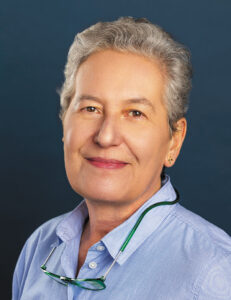
Emma Ciafaloni, MD
Depending on a person’s diagnosis and symptoms, a pregnancy care team may also include pulmonologists, cardiologists, anesthesiologists, physical or occupational therapists, and lactation specialists.
For example, some neuromuscular conditions are associated with higher rates of respiratory abnormalities or heart disease, so managing those conditions before and during pregnancy can improve outcomes.
Jessery says having a supportive care team made a difference during her pregnancy.
“All of my doctors were connected,” she says. “They were all able to see my chart, and I tried to stay on top of communicating between doctors and asking everything I could think of.”
Women can also expect to have conversations with their care teams about the genetic risk of their child having the same condition. These discussions can feel emotional, but they are meant to support informed decision-making.
“The important thing is that patients have the opportunity to have that discussion and hear what we know and what we can predict,” says Dr. Ciafaloni. “Then we can prepare for it.”
Anticipating a changing body
Because research on pregnancy in women with neuromuscular diseases is limited, many questions about how symptoms may change during pregnancy remain unanswered. Pregnancy is generally hard on the musculoskeletal system.
“Anybody who is pregnant is going to have a shift in their center of gravity and their weight, and those things affect how your body moves,” Dr. Thornburg says. “If you already have mobility challenges, those changes can become more noticeable during pregnancy.”
Classic pregnancy complaints include fatigue and the need to urinate frequently, both of which can be harder for women with neuromuscular diseases.
“It seemed that I was more fatigued than what I witnessed others experience with their pregnancies,” Savannah says.
Megan learned to adjust her daily habits. “A lot of wheelchair users will tell you, we are really good at holding our pee, and we just don’t want to do that when we’re pregnant,” she says. “I had to be around my husband and caregivers a lot more to make sure I had the opportunity to go to the bathroom as often as I needed.”
Some women also experience new or worsening symptoms, and it may not be clear whether they are related to the neuromuscular disease or the pregnancy.
Megan’s SMA has progressed, but it’s hard to tell if pregnancy contributed to that. “I had significant muscle weakness during pregnancy,” Megan says. “I needed to recover after pregnancy, but I feel like my baseline is the same as before I had my children.”
In many cases, changes or new symptoms are temporary, but some women experience lasting changes.
In a 2006 study titled “Pregnancy and birth outcomes in women with facioscapulohumeral muscular dystrophy (FSHD),” Dr. Ciafaloni led a research team examining pregnancy experiences in women with FSHD. The team surveyed 38 women who reported a total of 105 pregnancies. About 1 in 4 women experienced worsening weakness or pain during pregnancy. For many, these symptoms did not fully return to their pre-pregnancy baseline afterward.
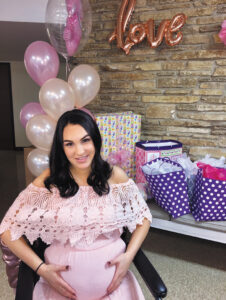
Cassidy Nilles
Cassidy Nilles of Illinois, who lives with LGMD, saw her mobility change gradually while she was pregnant with her daughter, who is now 8 years old. Early in her pregnancy, Cassidy was able to walk and continue working as a hairstylist from home. But around 18 weeks, she slowed down significantly.
“I started using a wheelchair when I went out of the house,” she says, adding that at one point she fell while trying to reach the bathroom and was unable to get up on her own.
After her daughter was born, some of the pregnancy-related strain eased, but Cassidy says she did not fully regain the mobility she had before pregnancy and uses a power wheelchair. It took time to adjust to how her body had changed, but she also feels proud of what she accomplished.
“It took me probably three years to process how difficult and hard this was on my body,” she says. “But it made me realize how strong women with neuromuscular diseases are in other ways. We may have physical weakness, but we have an internal superhuman strength.”
Planning for labor and delivery
As pregnancy progresses, many women with neuromuscular diseases begin thinking about another major question: How will they give birth?
While some assume a C-section will be necessary, experts say that isn’t always the case.
According to Dr. Thornburg, C-sections are not automatically used because of a neuromuscular diagnosis but may be recommended for obstetric reasons. In many cases, neuromuscular conditions primarily affect skeletal muscle, while the uterus — which is made of smooth muscle — can still function normally during labor.
She also points out that a C-section can present additional challenges for some patients with neuromuscular diseases. Because the procedure involves abdominal surgery, it may affect core strength and mobility during recovery.
“In general, we recommend vaginal delivery for everyone with a neuromuscular disorder as long as the baby is in the right position and not showing signs of distress,” Dr. Thornburg says.
Cassidy had conversations with her care team about her desire to deliver vaginally. Because pushing proved to be exhausting, doctors eventually used a vacuum to assist with the delivery.
Many women also have questions regarding epidurals and other forms of anesthesia.
“Spinal anesthesia can be more complicated and may have a less predictable spread — sometimes resulting in patchy or incomplete numbness — in people with spinal curvature or prior spinal surgeries,” Dr. Thornburg says. “It’s important to discuss medical history with your anesthesia team so you can plan for success.”
In cases where an epidural is not possible or not working well for labor, nitrous oxide (laughing gas) or other medications (such as nalbuphine or morphine) may be helpful during labor.
“There may also be a need for general anesthesia for a cesarean delivery,” Dr. Thornburg adds. “While it is generally a safe procedure, there are some types of neuromuscular diseases that can have issues with the medications used for general anesthesia, as well as differences in muscles of the head or neck that can increase the risk for difficulty with intubation. Therefore, meeting with an anesthesia team ahead is key to discuss these concerns and make a plan prior to the delivery date.”
An anesthesiology consultation can help identify any potential risks related to spinal curvature, respiratory function, or sensitivity to certain medications, allowing the care team to prepare for emergencies before labor begins.
In Jessery’s case, her planned vaginal birth took an unexpected turn. During her long labor, her baby eventually began showing signs of distress, so her doctors recommended a C-section. When attempts to numb her left side with regional anesthesia were unsuccessful, she ultimately had to undergo the procedure under general anesthesia.
Despite the complications, Jessery successfully delivered a healthy baby. “I wouldn’t change any of it,” she says. “I would do it again.”
The postpartum period
Planning for help after the baby arrives is just as important as planning for pregnancy and delivery.
Dr. Ciafaloni notes that weakness in the arms or trunk may make everyday tasks, such as lifting a baby or breastfeeding, more difficult, which is why postpartum planning is important. Physical therapy, occupational therapy, and lactation support can help new mothers adapt to these challenges.
Looking back, Cassidy says she wishes she had been better prepared for the physical toll. “If I could do it again, I would ask more questions about what happens after the baby is born,” she says.
Dr. Thornburg also emphasizes the importance of building a strong support system. “Sleep deprivation can be very triggering,” she says. “Arranging to have help and support doesn’t make you a less capable mother.”
Savannah recommends being near family and having support in place for the early weeks. “If you can, schedule ahead of time — like having a sister come help one day and your mom another day. There’s no way to do it alone,” she says.
Set up for success
Despite the uncertainties, many women with neuromuscular diseases say the experience of becoming a parent makes the challenges worthwhile. Dr. Ciafaloni notes that her study showed that even among patients whose symptoms worsened, most would make the same decision again.
With the right preparation and medical support, she says, pregnancy can be possible.
Cassidy agrees and encourages others in the community to seek support and information early.
“Find a group, find other women within the community who have done it,” she says. “Ask your doctors every single question, and make sure you have a really good support system to help you through this life-changing time.”
Maggie Callahan is a frequent contributor to Quest Magazine.
Questions to Ask Your Doctor
- Who should be part of my pregnancy care team?
- Should I see a maternal-fetal medicine (high-risk) specialist?
- Do I need pulmonary function testing during pregnancy?
- Should I schedule a consultation with an anesthesiologist before delivery?
- What genetic counseling or testing should we consider?
- How might pregnancy affect my neuromuscular condition or mobility?
- What delivery options are safest for my condition?
- What are my risk factors for needing to change my planned delivery approach?
- How can those risks be mitigated?
- What is the backup plan if my primary delivery approach does not work?
- What should I plan for during postpartum recovery?
Next Steps and Useful Resources
- Watch MDA’s webinar Navigating Neuromuscular Disease in Women’s Health.
- Regular visits to a gynecologist are important for a woman’s health, regardless of pregnancy status. Learn how to get accessible gynecology care.
- There are many paths to become a parent. Learn about Foster Care, Adoption, and Surrogacy Considerations for Parents with Neuromuscular Diseases.
- Stay up to date on Quest content! Subscribe to Quest Magazine and Newsletter.


Disclaimer: No content on this site should ever be used as a substitute for direct medical advice from your doctor or other qualified clinician.