
MDA Ambassador Guest Blog: A Myasthenia Gravis Voyage of Twists, Turns, and Discoveries
By Tina Vassar | Wednesday, June 3, 2026
5 Second Summary
MDA Ambassadors play an essential role in furthering MDA’s mission while representing and empowering the neuromuscular disease community. Quest Ambassador Guest Blog series provides a platform to share their personal stories, perspectives, and experience.
Tina Vassar lives in Durham, North Carolina with her dog Milo. She is 69 years young and has lived with myasthenia gravis for over 30 years.
Like many people living with myasthenia gravis, I have a unique story – or, as I call it, my voyage.
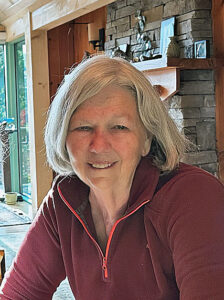
Tina Vassar
I was diagnosed with anti-ACHR+ generalized myasthenia gravis (gMG) in 1990, but my story begins before that. Before being diagnosed, my symptoms were present for quite some time. These included fatigue in the evening, double vision and a lot of stumbling and falls at the end of the day. I was told I was working too hard. My doctors and I could not put two and two together. The ironic thing is that I worked with myasthenia gravis patients.
At that time, I was working as a nurse with patients in the Cardiovascular Surgery Division. I worked with patients with lung and heart surgeries. I followed the patients from surgery to discharge and then saw them for their first post-op appointments. Since thymectomy is thoracic surgery, I also followed those patients.
As time went on though, my symptoms got worse. I was referred to all sorts of medical professionals, but they still could not figure me out. This was during the late 1980s, and gMG was more difficult to diagnose and treatments were limited at that time.

Original photography by Tina Vassar
Of course, my lifestyle did not help my symptoms. I kept very active despite the fatigue and falls. I am someone who just does not like to stop. An elderly patient told me once that the secret to a long life is to live it and never say no to opportunities that come my way unless they are illegal or immoral, just go for it! So, I did. I painted pictures in oils and learned to draw cartoons. I embraced boating. I love the water. I love to travel. I took my first plane ride to Yellowstone National Park and sat up all night to see if Old Faithful spouted off at night. It did!
But my day-to-day life was becoming more and more affected. Falls were increasing. Walking to the parking lot after work required frequent rest breaks, especially in the summer. I was doing a lot of photography work, but I could no longer carry my equipment. Summer shoots were almost impossible. I loved to photograph wildlife from my boat, but it became very hard to hold up my camera for extended periods of time to capture the wildlife.
A chest x-ray in 1986 revealed a thymoma (growth on the thymus gland) that required a thymectomy. This finding is what led my doctors to look into gMG as a possible diagnosis for my symptoms, since thymoma is associated with the illness. At that time the link between thymoma and myasthenia gravis was not clear. It took about 3 years of progressive symptoms to eventually be diagnosed with myasthenia gravis.
I began looking at research, had discussions with a neurologist, and went through lot of tests. Finally, I was officially diagnosed with gMG and started treatment in 1987.

Original photography by Tina Vassar
After the diagnosis of gMG was made, my emotions were all over the map. I was relieved that I had a diagnosis and wasn’t crazy. But I was also overwhelmed with questions: uncertainty about my career, future healthcare options for treatment, how to explain this to others. I was thirty-three years old with a disease that no one understood. MG is not like a broken leg, where you see the cast, or a heart attack that people could relate to. People may think this is contagious, when it is not. How would I explain it?
A Muscular Dystrophy Association patient representative told me about support groups and other services that can help through the power of education, support of other community members, and resources for caregivers and loved ones. Becoming active in the MDA community helped me navigate the uncharted waters of my voyage with MG.
Over the years, I went through all of the available treatment options for gMG. Some would work for a while and then my symptoms would return. Some did not work at all or had bad side effects. Even with treatments, I had to plan my day around my gMG. I lagged behind everyone on travel tours, I felt too tired to go out in the evenings, and my photography shoots were cancelled., I realized that I needed to become the Captain of my healthcare crew and seek more resources and information and direct my course., I have taken valuable steps to understand my MG better and to stay up to date on new treatments. MDA has been able to give me information that reveals a brighter future

Original photography by Tina Vassar
I am wearing a necklace with a compass on it. This is a small reminder that my life has taken a new course. We as members of the MG community are so different in how we live with the symptoms of MG. In speaking with patients all over the US and UK, I could not find anyone with symptoms exactly like mine. To me this is not a journey on a path, but a voyage on the ocean with uncharted possibilities and problems and solutions. In the beginning, I felt like I was in a dinghy in an open ocean without a compass. Now, I have a compass and a community.
I speak to other MG patients that are in the “same boat” as I was in the beginning and discuss management in the future. This is my story. As I have stated before, we are all different, in different points of our voyage, but I am here to tell you there is a “safe harbor”. That “safe harbor” can be found in the support of friends, family, caregivers, and the resources available to you today. MDA is an essential crew member for resources, support and education. And with new treatments constantly being developed, there is a brighter beacon of light to guide me to safe harbor and a full life.
Next Steps and Useful Resources
- For more information about the signs and symptoms of Myasthenia Gravis (MG), as well an explanation of the causes of disease, an in-depth overview can be found here.
- Find support for your mental health needs in MDA’s Mental Health Hub.
- The MDA Resource Center can provide information on finding specialized care at MDA Care Centers and mental health services. Call 833-ASK-MDA1or email resourcecenter@mdausa.org.
- Find an MDA Care Center near you.
- Learn more about Myasthenia Gravis in the Quest blog: Simply Stated: What is Myasthenia Gravis.
- Stay up-to-date on Quest content! Subscribe to Quest Magazine and Newsletter.


Disclaimer: No content on this site should ever be used as a substitute for direct medical advice from your doctor or other qualified clinician.